

 Home
Home Features
 Testimonials
 Downloads
 FAQ
FAQ What is Kikaroo?
 Blog
Blog Chore charts
Free Printable Daily Chore Chart
A daily chore chart is for the tasks that repeat every single day: make the bed, feed the pet, homework before screens, teeth before bed. No day columns to manage, no schedule to explain. The same short list, every day, until it stops being a list and becomes just what your kid does.
The generator below is set to daily. Add the tasks, put a picture on each one for a younger child, pick a style, and download the printable PDF free. The checklist layouts hold up to ten tasks per child, and up to three children each get their own page.
If your chores happen on specific days instead, like trash on Tuesday and vacuuming on Saturday, the weekly chart fits better; you can switch the frequency right in the form.
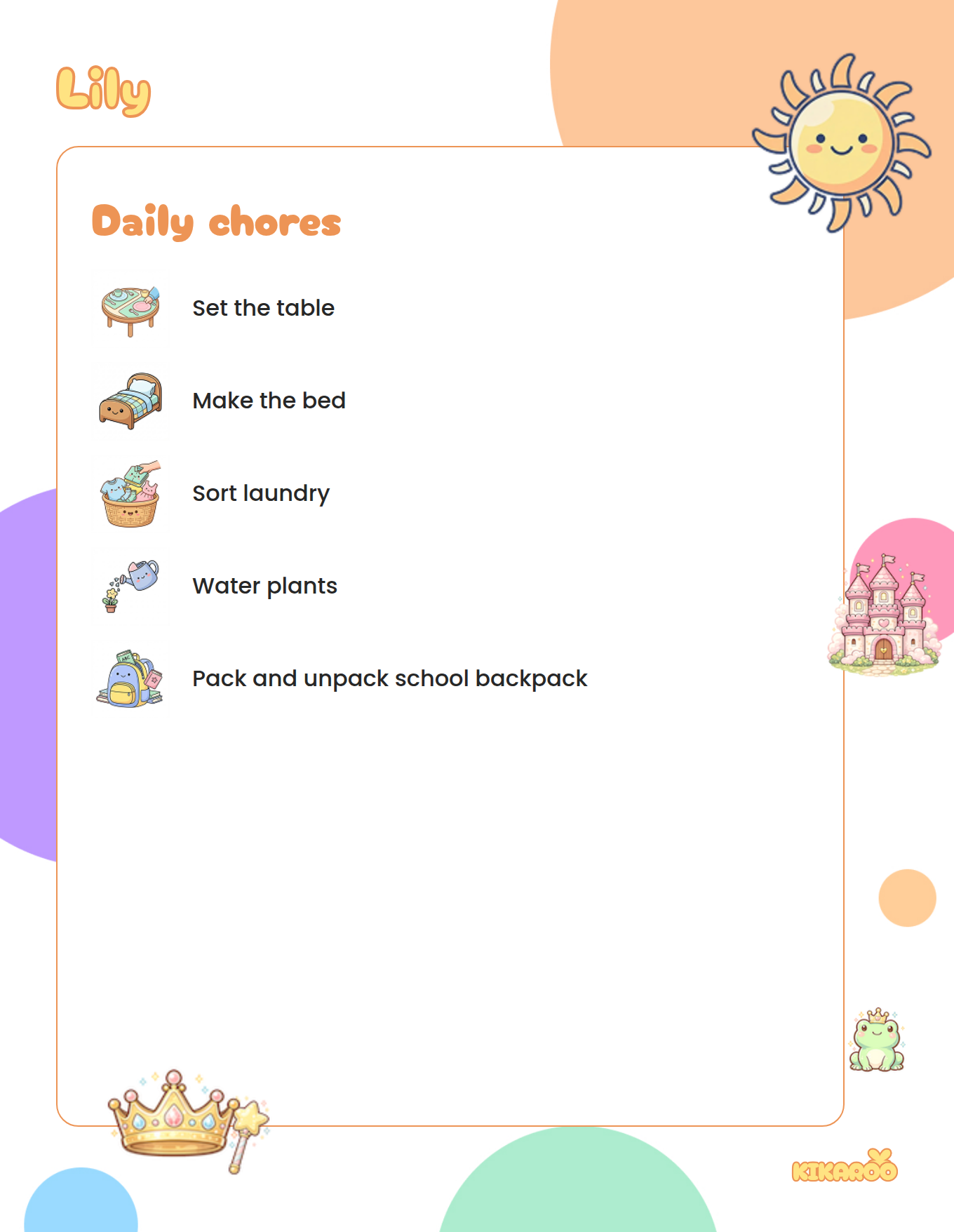
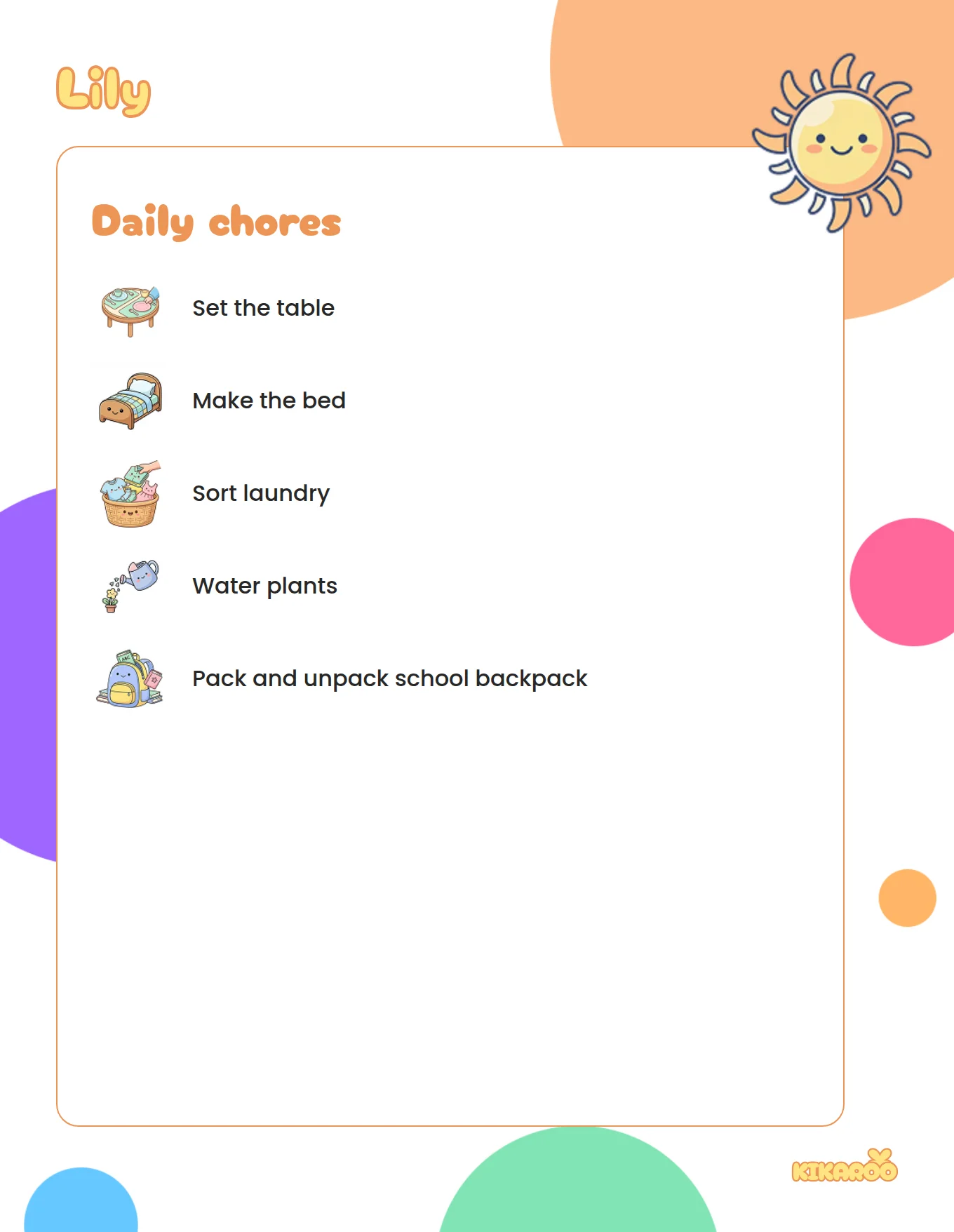
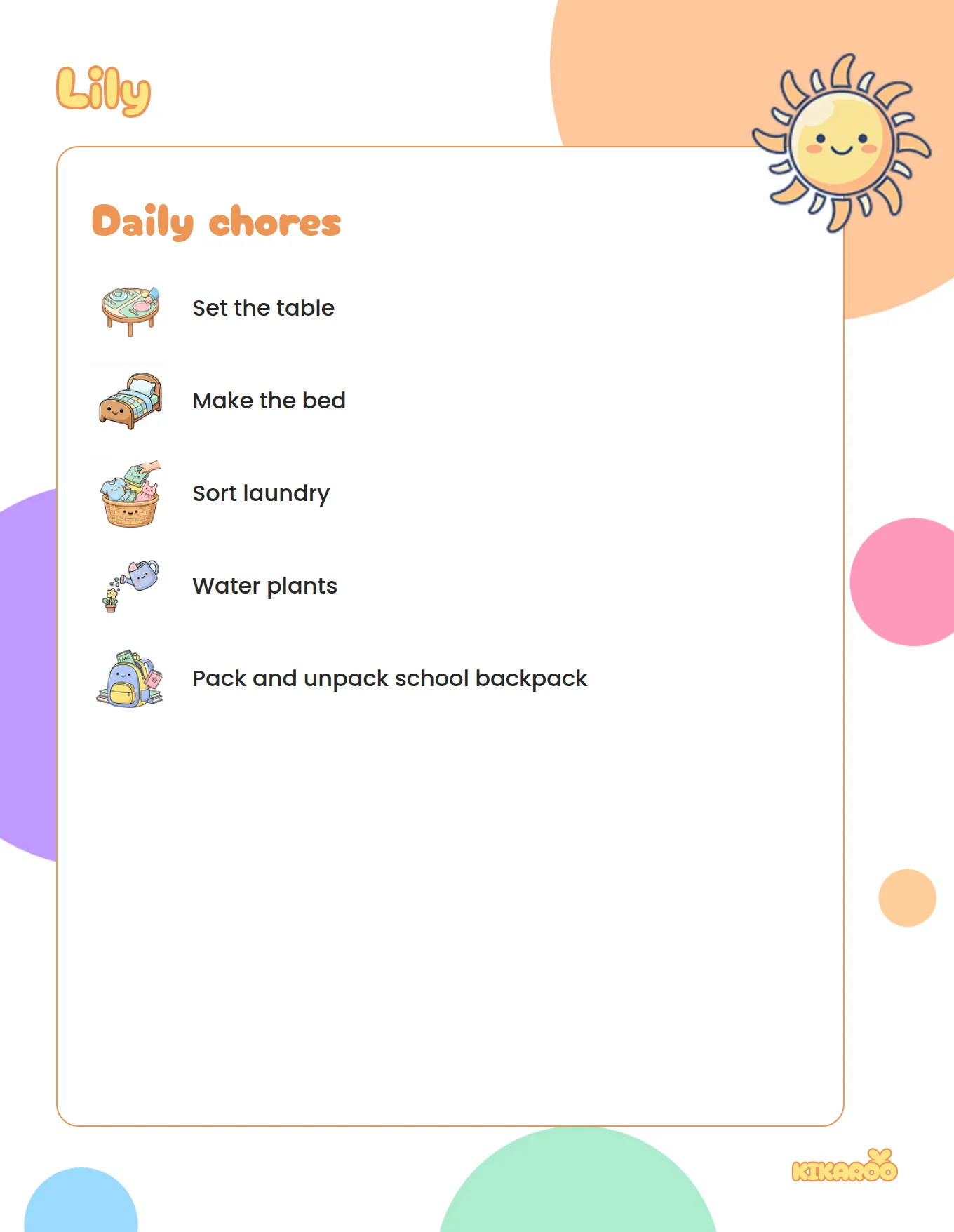
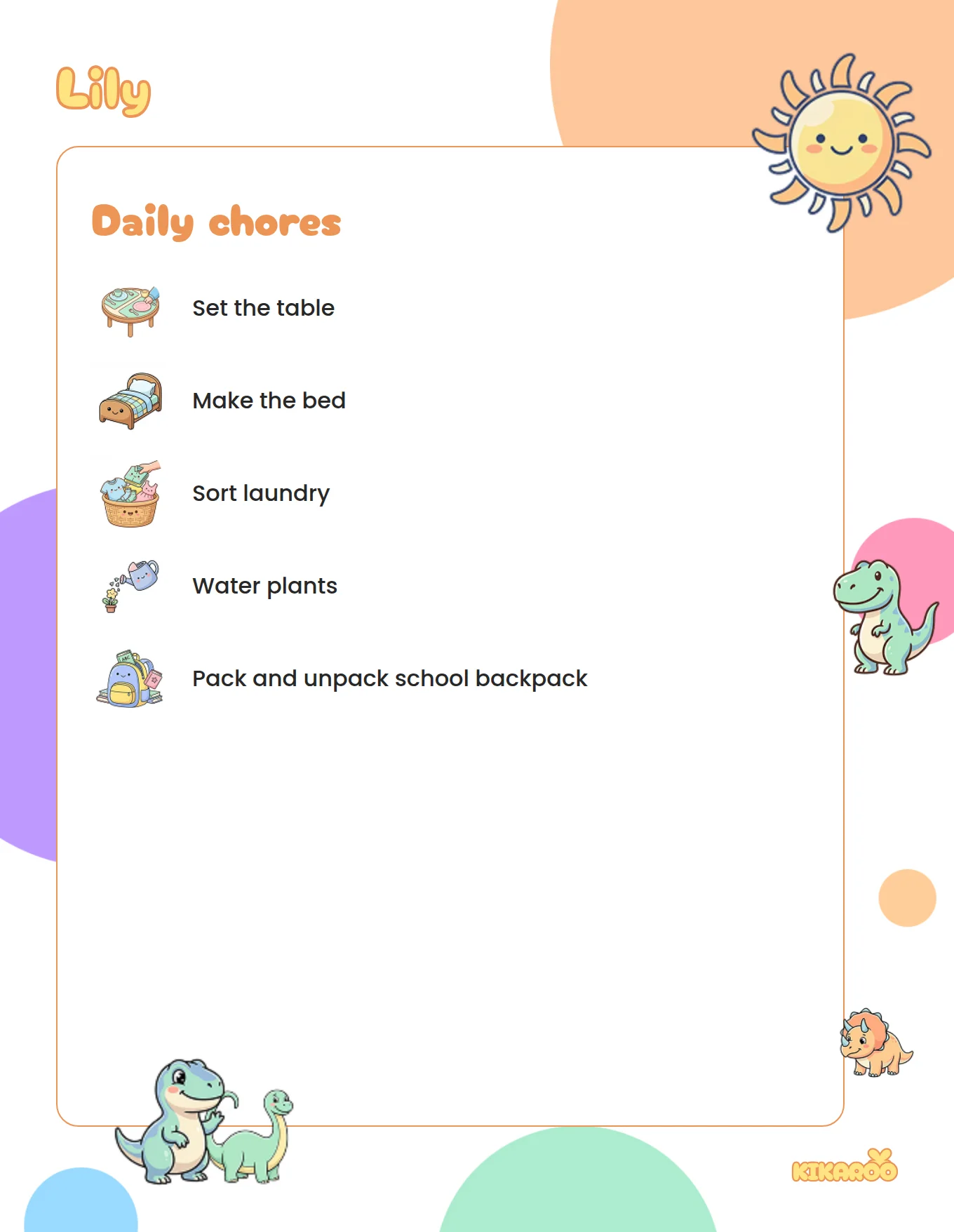
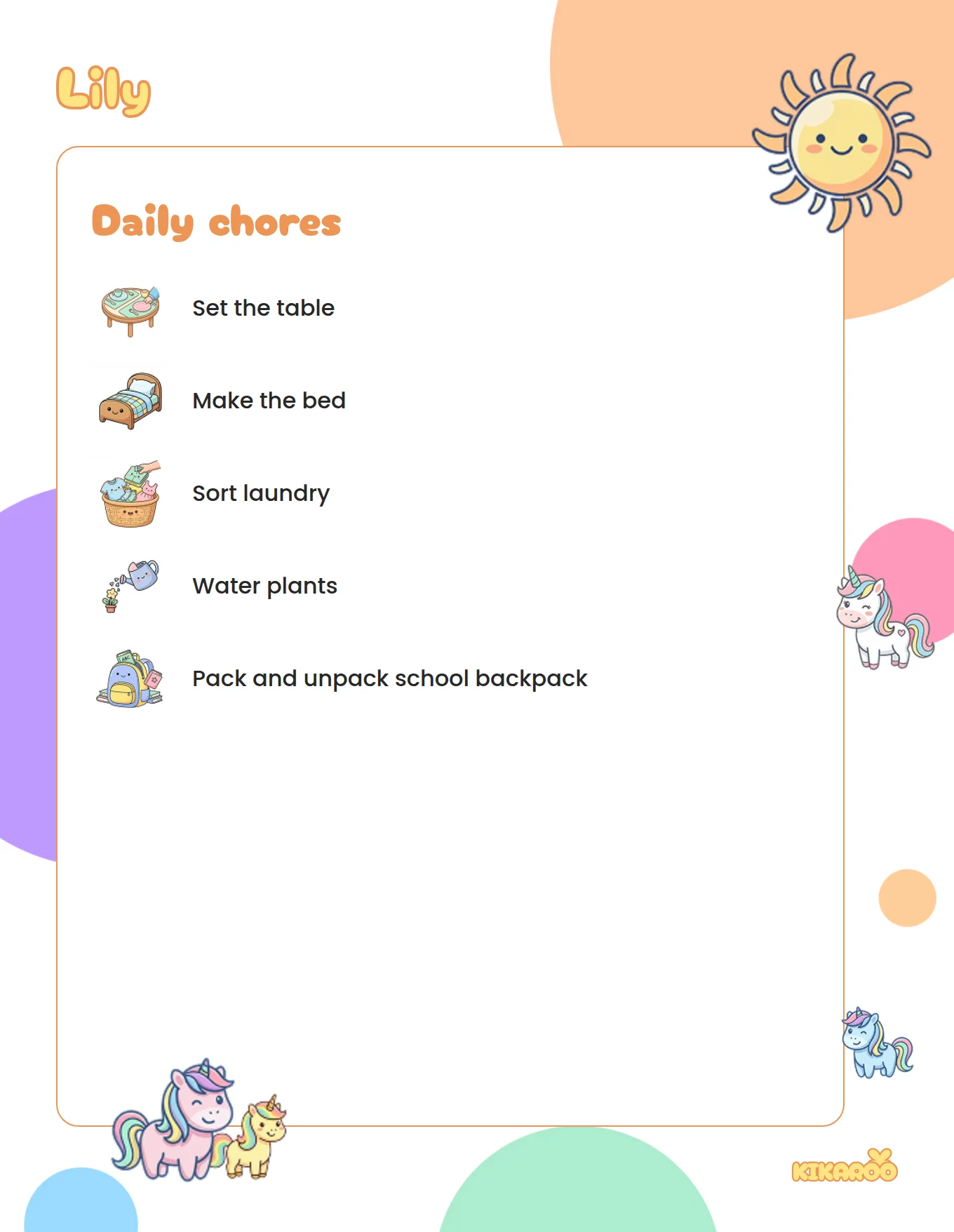
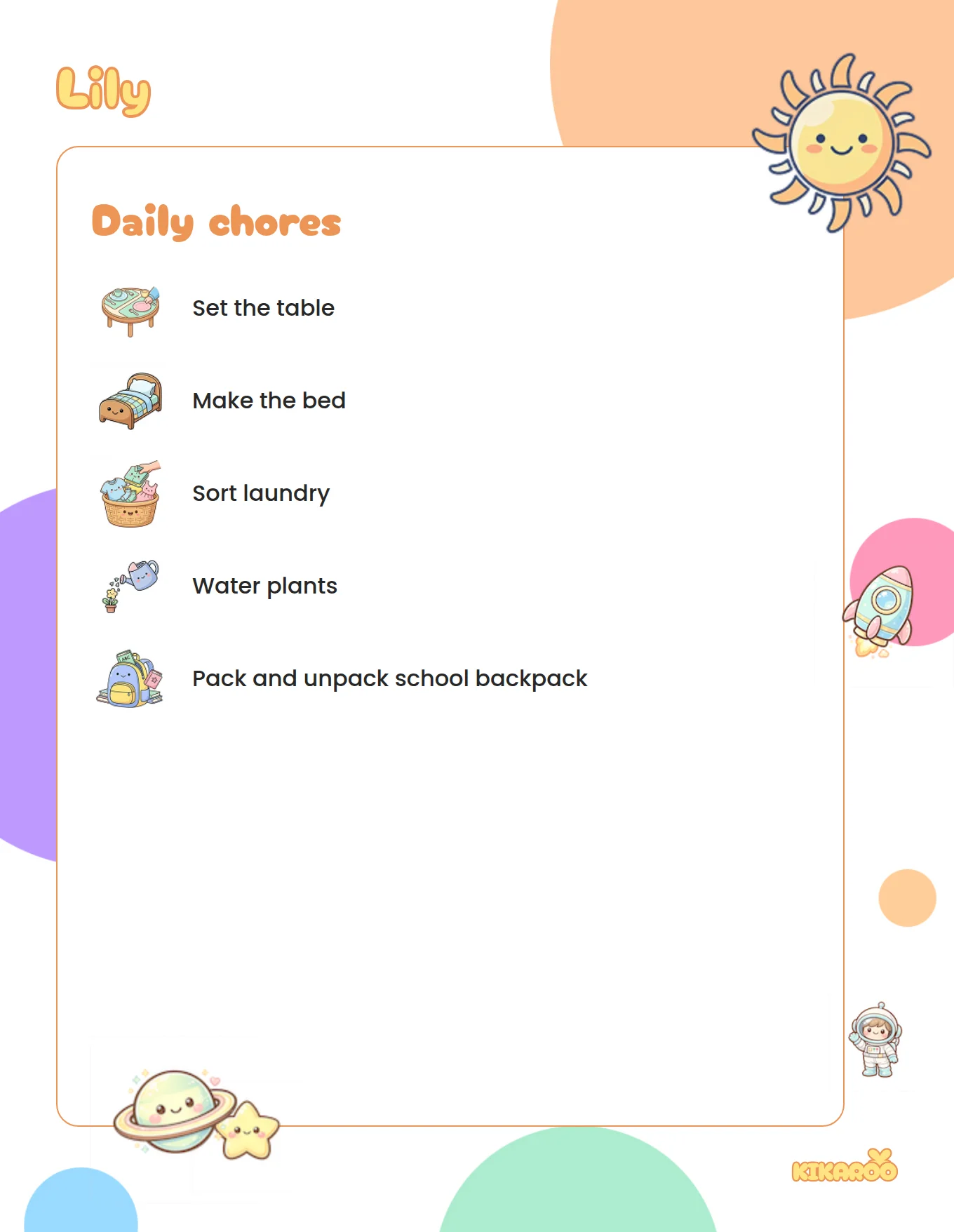
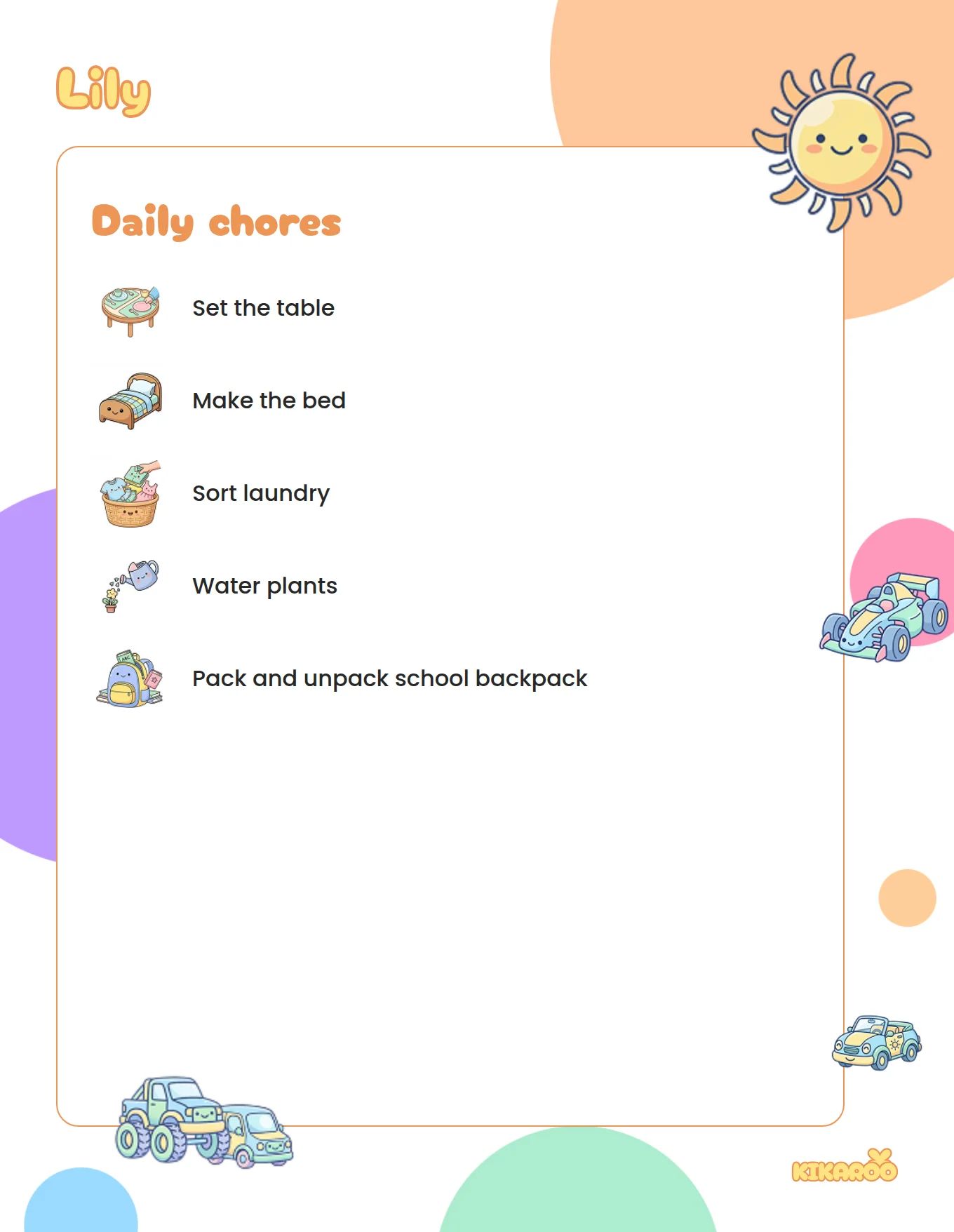
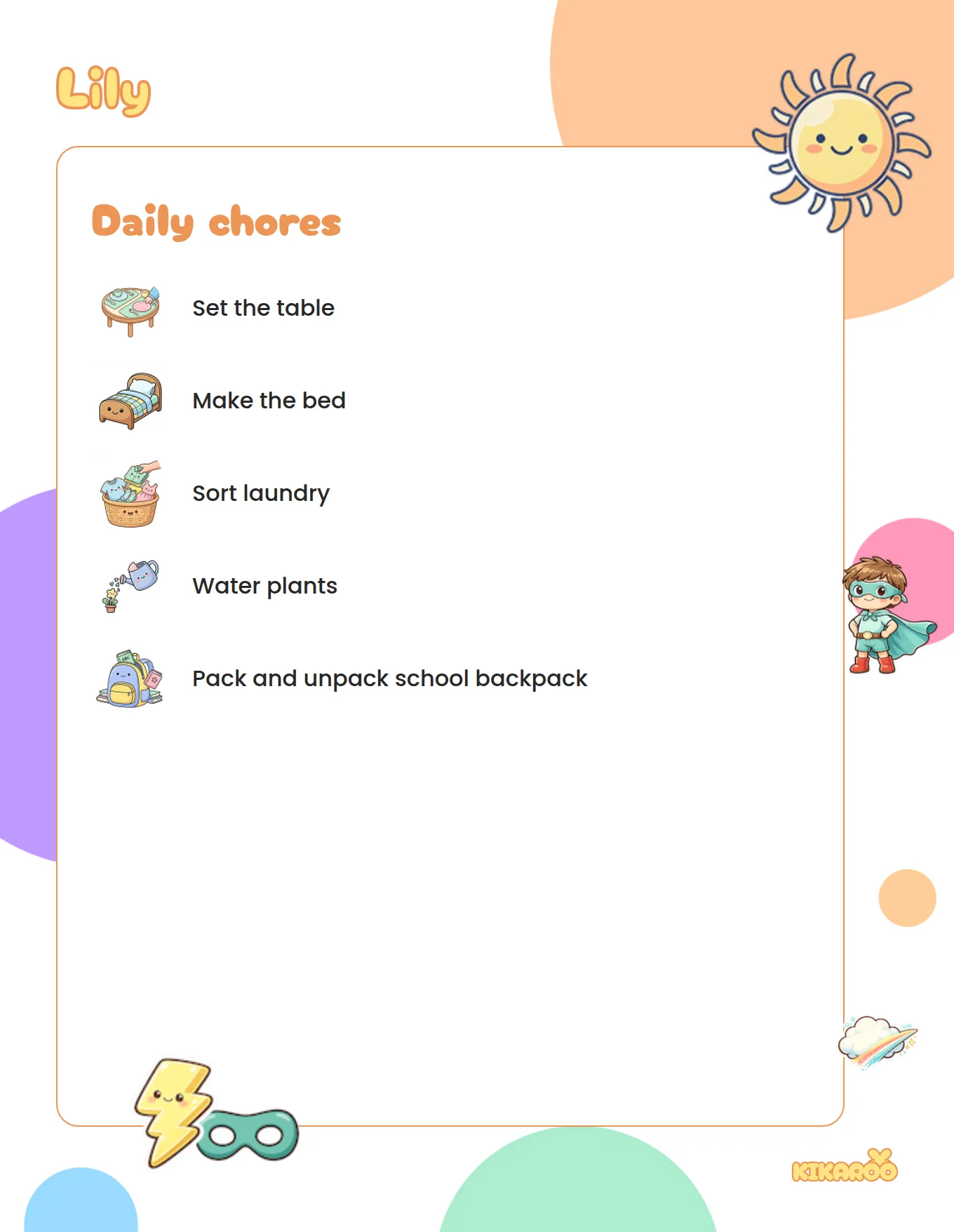
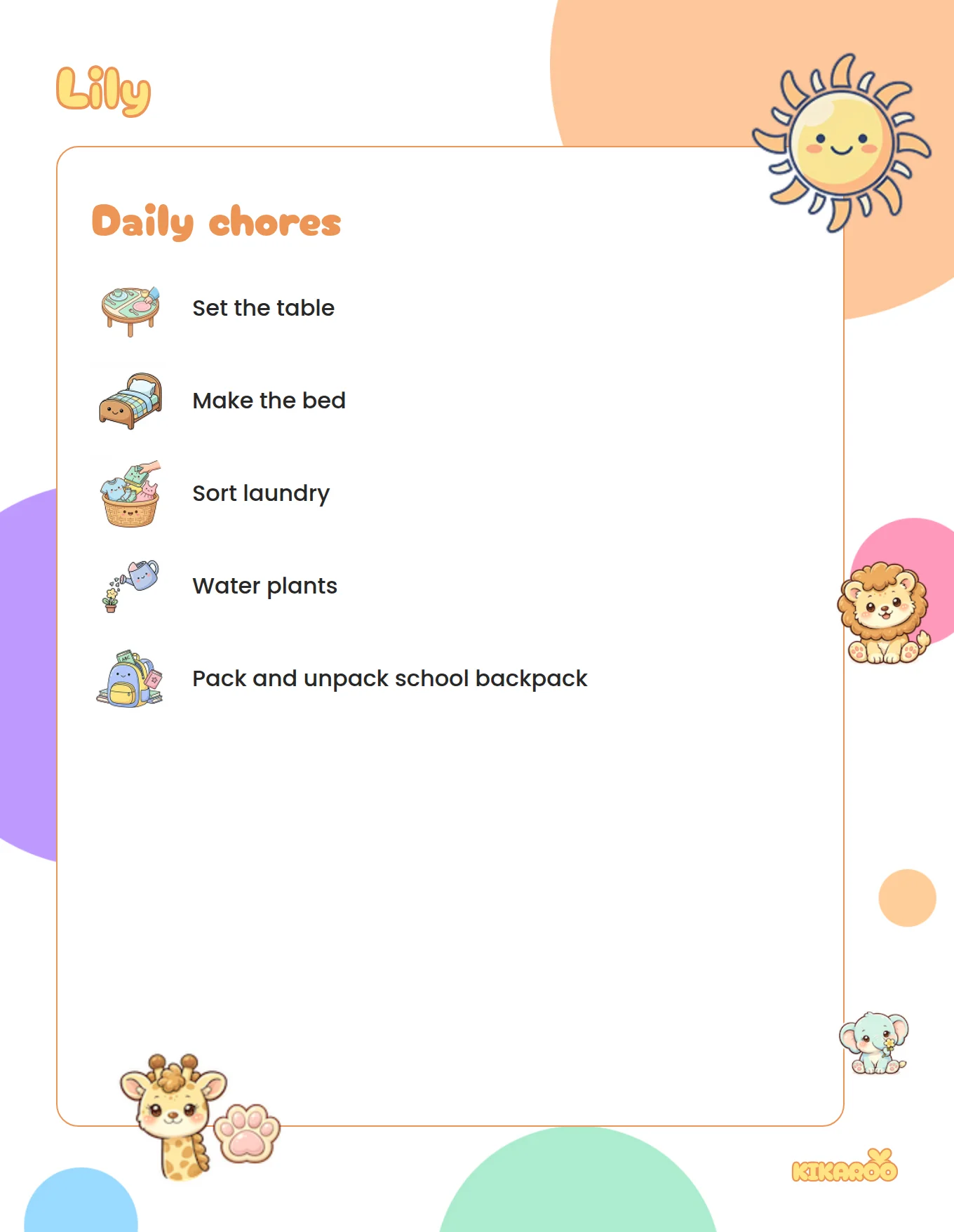
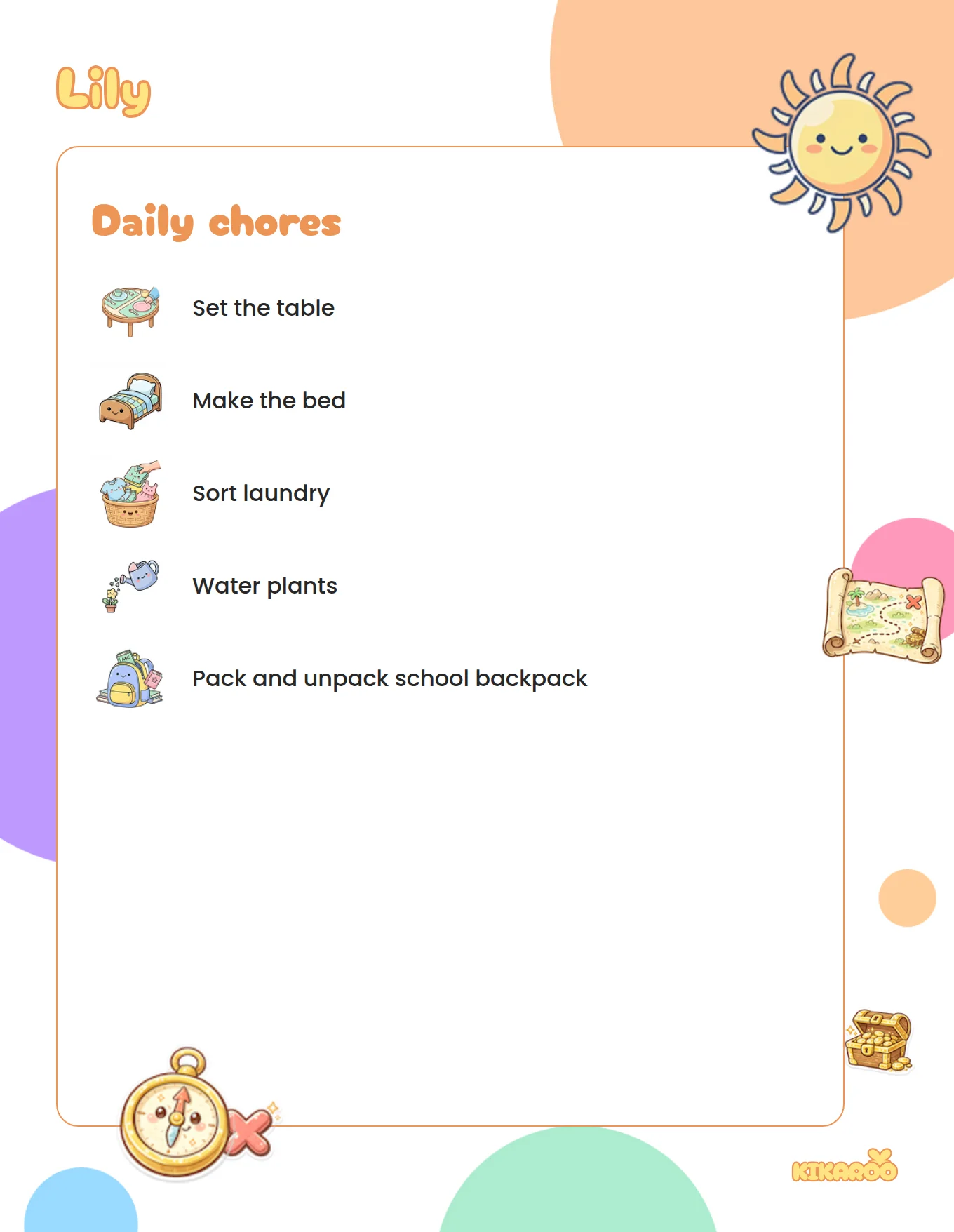
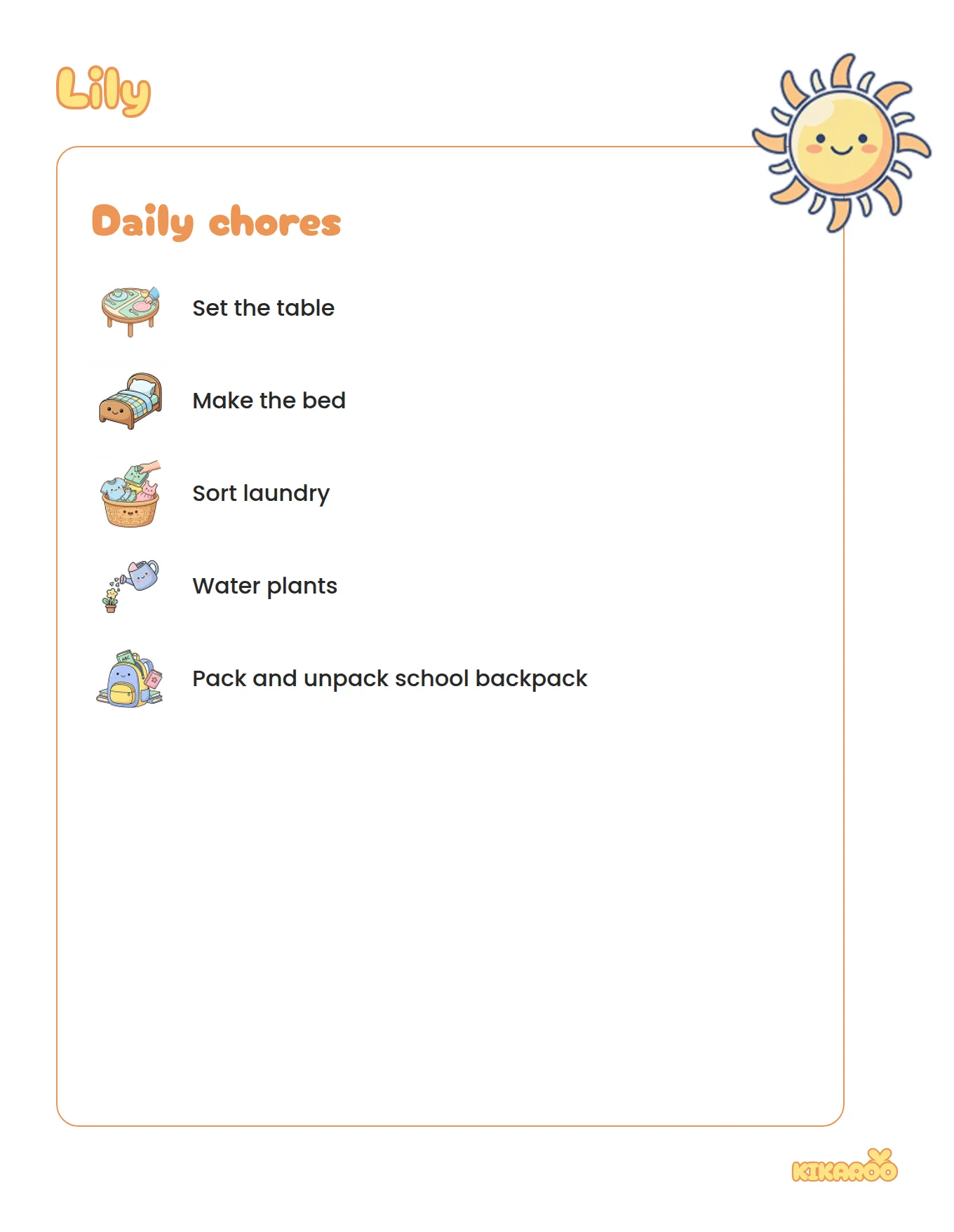
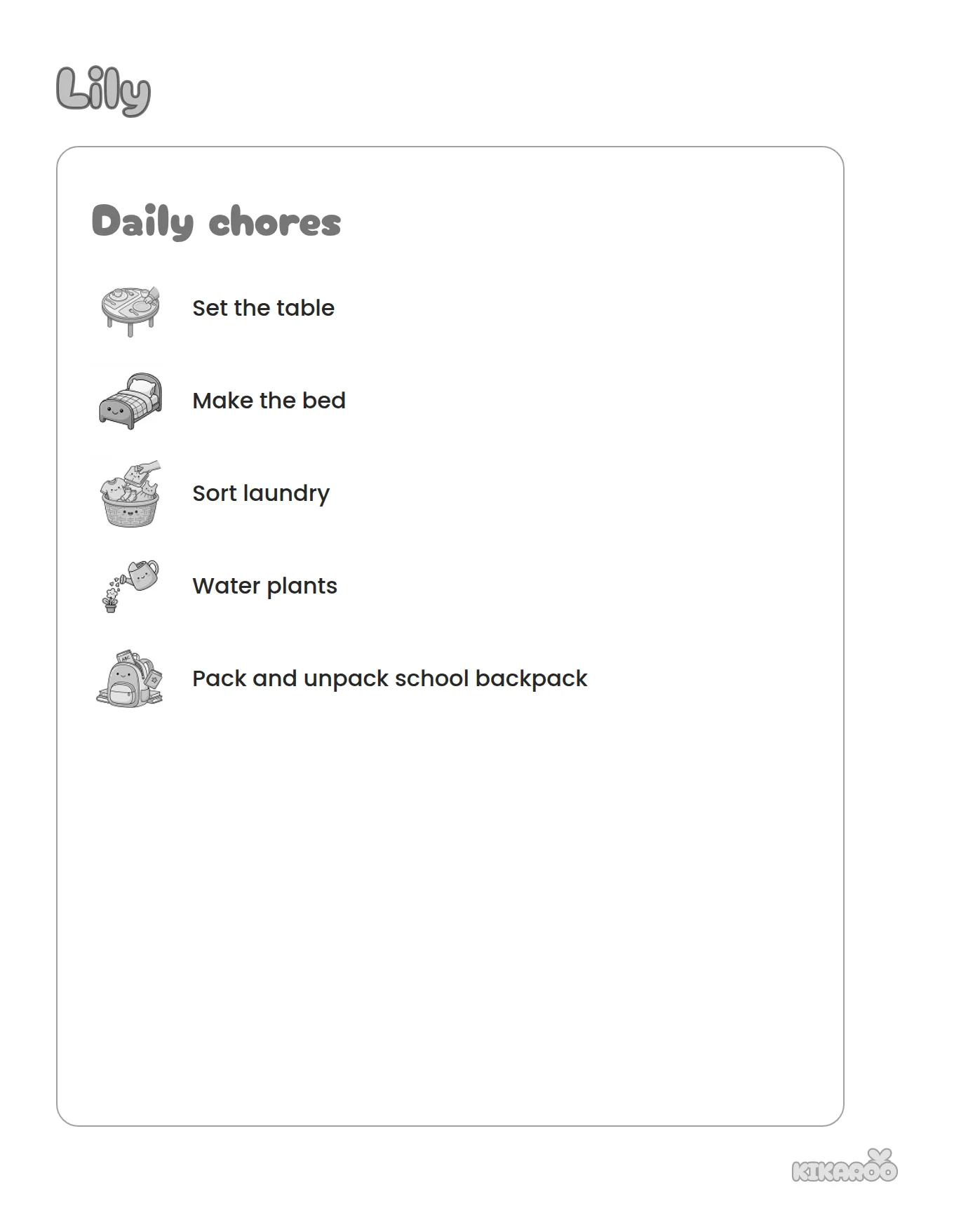
What belongs on a daily chore chart?
Daily charts are for habits: small tasks where the repetition is the whole point. Common picks:
- Make the bed
- Feed and water the pet
- Put dirty clothes in the hamper
- Homework before screens
- Tidy up toys before dinner
- Pack the school bag for tomorrow
- Brush teeth before bed
Daily or weekly: pick the right chart
Use a daily chart when the same short routine repeats every day; it fits up to ten small tasks. Use a weekly chart when chores land on specific days and you want the week visible in columns; it suits the bigger jobs. Many families run both: a daily chart for the morning-and-evening routine, a weekly chart for the real chores. Print both; fridges are big.
The habit math
Daily charts win through boring repetition. Keep the list short enough to finish on the worst day, not the best one, and anchor it to fixed moments: bed gets made before breakfast, bag gets packed after homework. Tick at the same time each evening and let the unbroken streak do the motivating. When a task has been automatic for a month, it can leave the chart and make room for a new one.
More free printable charts: the chore chart generator, chore chart for a 10-year-old, chore chart for a 12-year-old, chore chart for a 5-year-old, chore charts by age.
 Make the bed
 Pick up toys
 Organize books and school supplies
 Put clothes away
 Pack and unpack school backpack
 Dust low surfaces
 Water plants
 Take out trash
 Feed the pet
 Clear the table after meals
 Get ready for school
 Get dressed
 Put on your shoes and jacket
 Put on your pajamas
 Go to sleep
 Clean your shoes
 Wipe kitchen table
 Clean the sink
 Organize shoes
 Clean the mirror
 Collect dirty laundry
 Sort laundry
 Unload dishwasher
 Load dishwasher
 Vacuum the room
 Mop the floor
 Use the bathroom
 Brush your teeth
 Brush your hair
 Wash your face
 Take a shower
 Set the table
 Collect dishes
 Prepare a simple breakfast
 Wash fruits and vegetables
 Put groceries away
 Put away clean dishes
 Make a snack
 Help in the kitchen
 Drink water
 Pick up trash outside
 Water flowers
 Sweep the entrance
 Put away the bicycle
 Clean shoes
 Put away outdoor toys
 Make a daily plan
 Check homework
 Organize desk
 Pack bag for tomorrow
 Take care of a pet
 Turn off lights
 Vacuum the whole apartment
 Dust the whole room
 Prepare a simple meal
 Take out the trash
 Wash dishes by hand
 Clean the bathroom
 Cook with supervision
 Wash the car
 Babysit a younger sibling
 Plan weekly chores