

 Home
Home Features
 Testimonials
 Downloads
 FAQ
FAQ Blog
Blog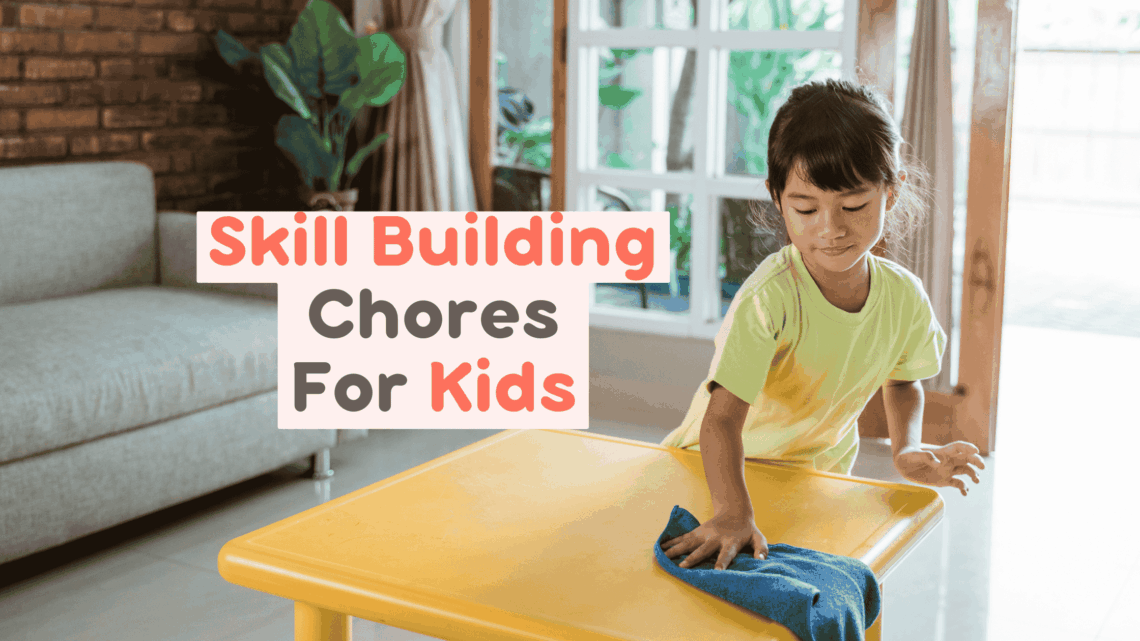
Skill building chores help children grow in ways that go far beyond cleaning. The right chores can strengthen motor skills, support emotional development, improve problem solving and build independence.
When children practice chores regularly, they learn how to follow steps, manage time, work with their hands and take responsibility for meaningful work. These chores also help children feel capable and confident as they master real life skills at their own pace.
Skill building chores work best when they match a child’s age, abilities and developing strengths. Some chores support fine motor skills, others build gross motor skills, and many support cognitive skills such as planning, sorting and sequencing. Many parents use charts or digital tools such as Kikaroo chore app to help children follow their routine and celebrate their progress.
Below are some of the best skill building chores for kids, along with explanations of which skills each chore develops and how they help children grow in everyday life.
Folding Laundry
Folding laundry strengthens fine motor skills and hand eye coordination.
When kids fold shirts, match socks or stack towels, they practice precise finger movements and careful control. This chore also teaches sequencing as children learn the steps of folding and placing clothing in the right place. For younger children, even folding washcloths builds confidence and helps prepare them for writing, cutting and other detailed school activities.
Sorting Toys or Household Items
Sorting builds early math and cognitive skills.
When children group toys by size, color or type, they practice classification, comparison and logical thinking. Sorting also helps children develop attention to detail and patience. As they organize items into clear categories, kids learn to break larger chores into smaller steps, a valuable skill in both school and daily life.
Sweeping and Light Vacuuming
Sweeping supports gross motor development because children use larger muscles in their arms, shoulders and core.
It also helps kids learn how to move their bodies with purpose. Light vacuuming teaches children how to guide a tool while paying attention to their surroundings. Both chores build endurance, balance and coordination. Kids also see immediate results, which increases motivation.
Watering Plants
Watering plants teaches children responsibility and care for living things.
This chore supports emotional development because kids learn patience and empathy as they help something grow. Carrying a small watering can also builds strength and motor planning. Children see the impact of their effort over time, which helps them connect actions with results.
Setting the Table
Setting the table builds sequencing skills, memory and spatial awareness.
Children learn the correct order of placing napkins, utensils and cups and understand where each item belongs. This chore also supports social development by teaching kids that they play an important role in family routines. Setting the table helps children learn left and right orientation, pattern recognition and visual organization.
Making Their Bed
Making the bed teaches children how to follow a series of steps with focus and consistency.
Pulling blankets, straightening pillows and smoothing sheets all strengthen bilateral coordination because kids use both hands together. This chore also teaches routine, self discipline and pride in their space. Children gain confidence from completing something that visibly improves their environment.
Helping Prepare Simple Food
Food preparation supports fine motor skills, sensory exploration and confidence in the kitchen.
Kids can rinse produce, peel small fruits, stir mixtures or spread toppings. These movements develop hand strength and precise finger control. Food preparation also builds math skills through measuring and counting. It introduces safety awareness and helps children become more independent with mealtimes.
Organizing School Supplies
Organizing pencils, papers, books and folders strengthens planning and problem solving skills.
This chore teaches children how to group items, create order and prepare for the next day. It also supports executive functioning skills such as memory, focus and sequencing. Kids who practice organizing become more responsible with homework and school routines.
Dusting and Surface Cleaning
Dusting encourages body awareness and attention to detail.
Kids learn to move around furniture, reach different levels and use their hands with control. Dusting also helps kids notice patterns, such as where dust gathers most often. This chore is especially good for children who need practice staying focused on small areas while completing a full chore from start to finish.
Helping With Recycling
Sorting recycling strengthens critical thinking, classification and environmental awareness.
Children learn how to tell the difference between plastic, paper, cardboard and cans. This chore supports early science skills and helps kids understand how human actions affect the world. It also builds responsibility as they see how small efforts contribute to a cleaner home and community.
Caring for Pets
Feeding pets, brushing fur and helping clean small areas teach empathy, consistency and routine.
Caring for pets supports emotional growth because children practice nurturing and kindness. This chore also builds time management skills when kids remember feeding times or daily care routines. It teaches children that living things depend on them and that responsibility must be steady.
Organizing the Bookshelf or Game Shelf
Organizing shelves develops visual discrimination, planning and problem solving.
Kids decide how to arrange books, whether by size, topic or color. They learn how to place items neatly and how to manage a space with purpose. This chore improves executive functioning skills such as categorizing, sequencing and spatial arrangement. It also encourages creativity as kids think about how to make their space look appealing.
Conclusion
Skill building chores help children grow in independence, confidence and practical ability. When kids practice chores like folding laundry, preparing food, caring for pets or organizing their belongings, they learn life skills that support both home routines and school readiness.
These chores strengthen motor skills, cognitive skills and emotional development in a natural way. With steady guidance and helpful tools such as Kikaroo chore app to track progress and build routines, skill building chores become a powerful way to help children develop into capable and confident individuals.