

 Home
Home Features
 Testimonials
 Downloads
 FAQ
FAQ What is Kikaroo?
 Blog
Blog Chore charts
Free Printable Chore Chart for a 6-Year-Old
Six is a turning point for chores. Your child is in school, starting to read, and suddenly very aware of the difference between pretend jobs and real ones. A chart works at this age when the chores genuinely matter to the household and the schedule respects that school days are already full.
The generator below is already set for a 6-year-old. It pre-fills real jobs like making the bed and setting the table; every chore can carry a picture as backup for an early reader. Edit the list, assign days, and print the chart as a free PDF.
Two to four chores is the right load: a couple of five-minute tasks on school days, one bigger job on the weekend.
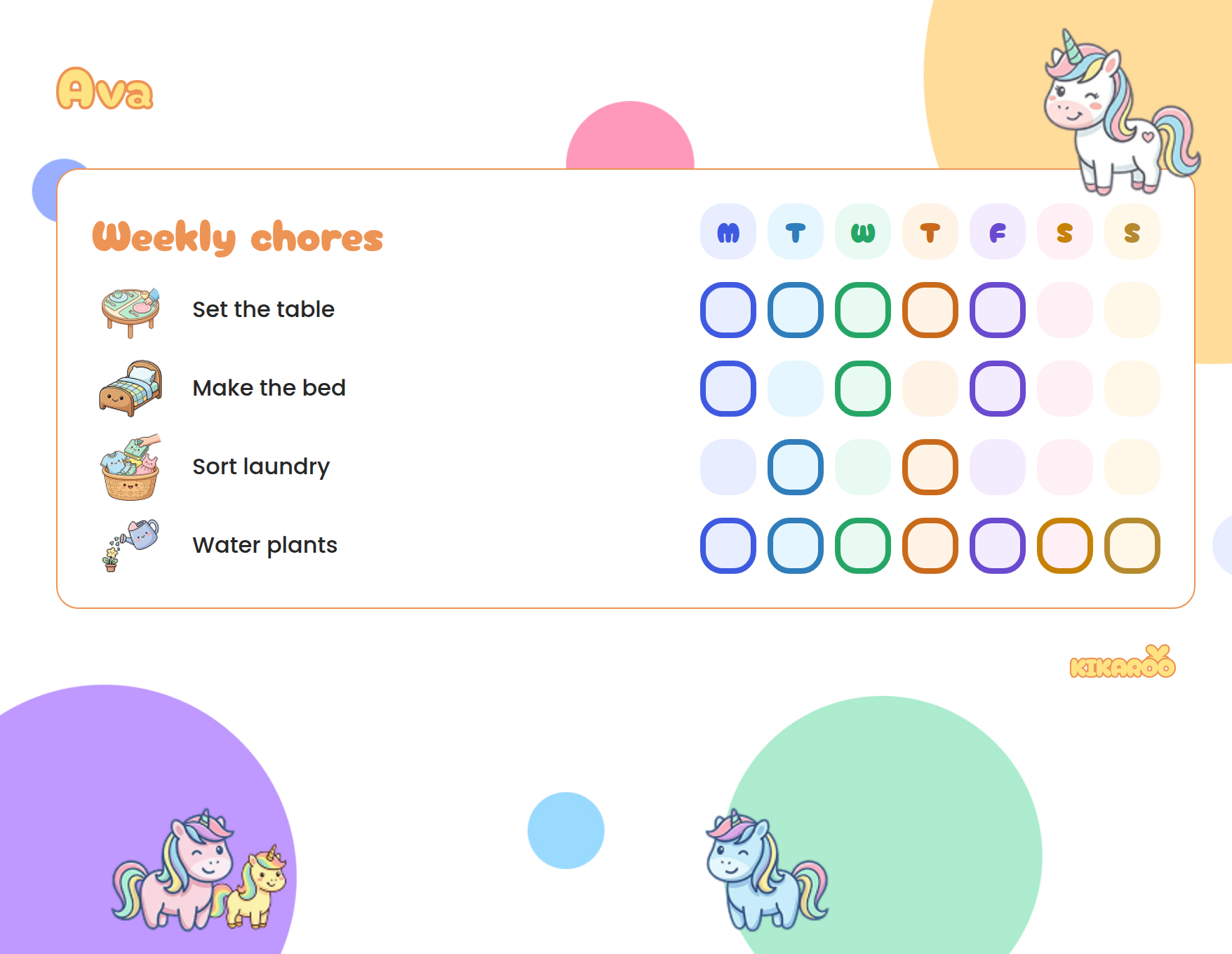
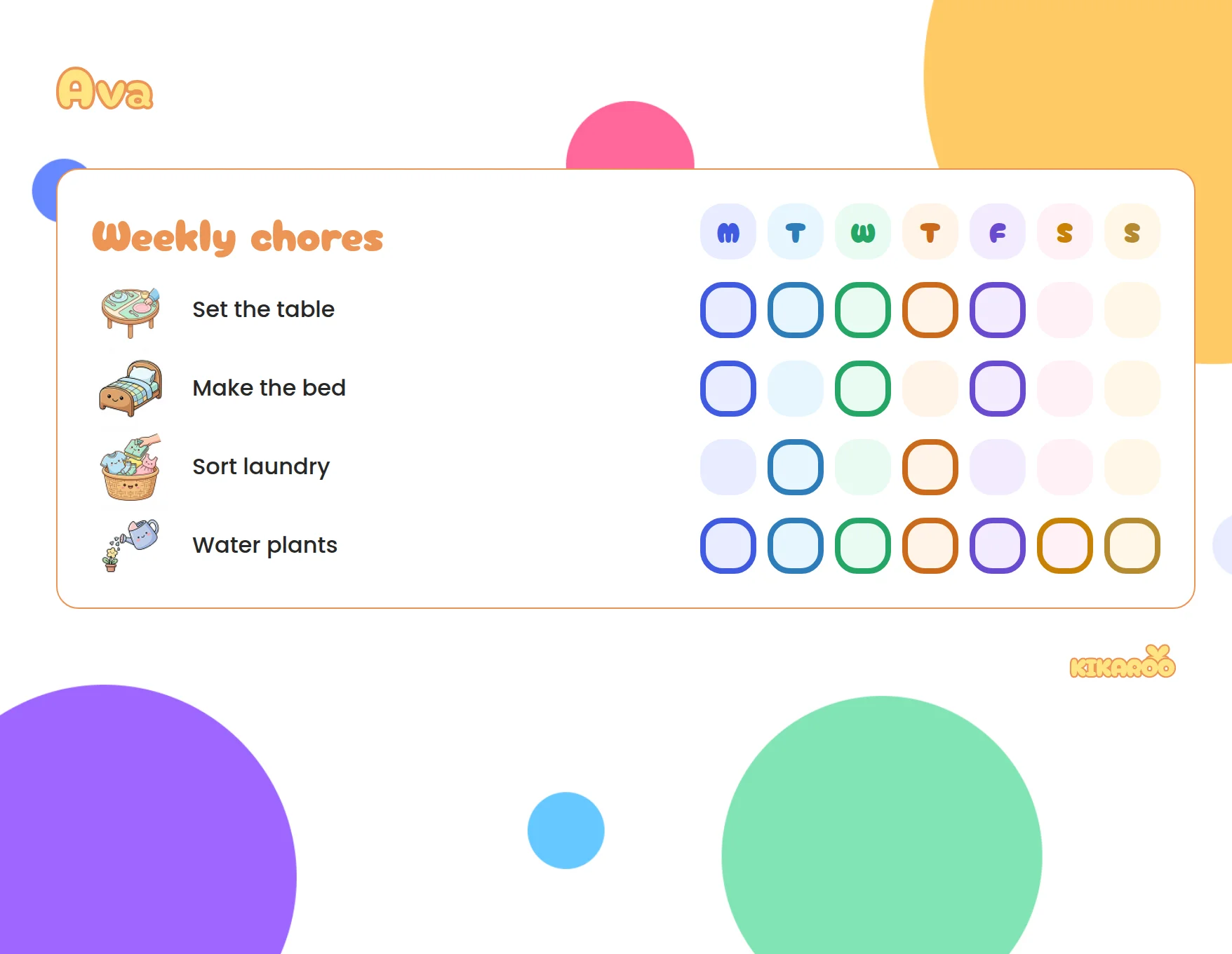
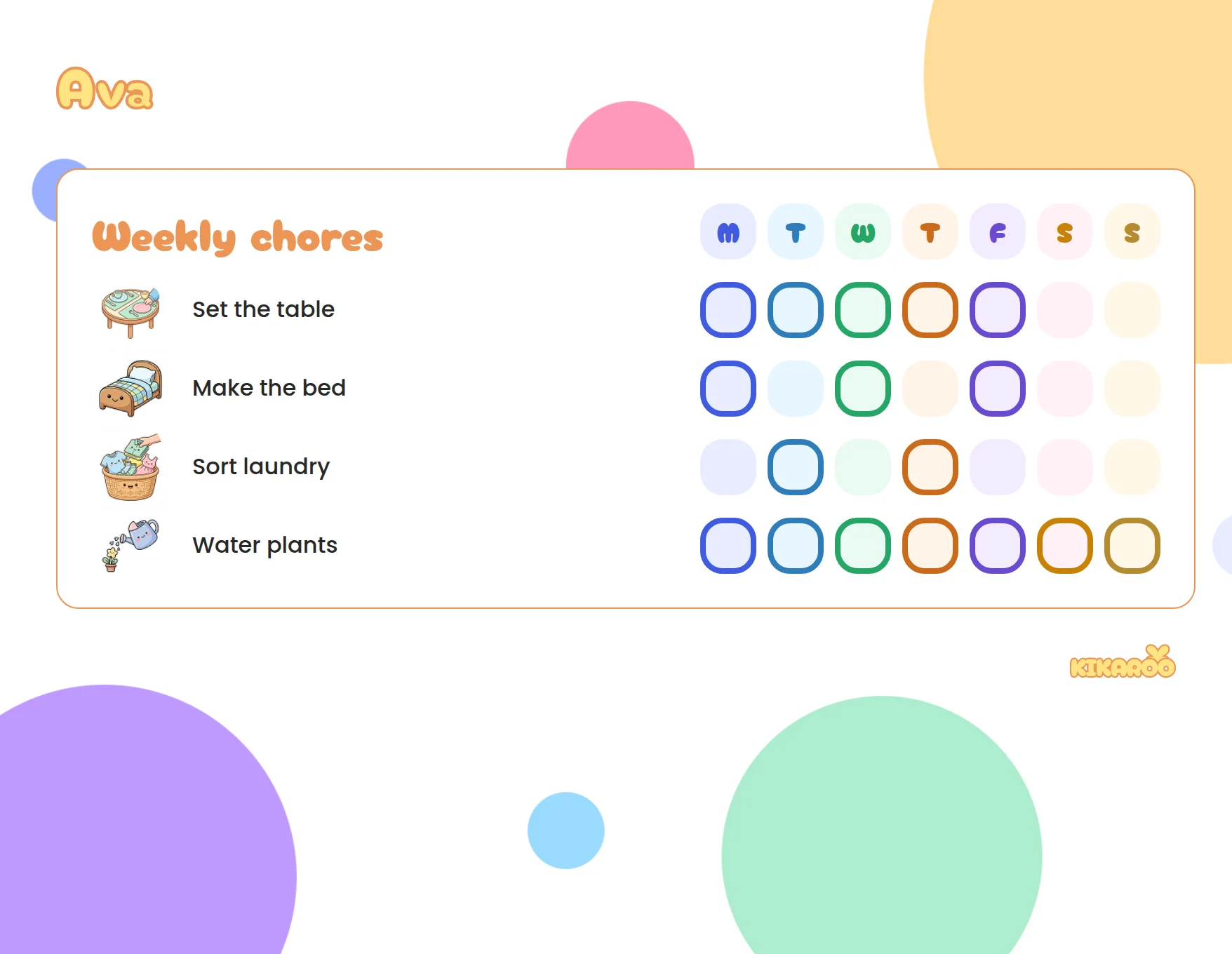
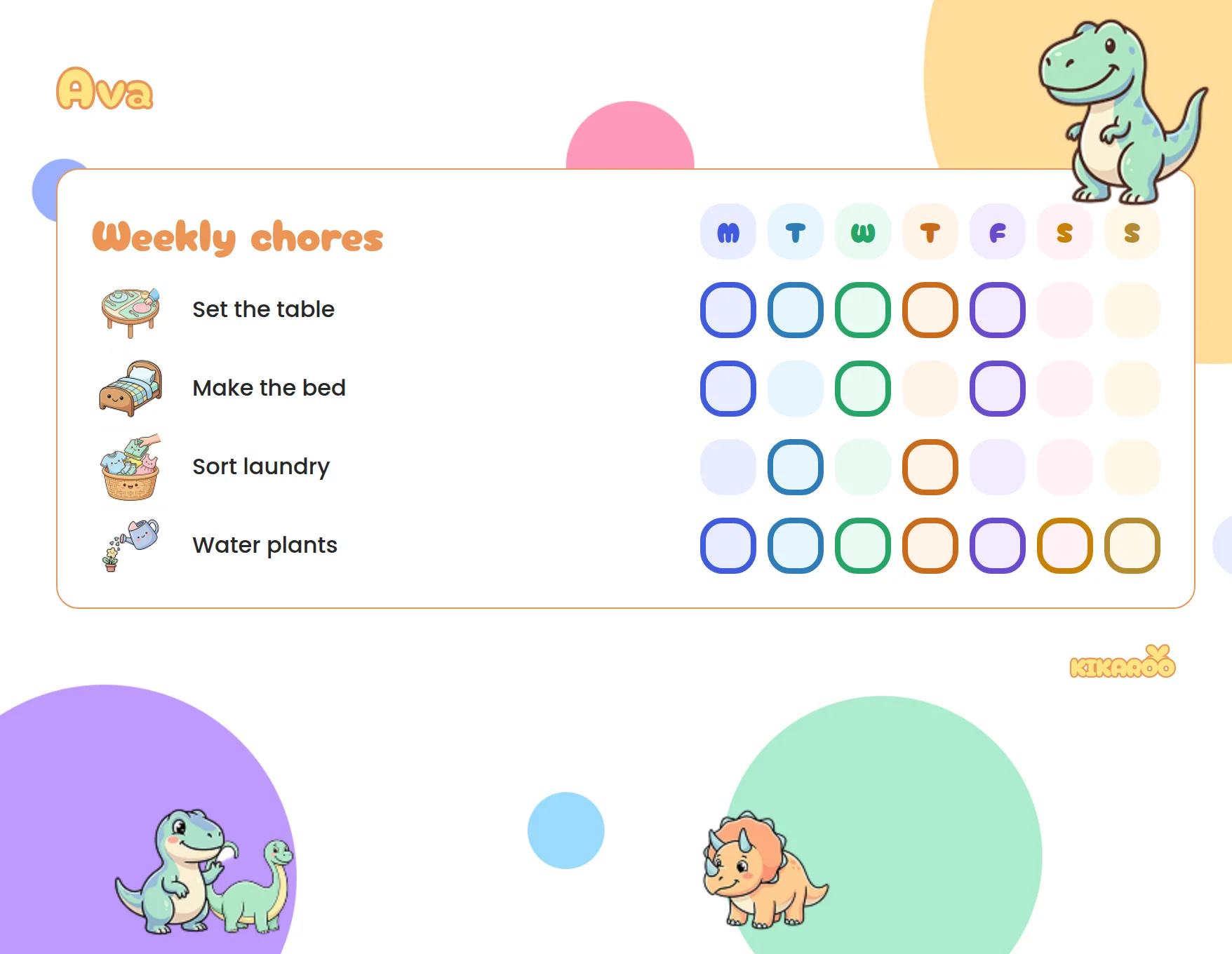
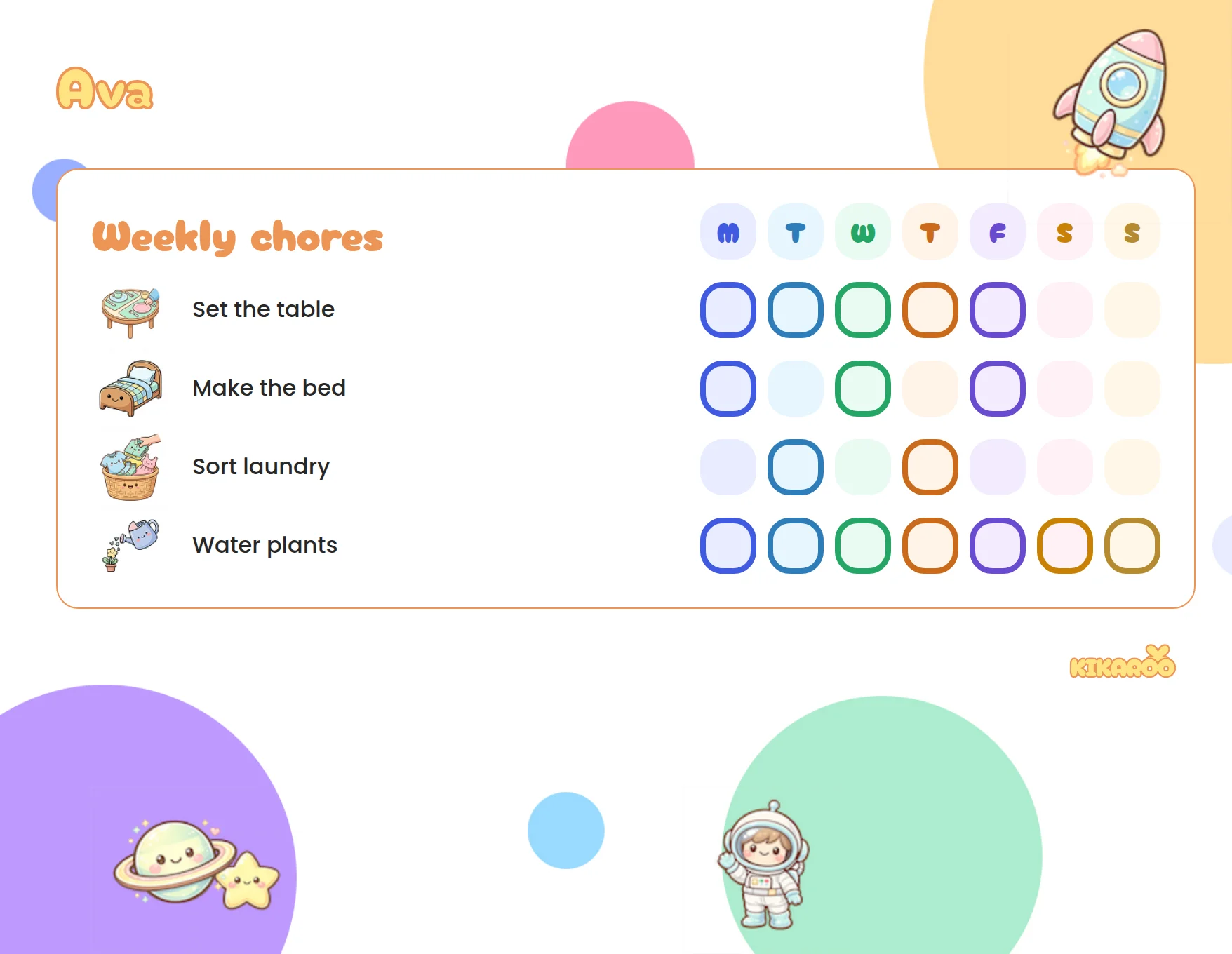
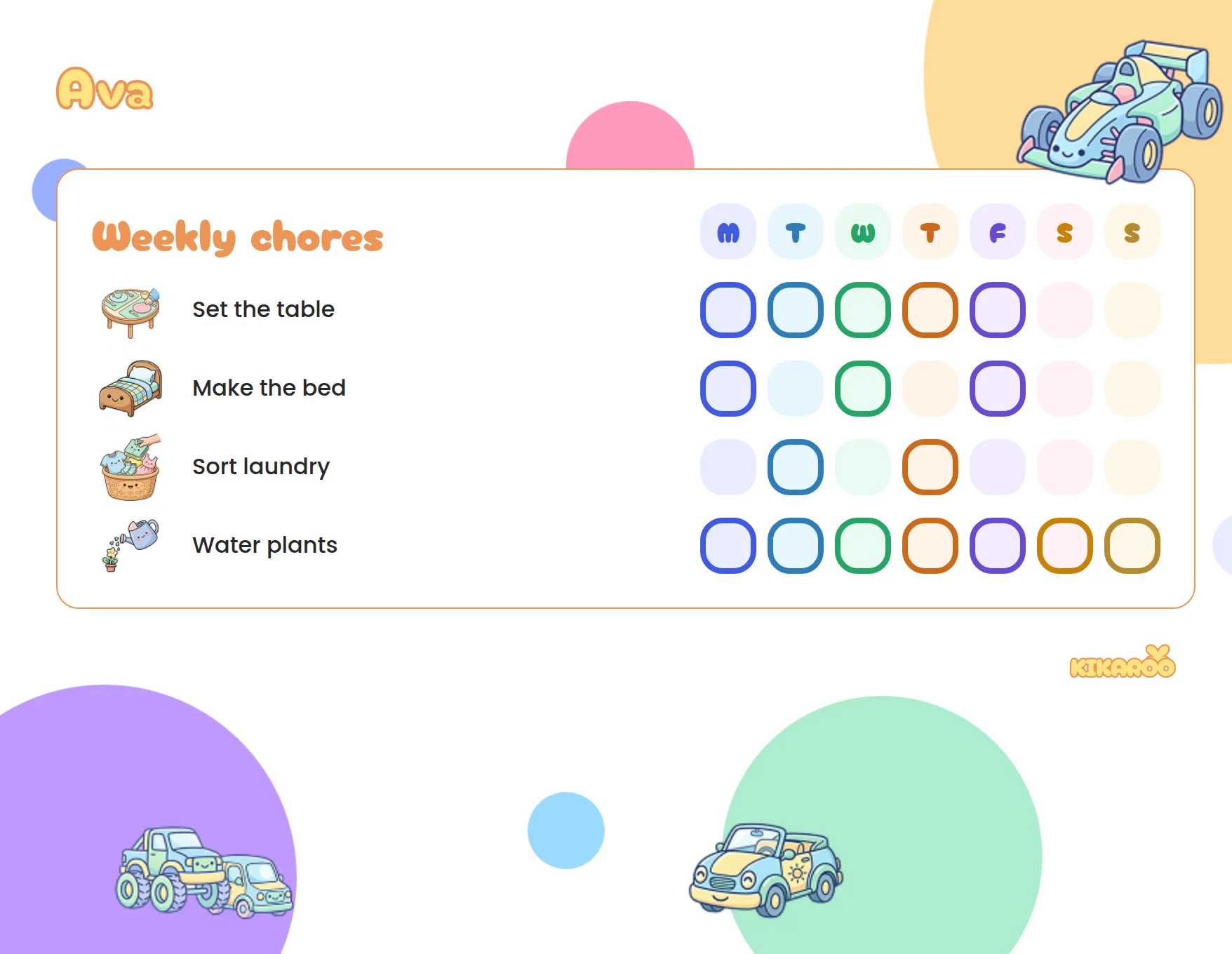
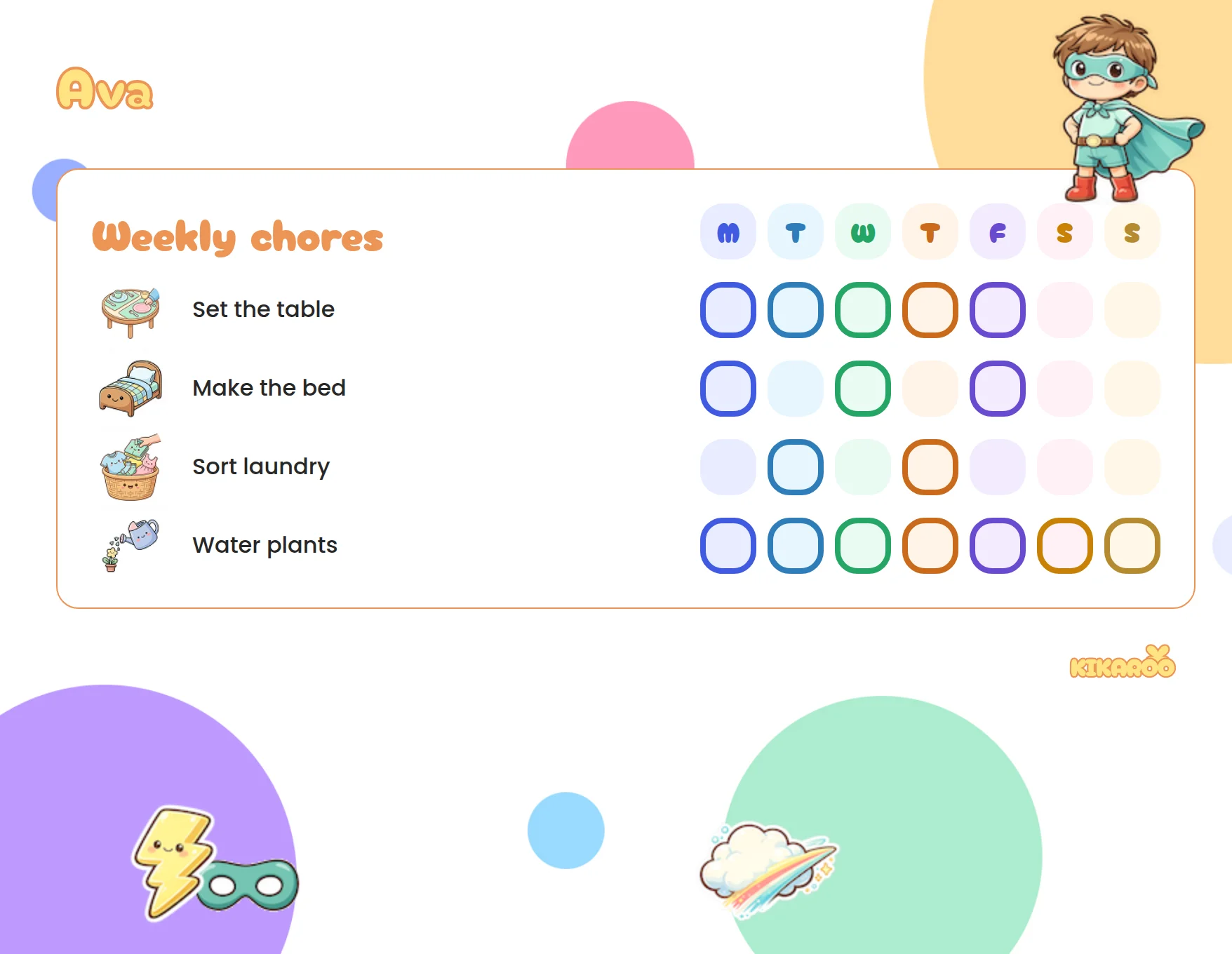
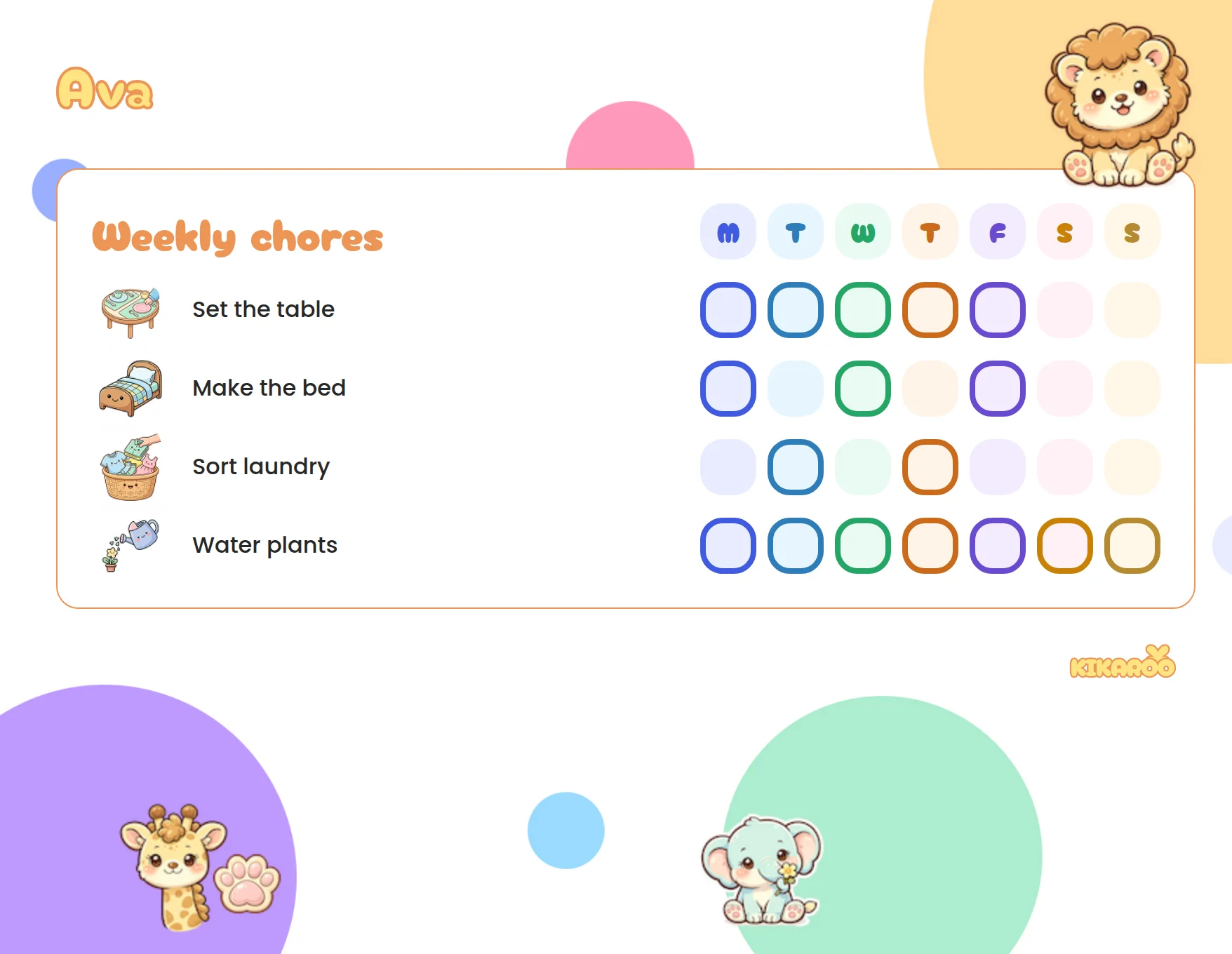
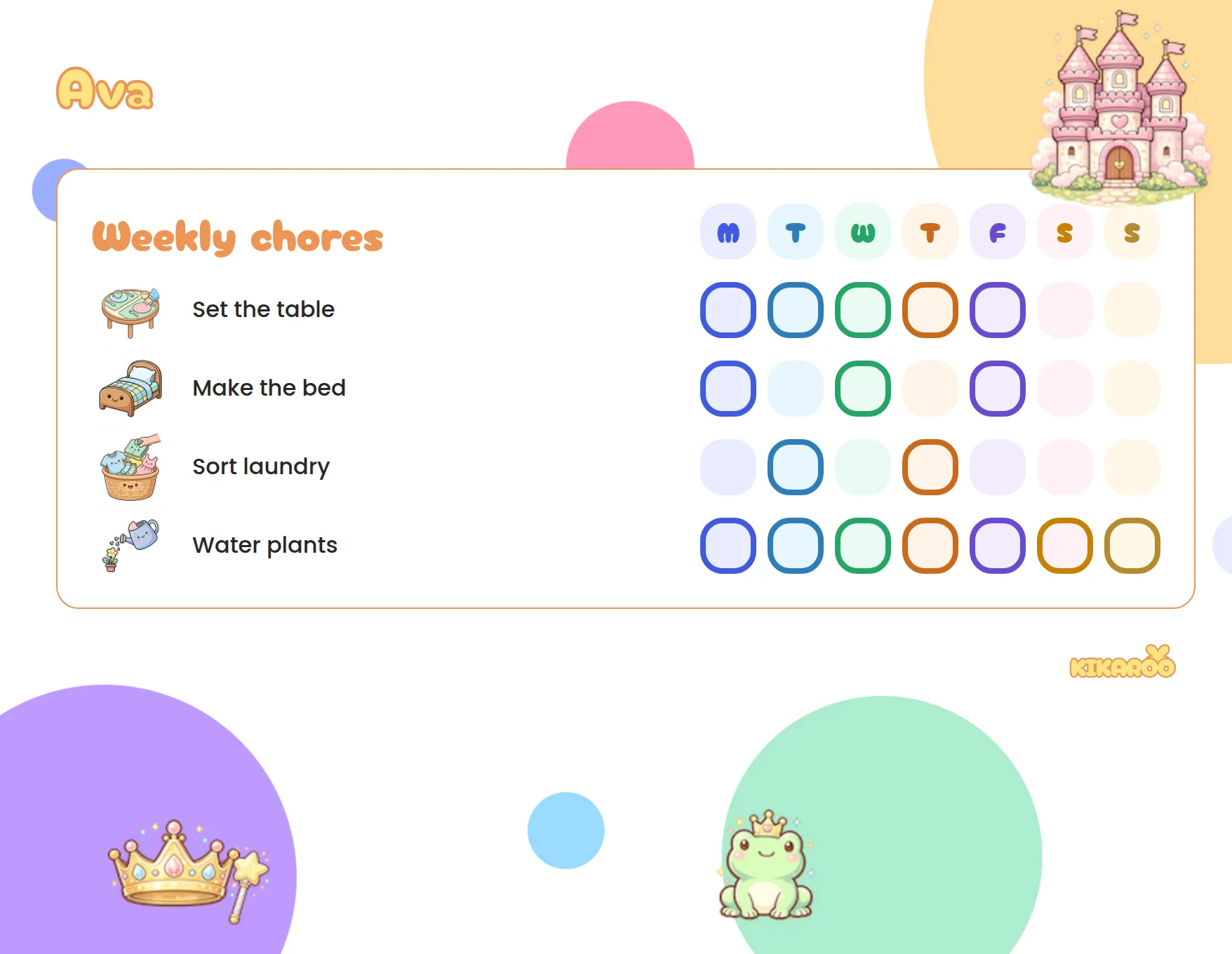
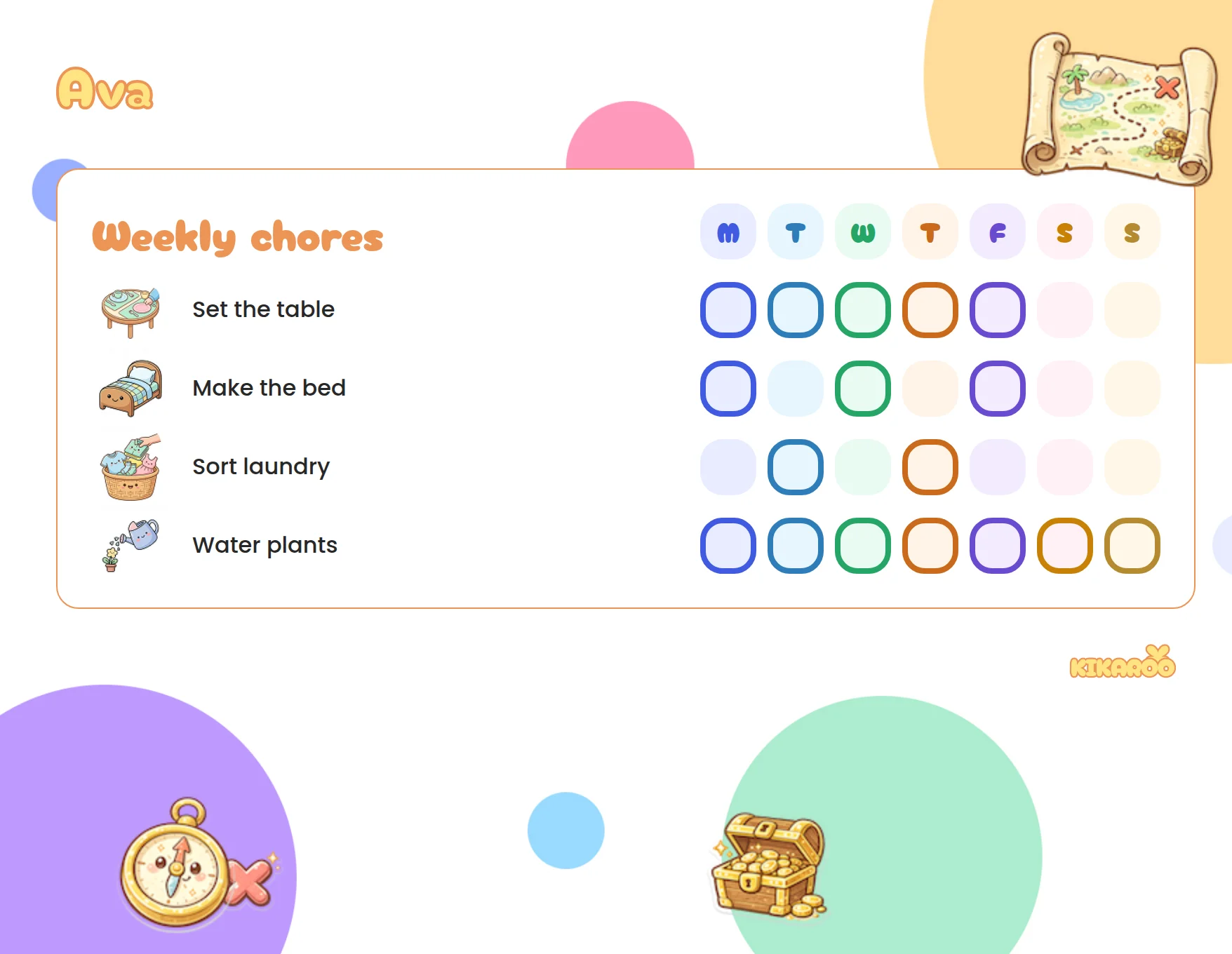
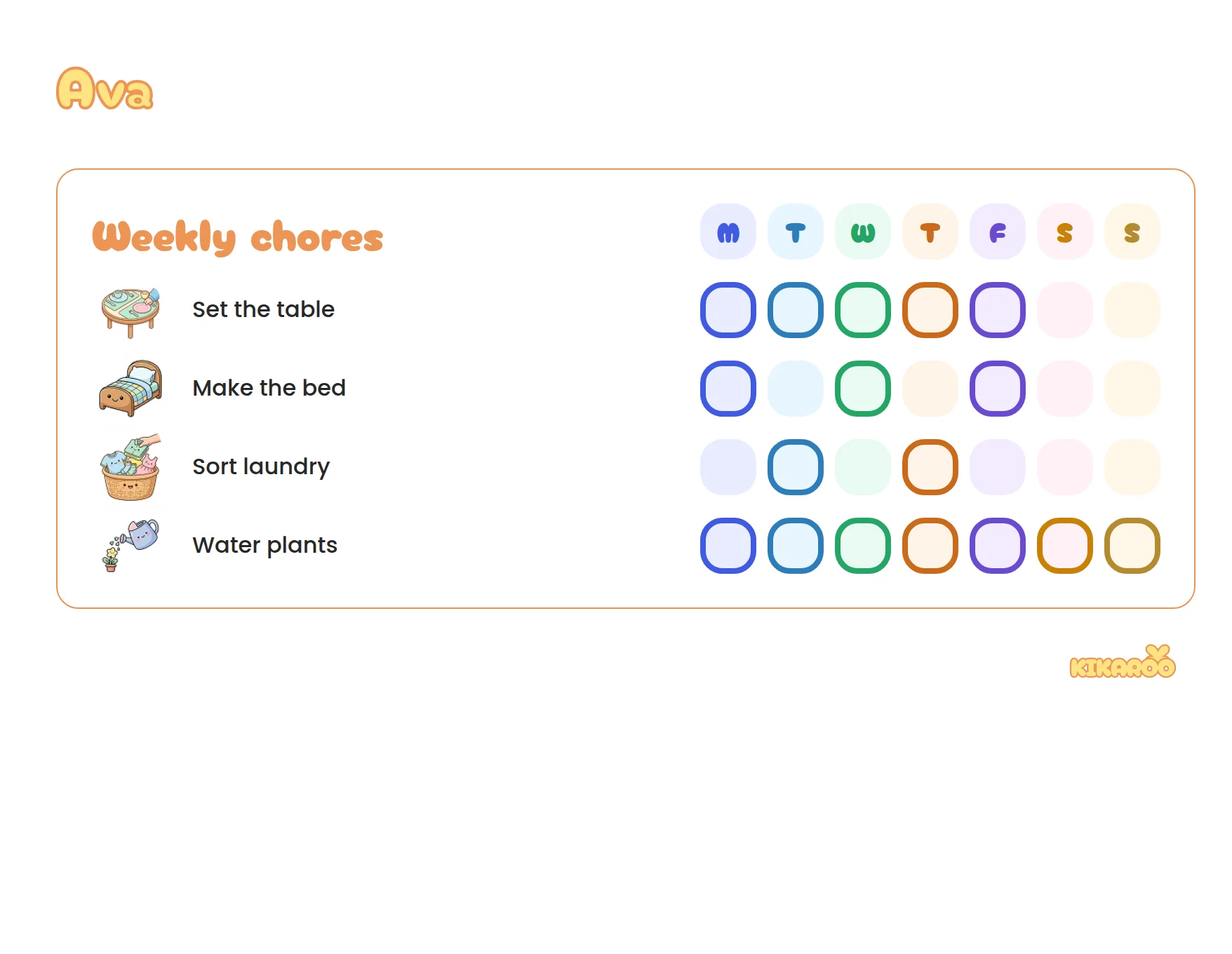
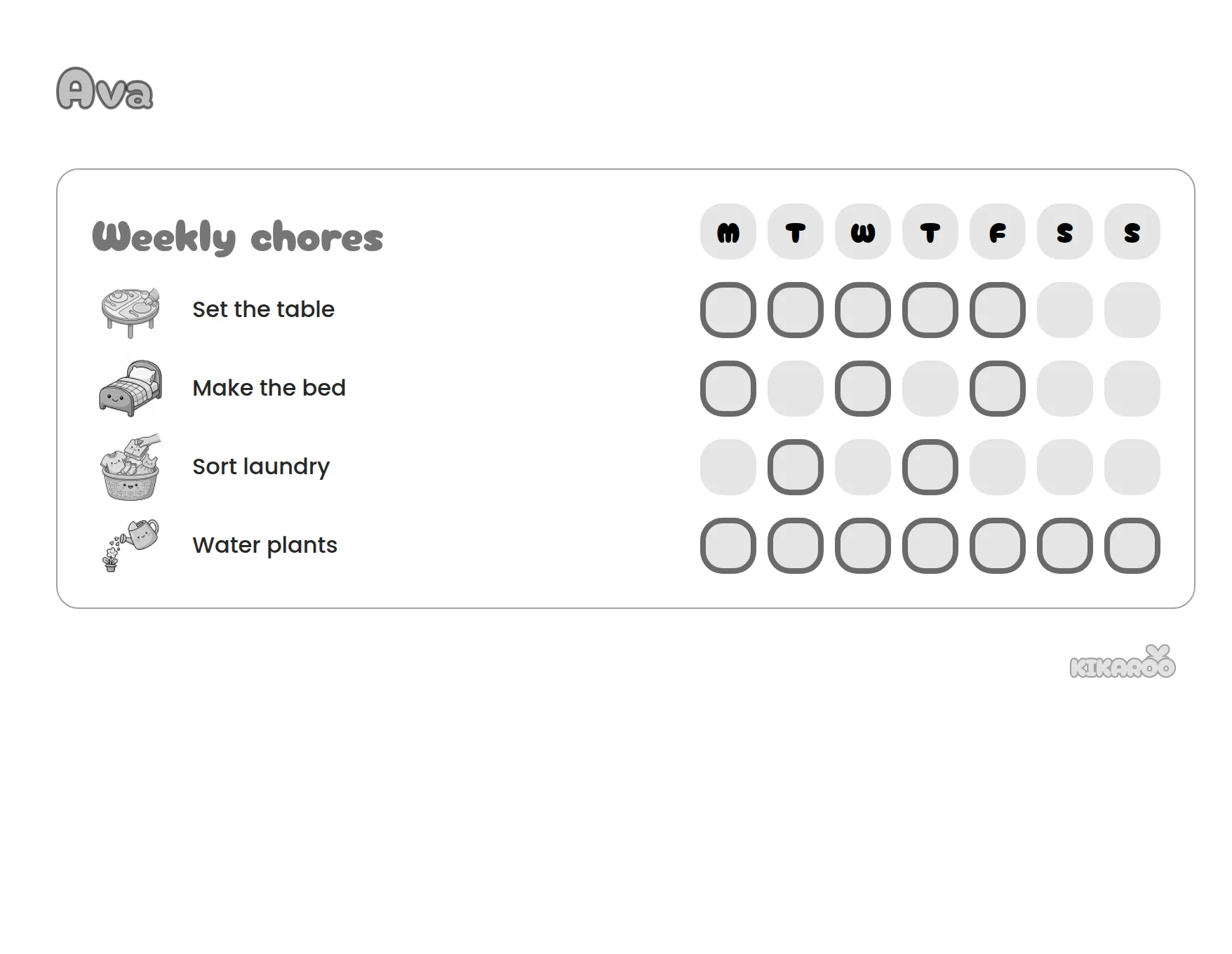
What chores can a 6-year-old do?
First-graders can handle chores with two or three steps, done start to finish. Jobs most 6-year-olds can own:
- Make their bed every morning
- Set the table
- Feed and water the pet
- Put their clean laundry away
- Pack the school bag using a checklist
- Tidy their room with a clear goal, like all toys in the bin
From picture play to real routine
At six the chart shifts from game to routine, and the trick is not losing the fun in the handover. Keep the pictures even as reading starts; they let your child check the chart at a glance. But talk about the chores differently: 'the table is your job now' lands very differently at six than 'can you help me set the table', and first-graders are proud of jobs that are officially theirs.
School days change the math
Six is usually the first year the afternoon is genuinely full: school, homework, activities, and a tired kid. Put the daily chores where they already fit, like making the bed before school and feeding the pet before dinner, and push anything bigger to the weekend columns. A chart that ignores the school schedule becomes a nightly fight by October.
More free printable charts: the chore chart generator, chore chart for a 5-year-old, chore charts by age, chore chart for teens, weekly chore chart.
 Make the bed
 Pick up toys
 Organize books and school supplies
 Put clothes away
 Pack and unpack school backpack
 Dust low surfaces
 Water plants
 Take out trash
 Feed the pet
 Clear the table after meals
 Get ready for school
 Get dressed
 Put on your shoes and jacket
 Put on your pajamas
 Go to sleep
 Clean your shoes
 Wipe kitchen table
 Clean the sink
 Organize shoes
 Clean the mirror
 Collect dirty laundry
 Sort laundry
 Unload dishwasher
 Load dishwasher
 Vacuum the room
 Mop the floor
 Use the bathroom
 Brush your teeth
 Brush your hair
 Wash your face
 Take a shower
 Set the table
 Collect dishes
 Prepare a simple breakfast
 Wash fruits and vegetables
 Put groceries away
 Put away clean dishes
 Make a snack
 Help in the kitchen
 Drink water
 Pick up trash outside
 Water flowers
 Sweep the entrance
 Put away the bicycle
 Clean shoes
 Put away outdoor toys
 Make a daily plan
 Check homework
 Organize desk
 Pack bag for tomorrow
 Take care of a pet
 Turn off lights
 Vacuum the whole apartment
 Dust the whole room
 Prepare a simple meal
 Take out the trash
 Wash dishes by hand
 Clean the bathroom
 Cook with supervision
 Wash the car
 Babysit a younger sibling
 Plan weekly chores