

 Home
Home Features
 Testimonials
 Downloads
 FAQ
FAQ What is Kikaroo?
 Blog
Blog Chore charts
Free Printable Chore Chart for Teens
Chore charts do work for teenagers, but only if you change what goes on them. A 14-year-old handed a list of kid chores in a cartoon frame will ignore it, and honestly, fair enough. A teen chart earns its place on the wall when the chores are real adult responsibilities and the design respects them.
The generator below is set for teens. It pre-fills responsibilities like cooking a meal each week, cleaning the bathroom, and doing their own laundry; the minimalist and black-and-white styles print clean without a dinosaur in sight. Edit the list together, agree on the deal, and print it.
That word, together, is the difference at this age. A chart imposed on a teen becomes a battleground; a chart negotiated with them becomes a contract.
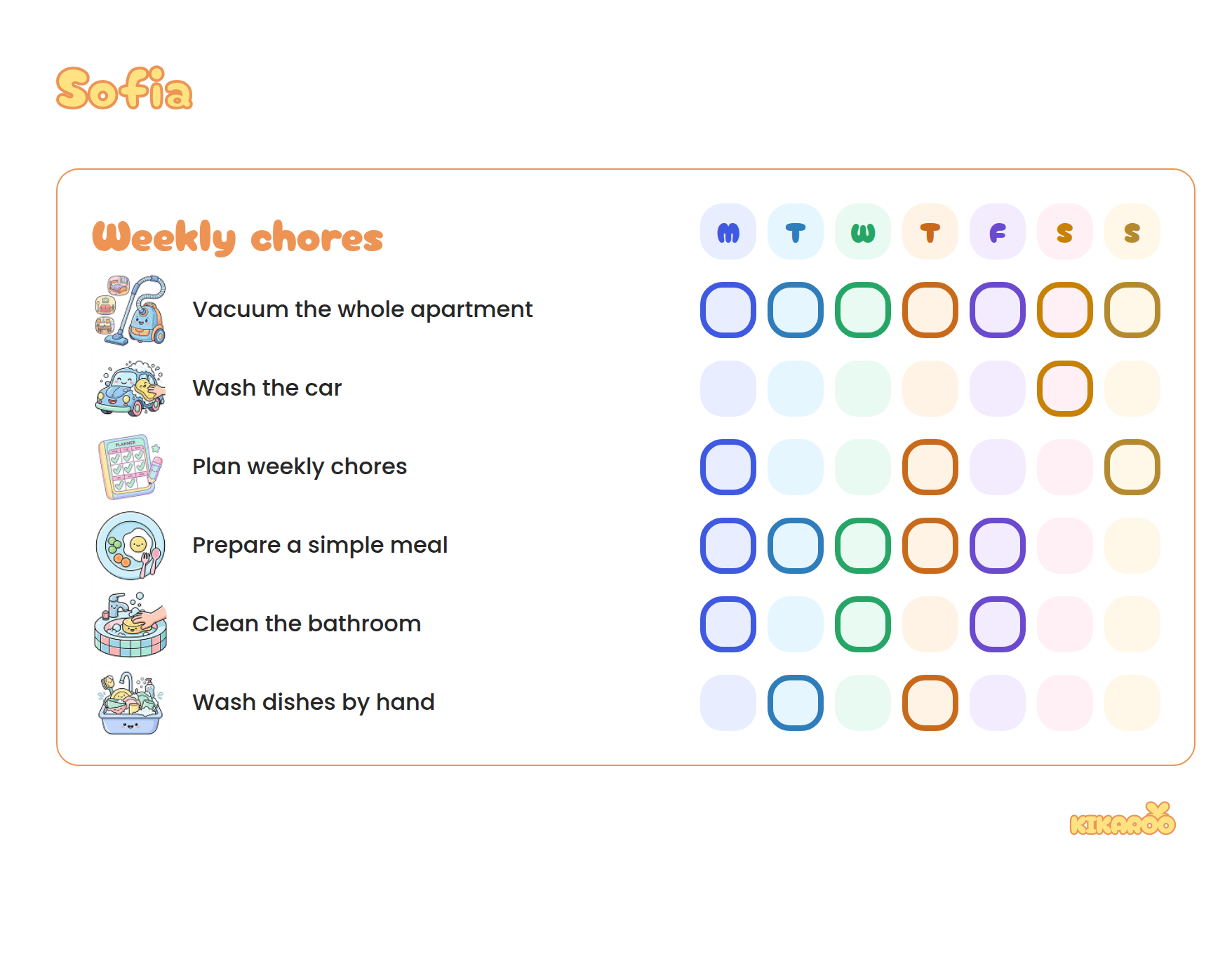
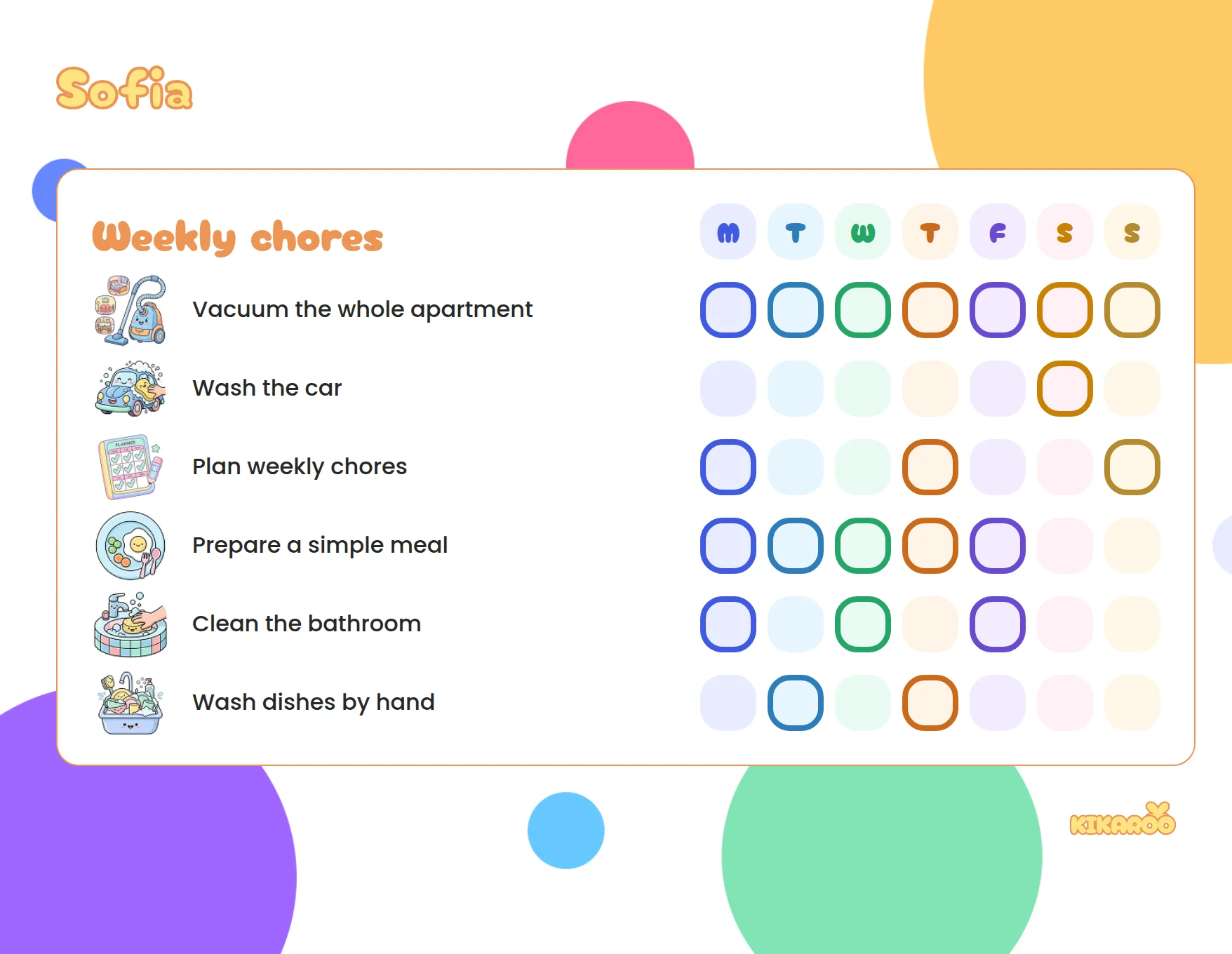
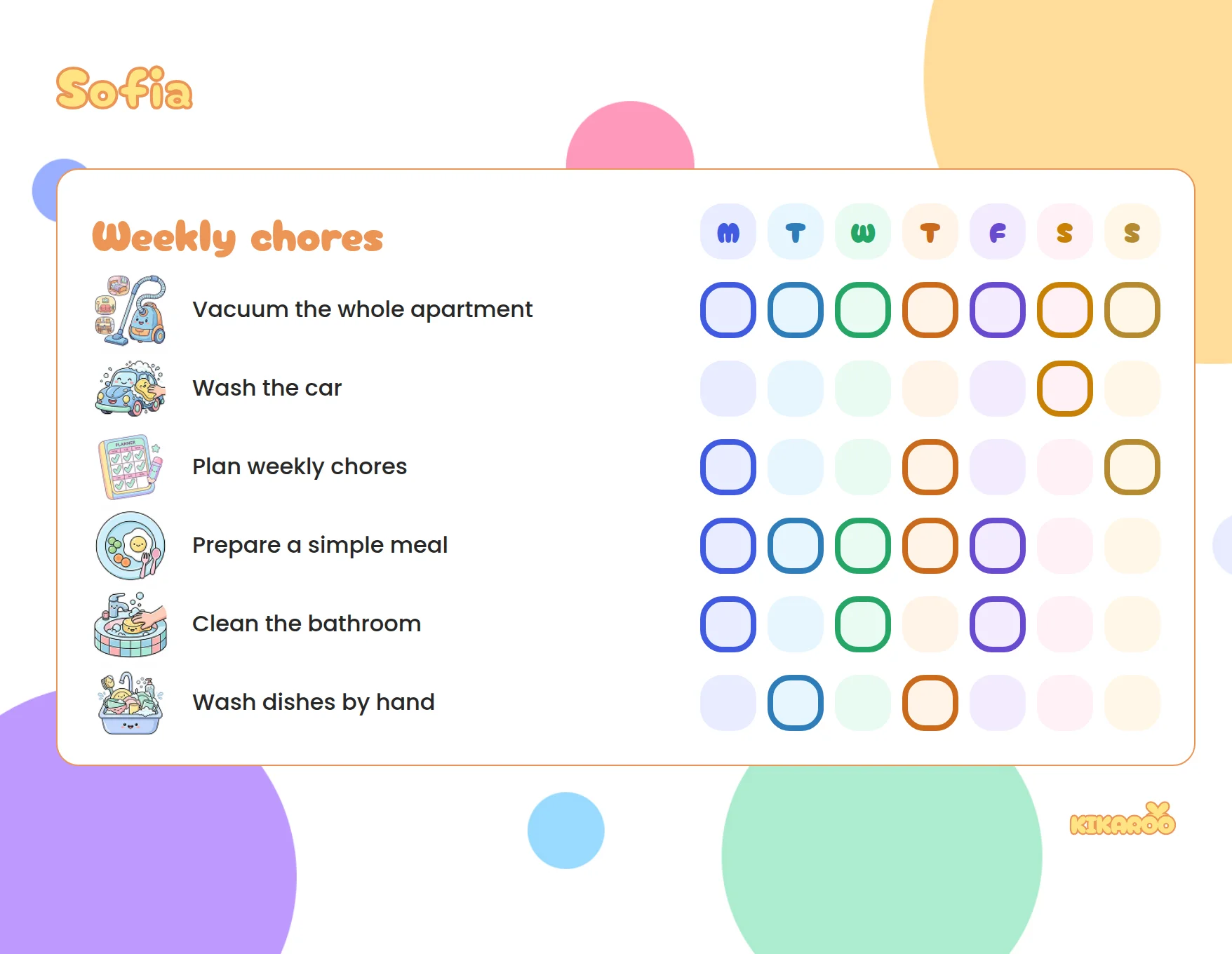
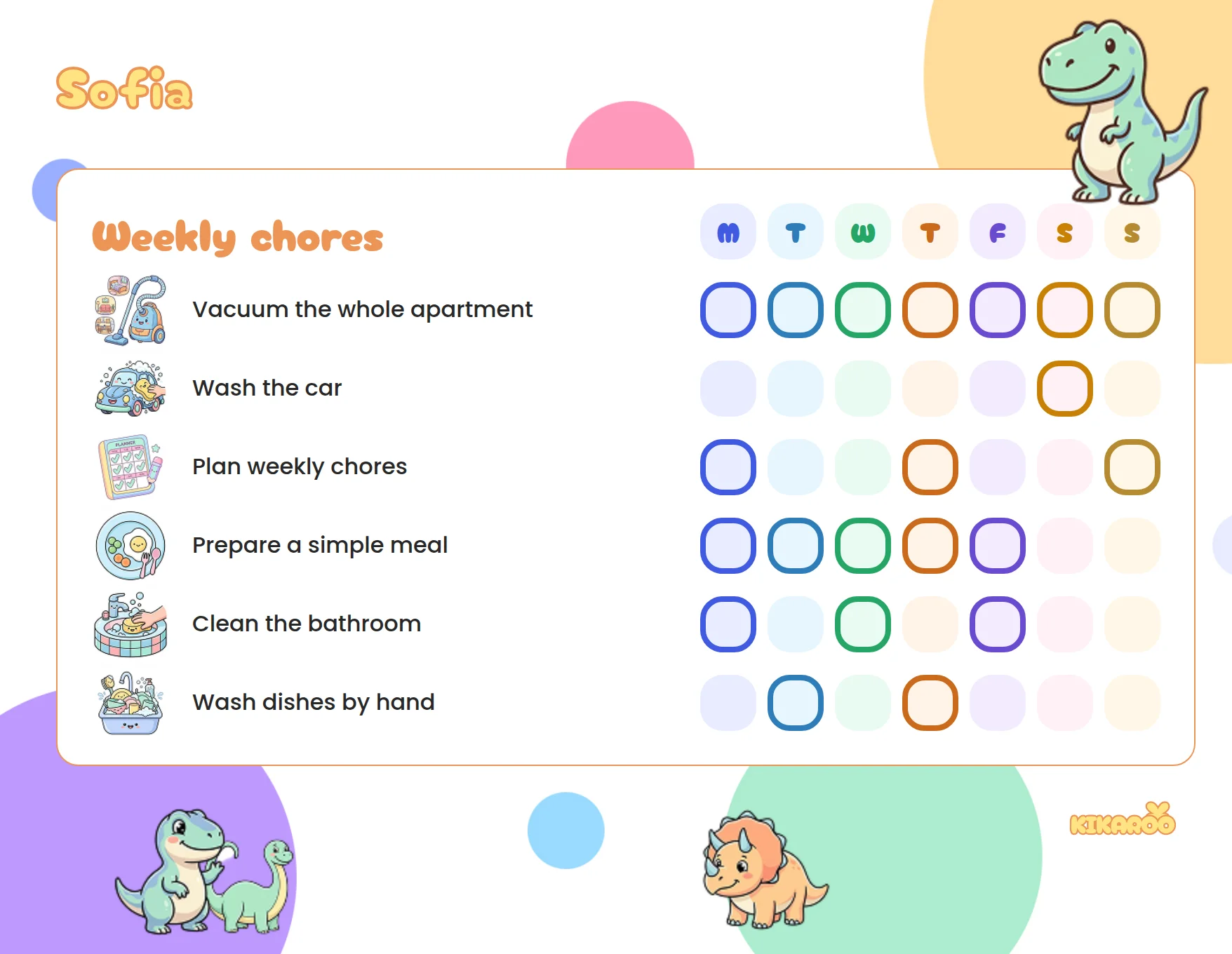
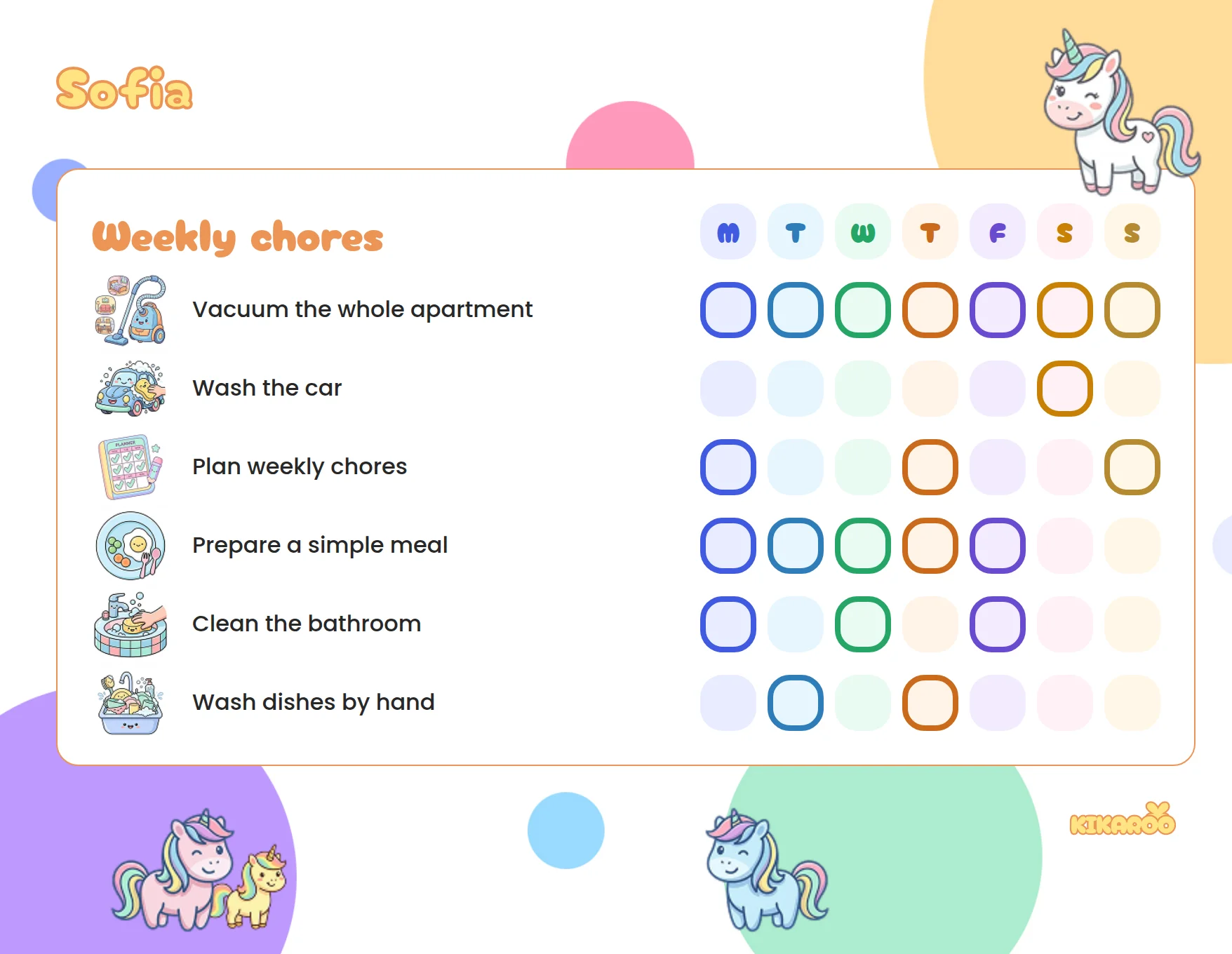
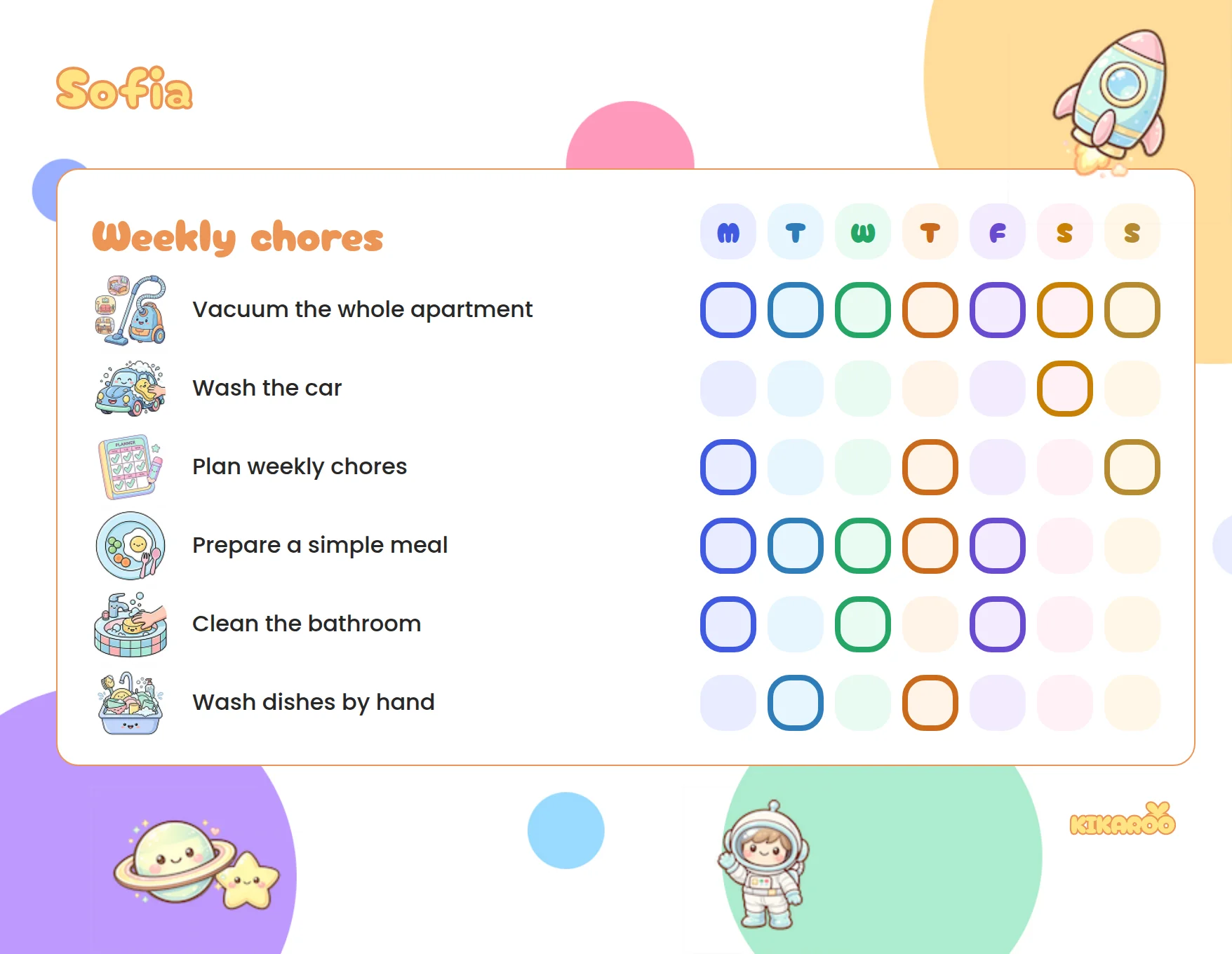
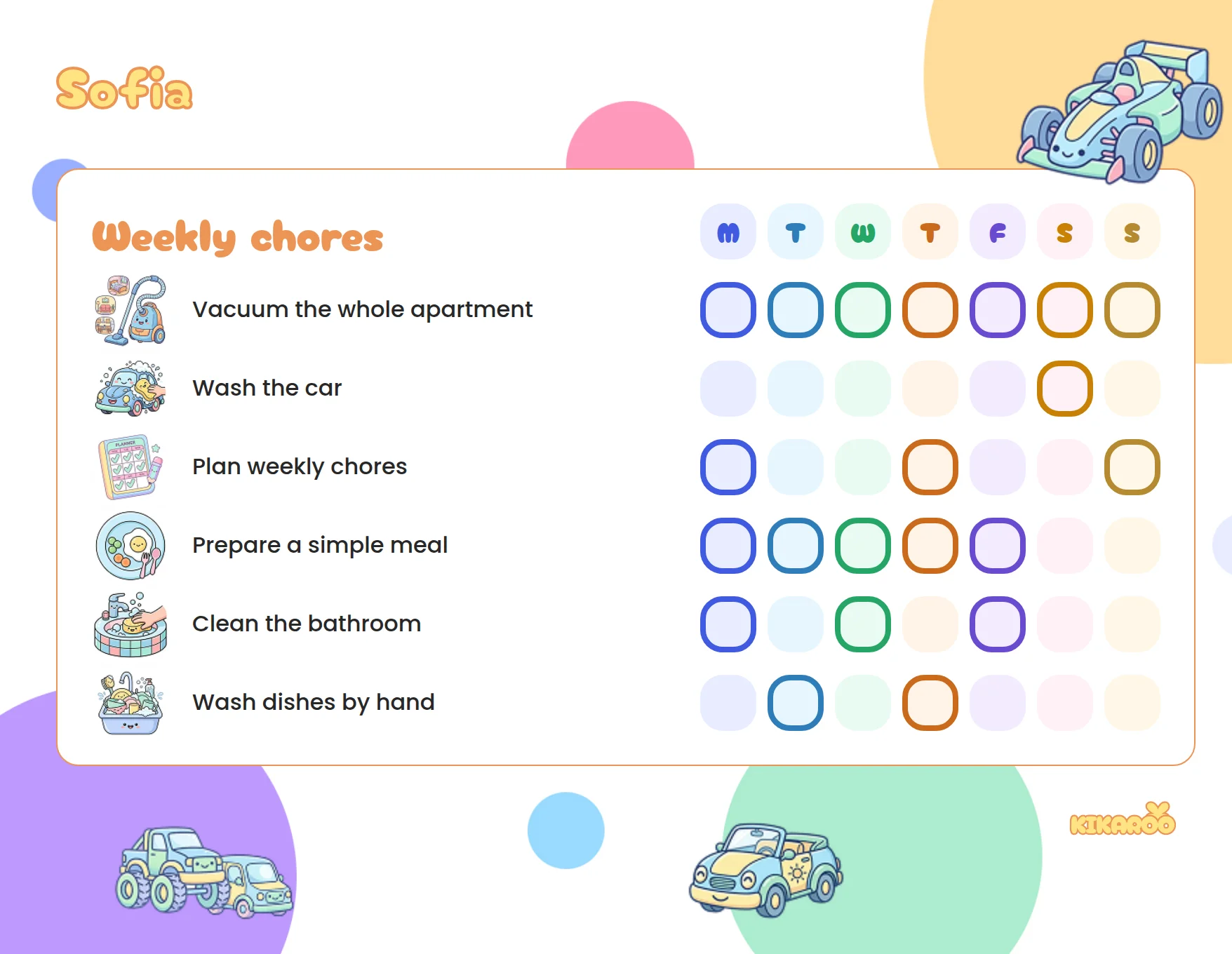
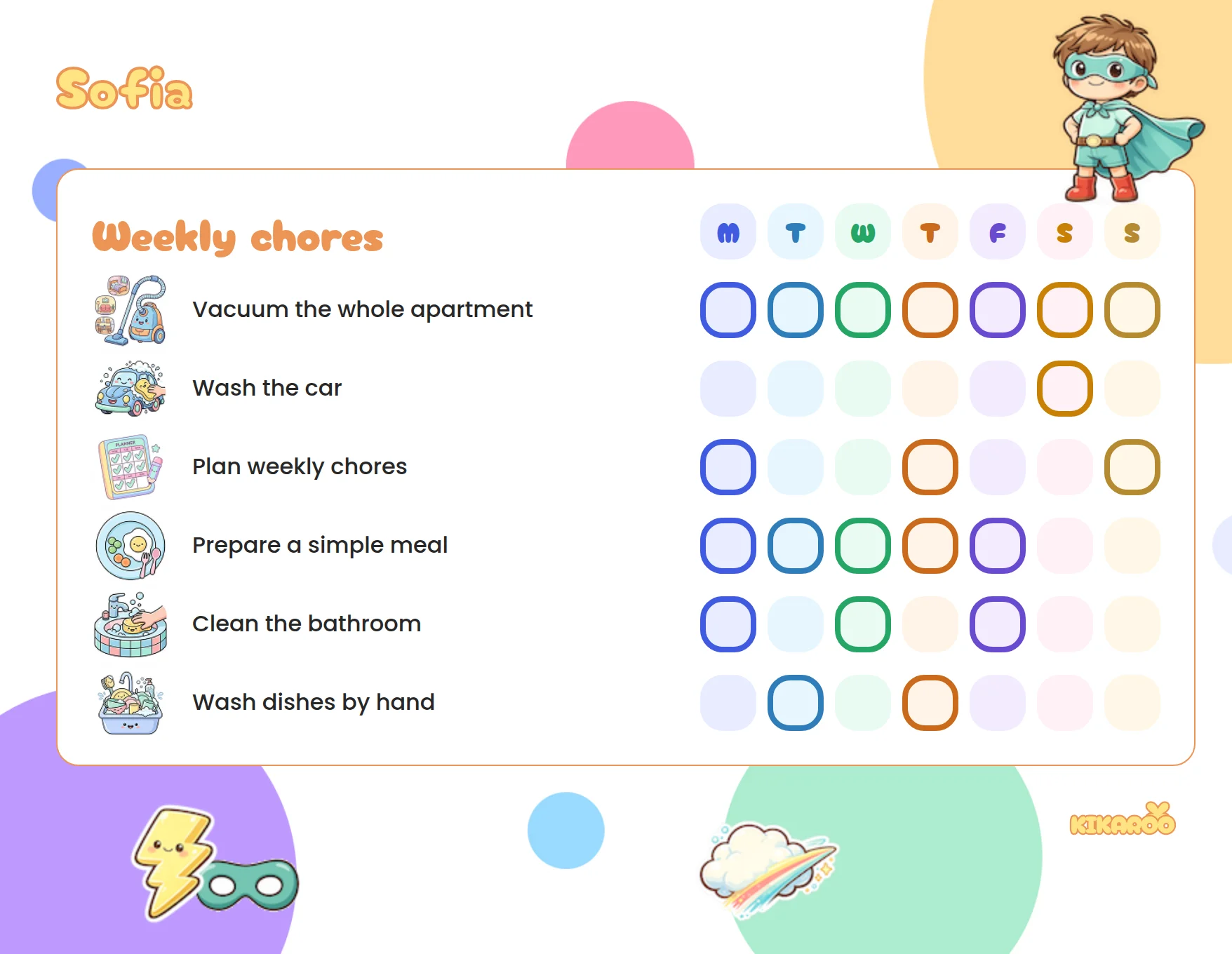
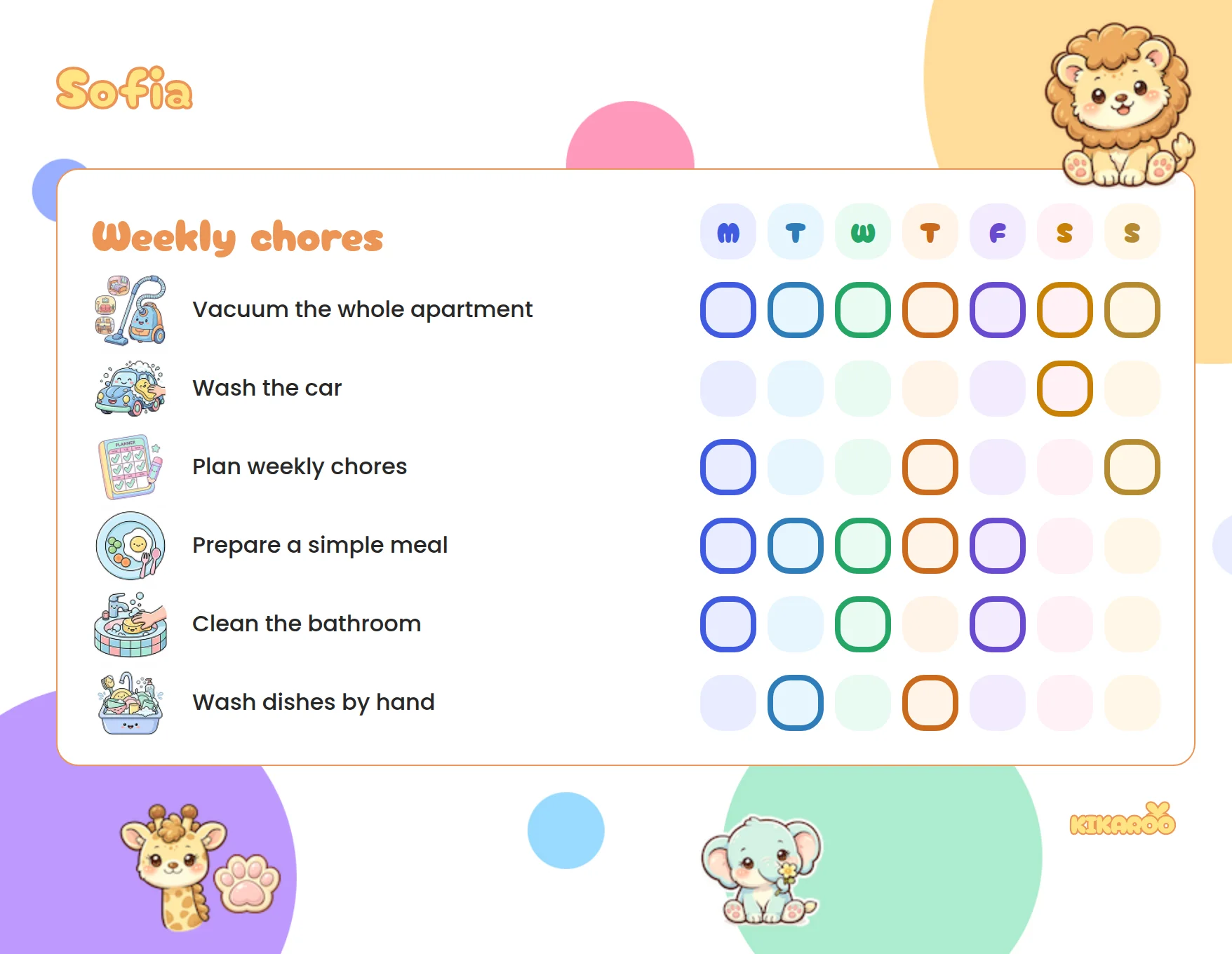
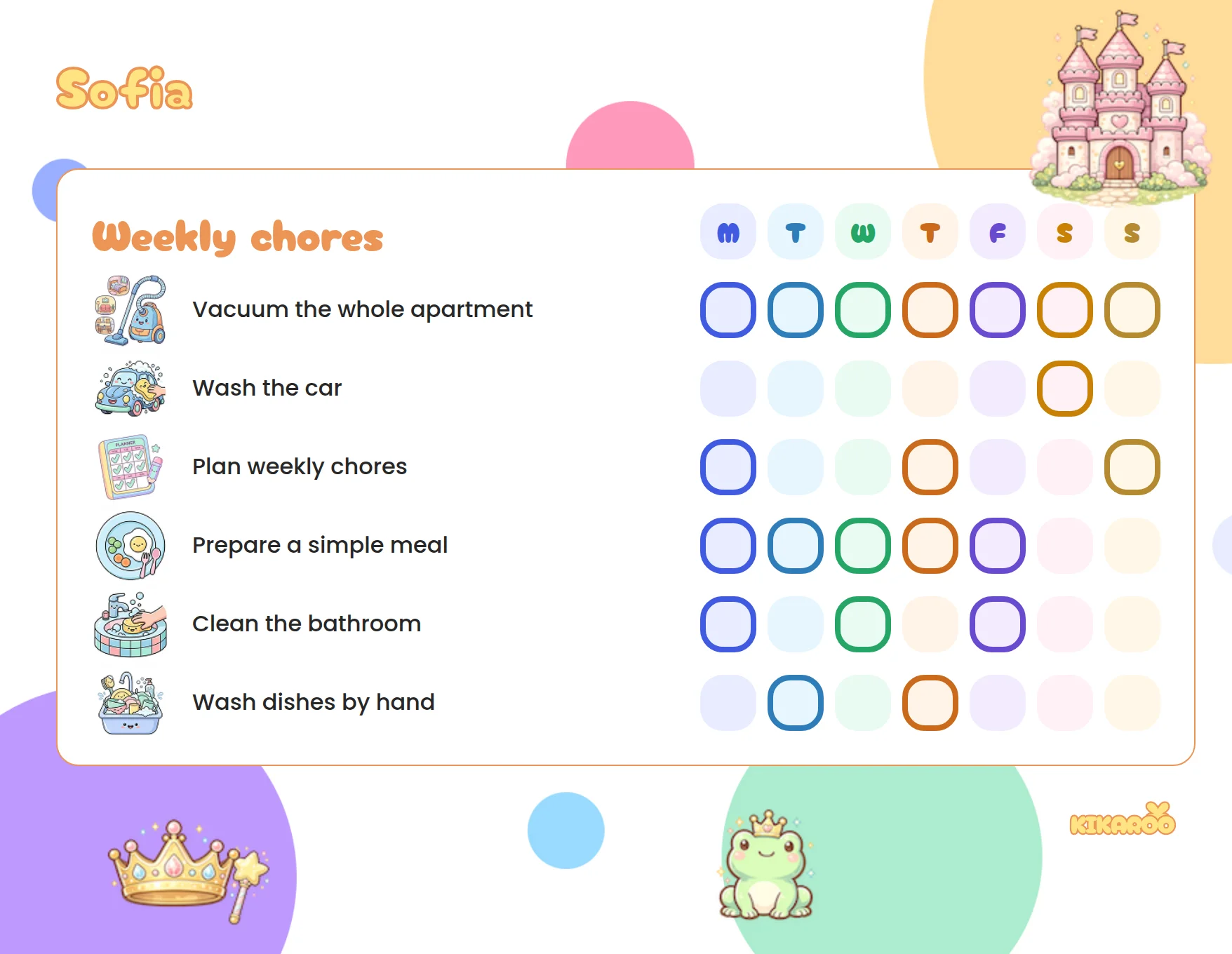
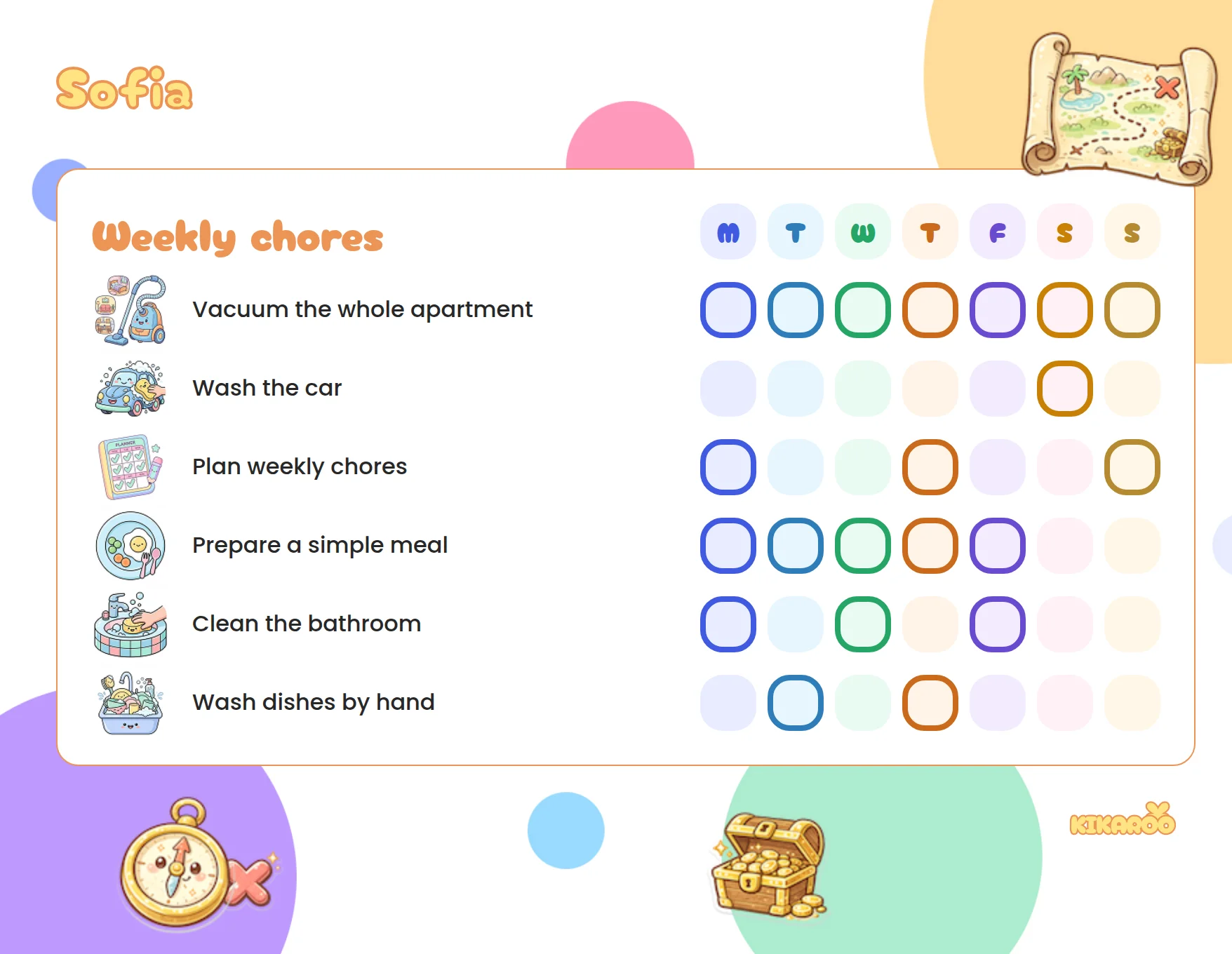
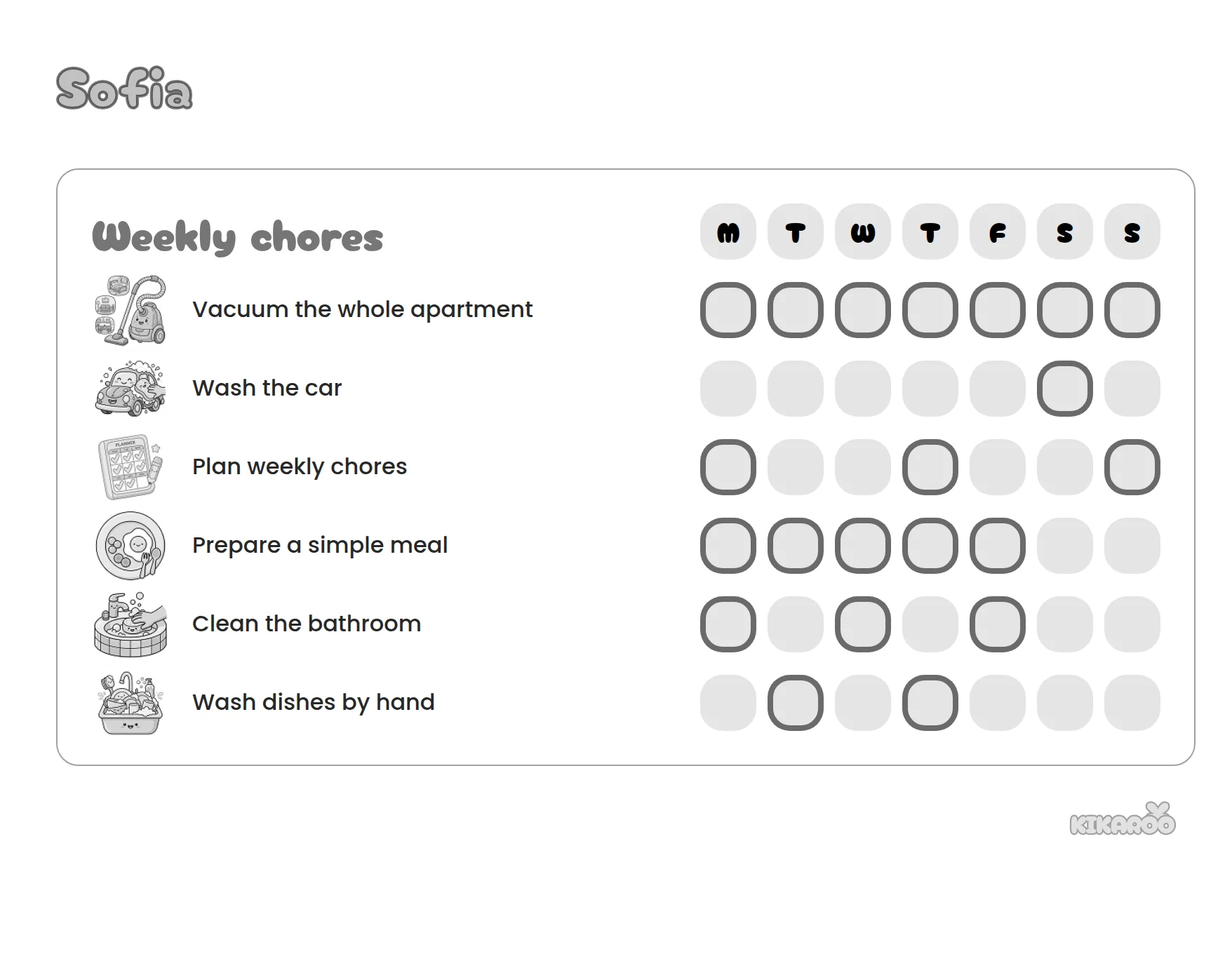
A chore list for teens that actually prepares them
The best teen chores are the ones they will be doing alone at 19. Start here:
- Cook one full meal for the family each week
- Do their own laundry, start to finish
- Clean the bathroom properly
- Vacuum the common areas
- Wash the car
- Handle a weekly grocery run or the shopping list
- Mow the lawn or seasonal yard work
- Plan their own week of chores
Make it a deal, not a demand
Sit down once, agree on the list, the standards, and what it earns them: allowance, fuel money, later curfew, whatever fits your family. Write the agreed version into the chart and print it. When the terms are on paper, you stop being the enforcer of vague expectations and become the other party to a clear deal. Renegotiate it every few months as they take on more.
When paper is not enough
Some teens run fine on a printed chart on the fridge. Others live on their phone, and a paper list stops being checked by October. If that is your house, the printed chart is still the right way to agree on the deal, and the Kikaroo app is the version that follows them to their pocket, with points adding up toward the rewards you agreed. Same system, their format.
More free printable charts: the chore chart generator, chore chart for a 9-year-old, daily chore chart, monthly chore chart, weekly chore chart.
 Make the bed
 Pick up toys
 Organize books and school supplies
 Put clothes away
 Pack and unpack school backpack
 Dust low surfaces
 Water plants
 Take out trash
 Feed the pet
 Clear the table after meals
 Get ready for school
 Get dressed
 Put on your shoes and jacket
 Put on your pajamas
 Go to sleep
 Clean your shoes
 Wipe kitchen table
 Clean the sink
 Organize shoes
 Clean the mirror
 Collect dirty laundry
 Sort laundry
 Unload dishwasher
 Load dishwasher
 Vacuum the room
 Mop the floor
 Use the bathroom
 Brush your teeth
 Brush your hair
 Wash your face
 Take a shower
 Set the table
 Collect dishes
 Prepare a simple breakfast
 Wash fruits and vegetables
 Put groceries away
 Put away clean dishes
 Make a snack
 Help in the kitchen
 Drink water
 Pick up trash outside
 Water flowers
 Sweep the entrance
 Put away the bicycle
 Clean shoes
 Put away outdoor toys
 Make a daily plan
 Check homework
 Organize desk
 Pack bag for tomorrow
 Take care of a pet
 Turn off lights
 Vacuum the whole apartment
 Dust the whole room
 Prepare a simple meal
 Take out the trash
 Wash dishes by hand
 Clean the bathroom
 Cook with supervision
 Wash the car
 Babysit a younger sibling
 Plan weekly chores