

 Home
Home Features
 Testimonials
 Downloads
 FAQ
FAQ What is Kikaroo?
 Blog
Blog Chore charts
Free Printable Monthly Chore Chart
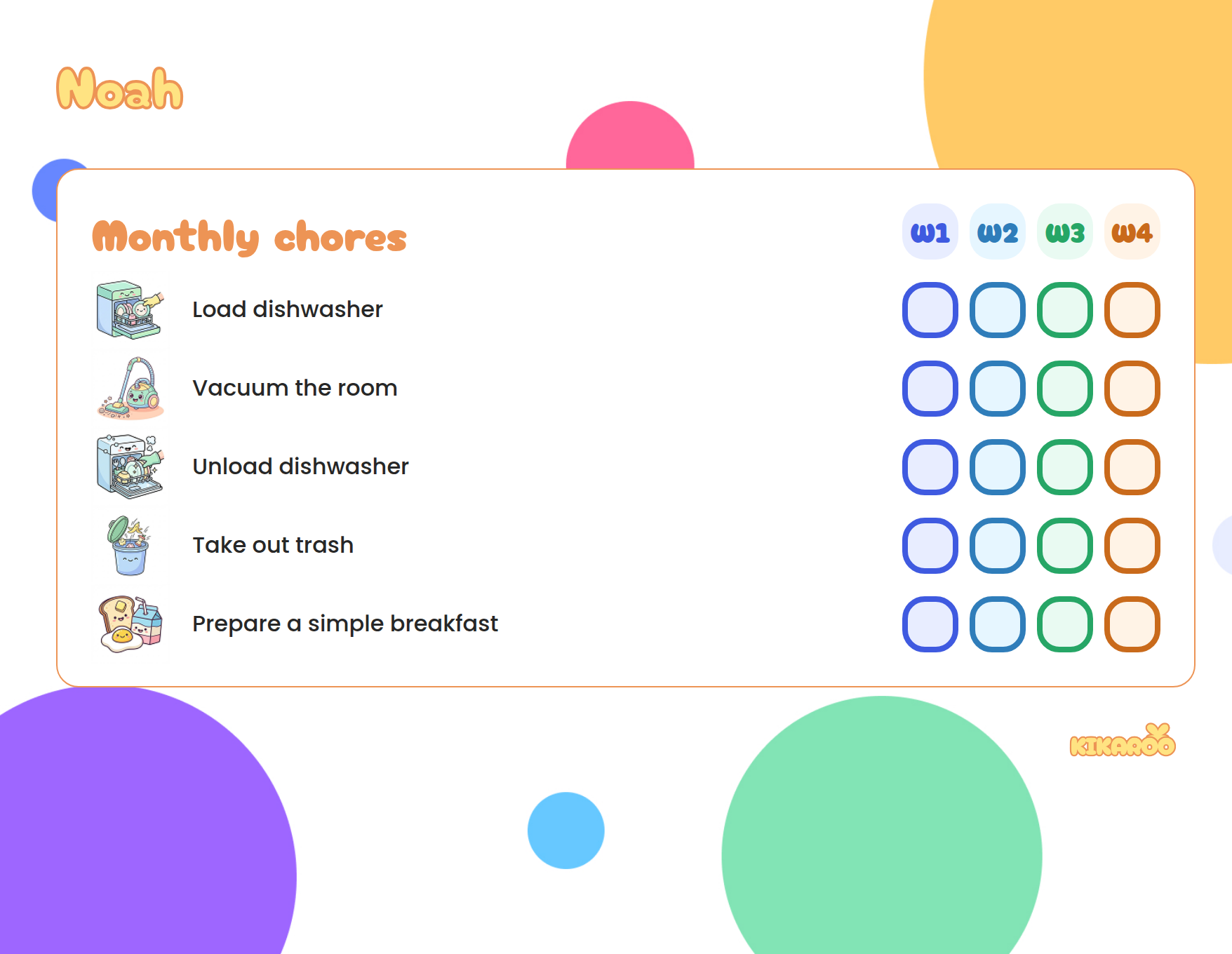
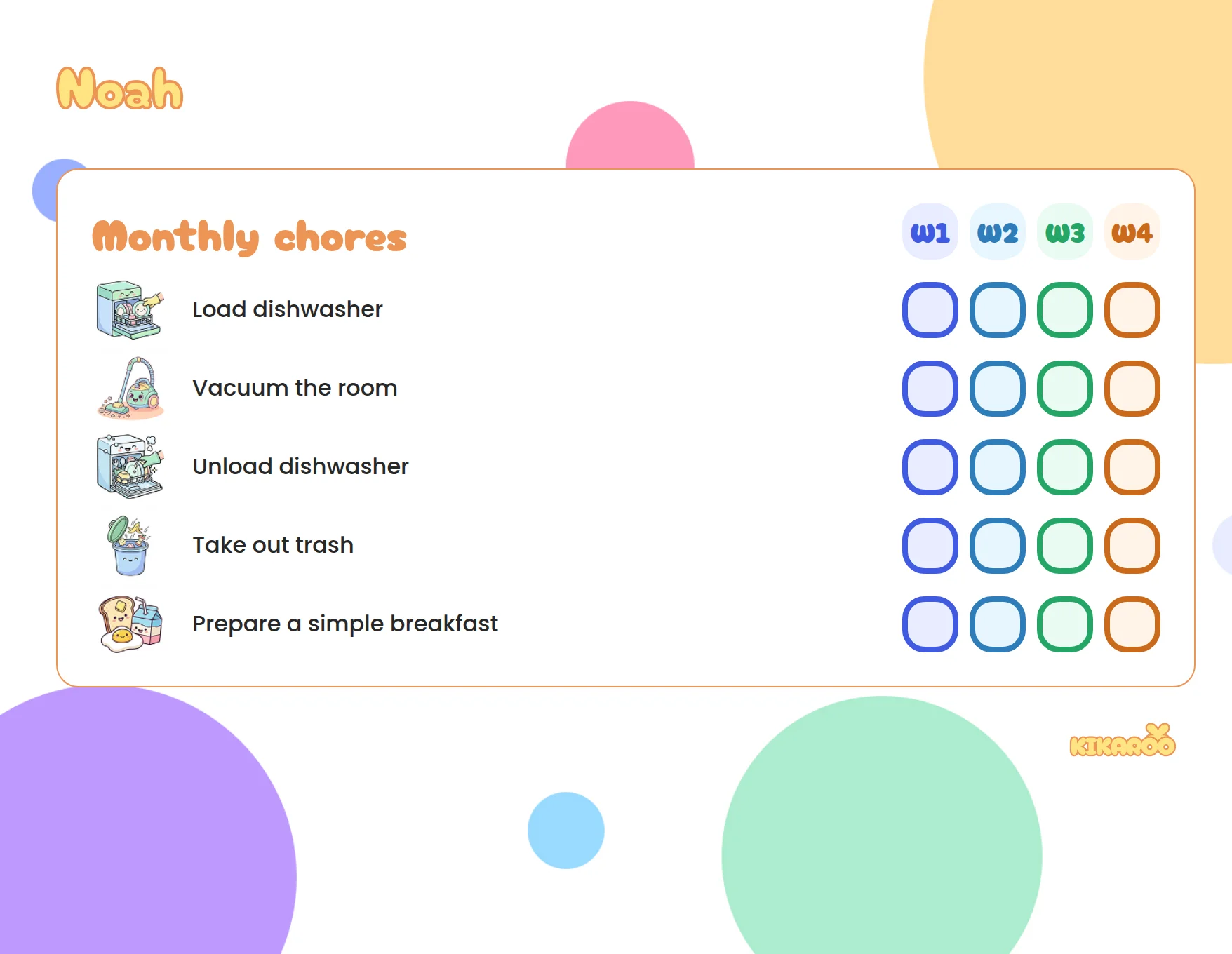
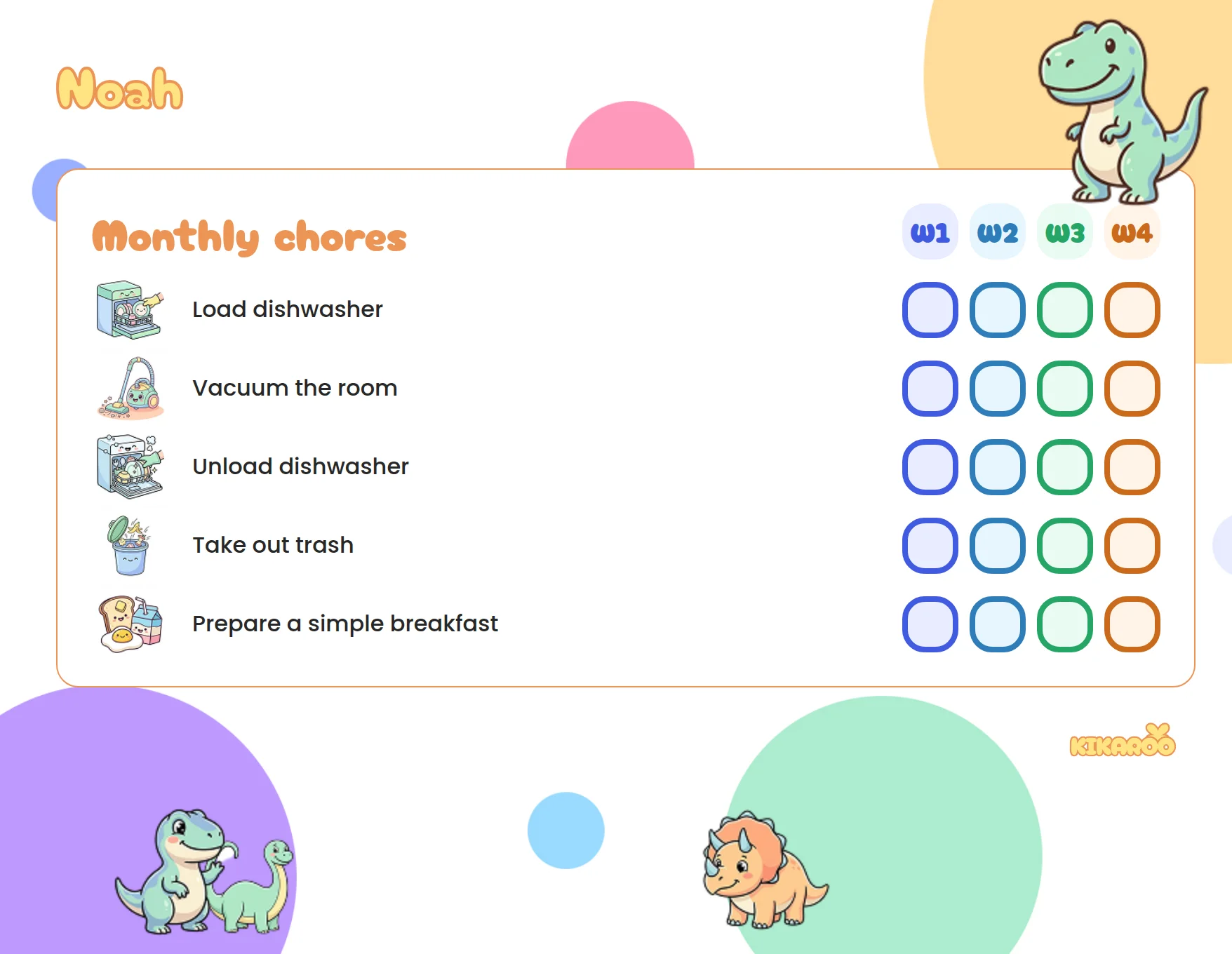
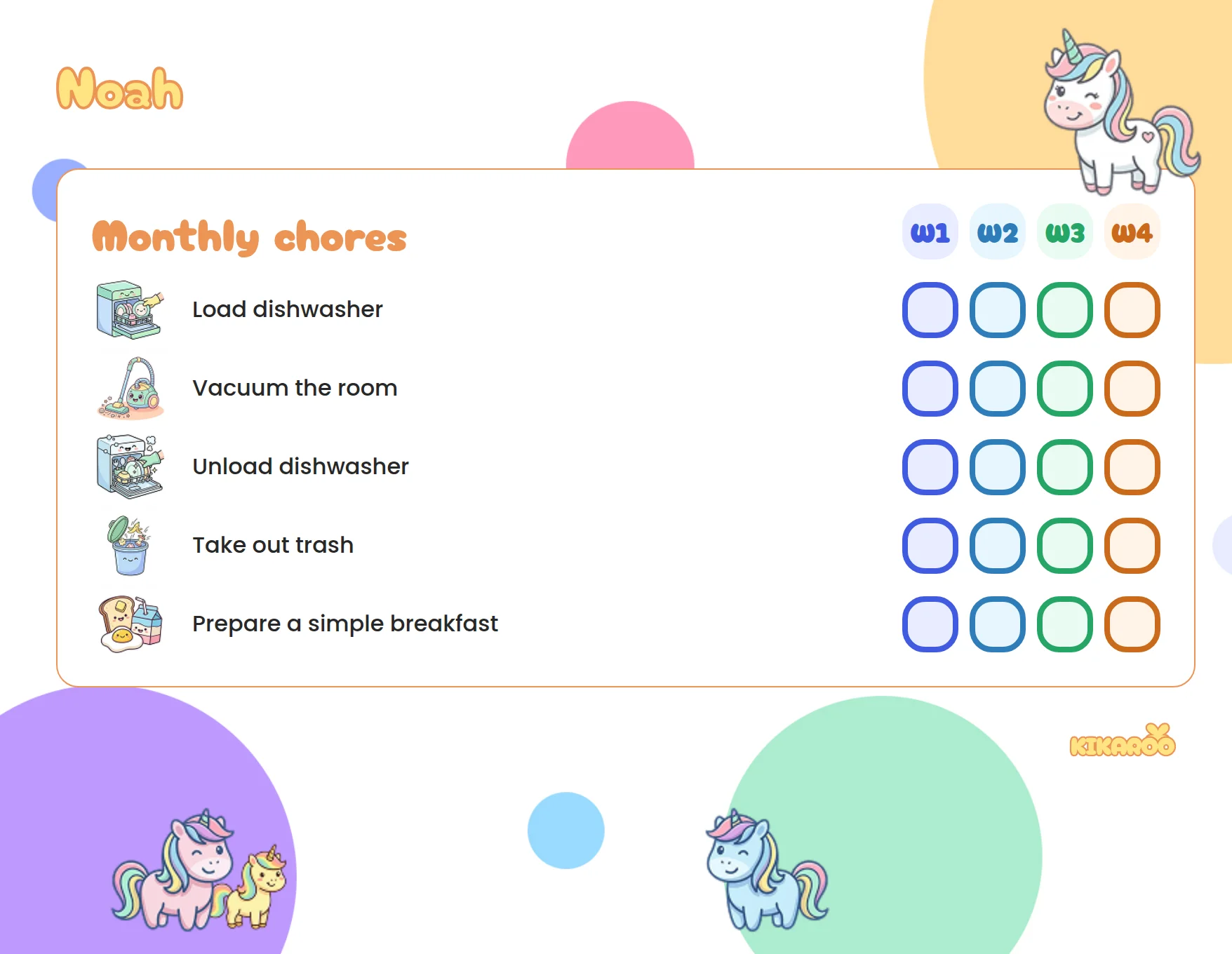
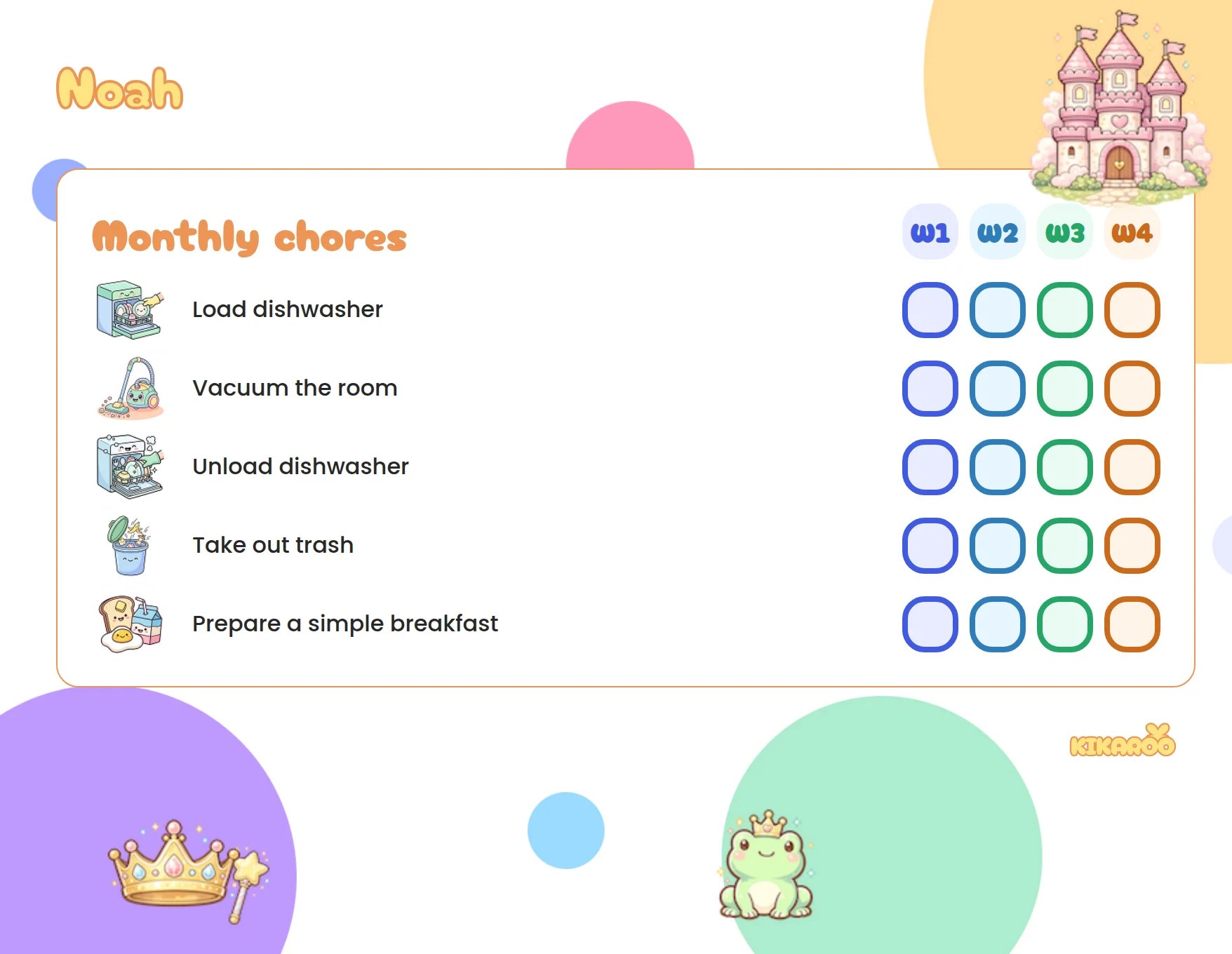
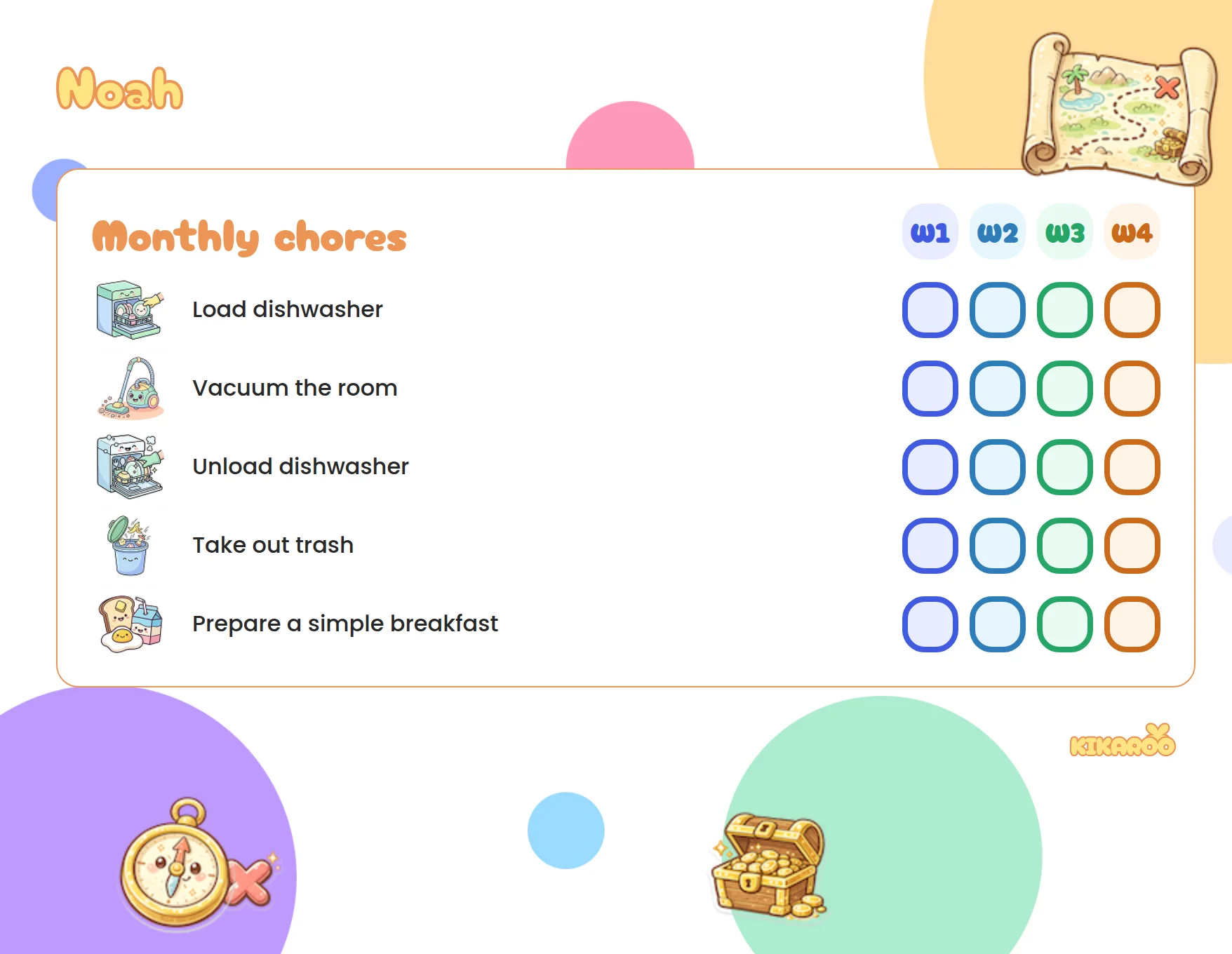
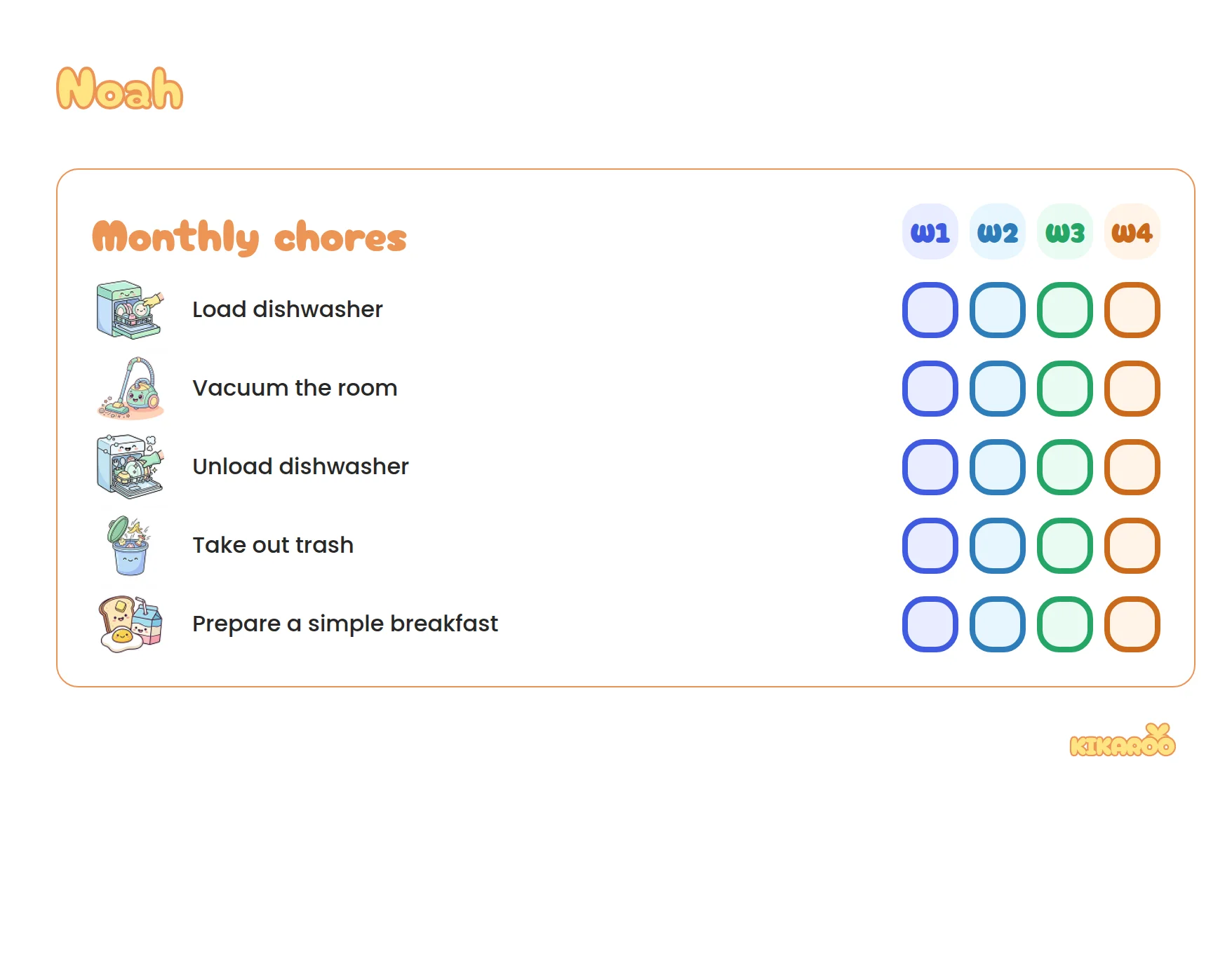
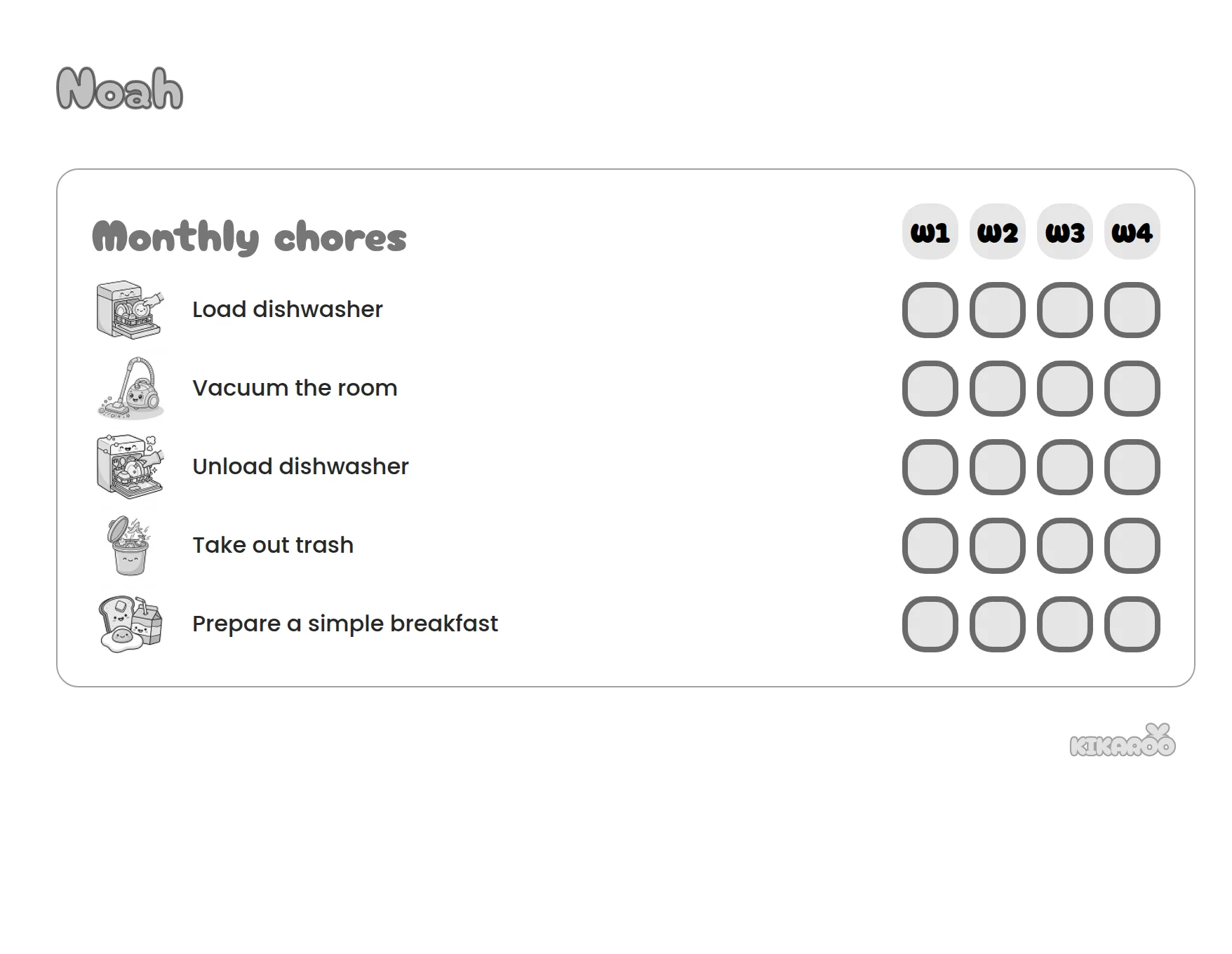
A monthly chore chart puts four weeks on one page. Each chore gets a row and four checkboxes, one per week, so a job like changing the bed sheets gets ticked once a week and the whole month of follow-through is visible on a single sheet. One print run covers the month.
The generator below is set to monthly. Add the recurring jobs, pick a style, and download the printable PDF free. Up to three children each get their own page in the same file.
Monthly charts suit once-a-week jobs and older kids. If your list is daily habits or day-specific chores, the daily and weekly charts fit better; switch the frequency in the form to compare.
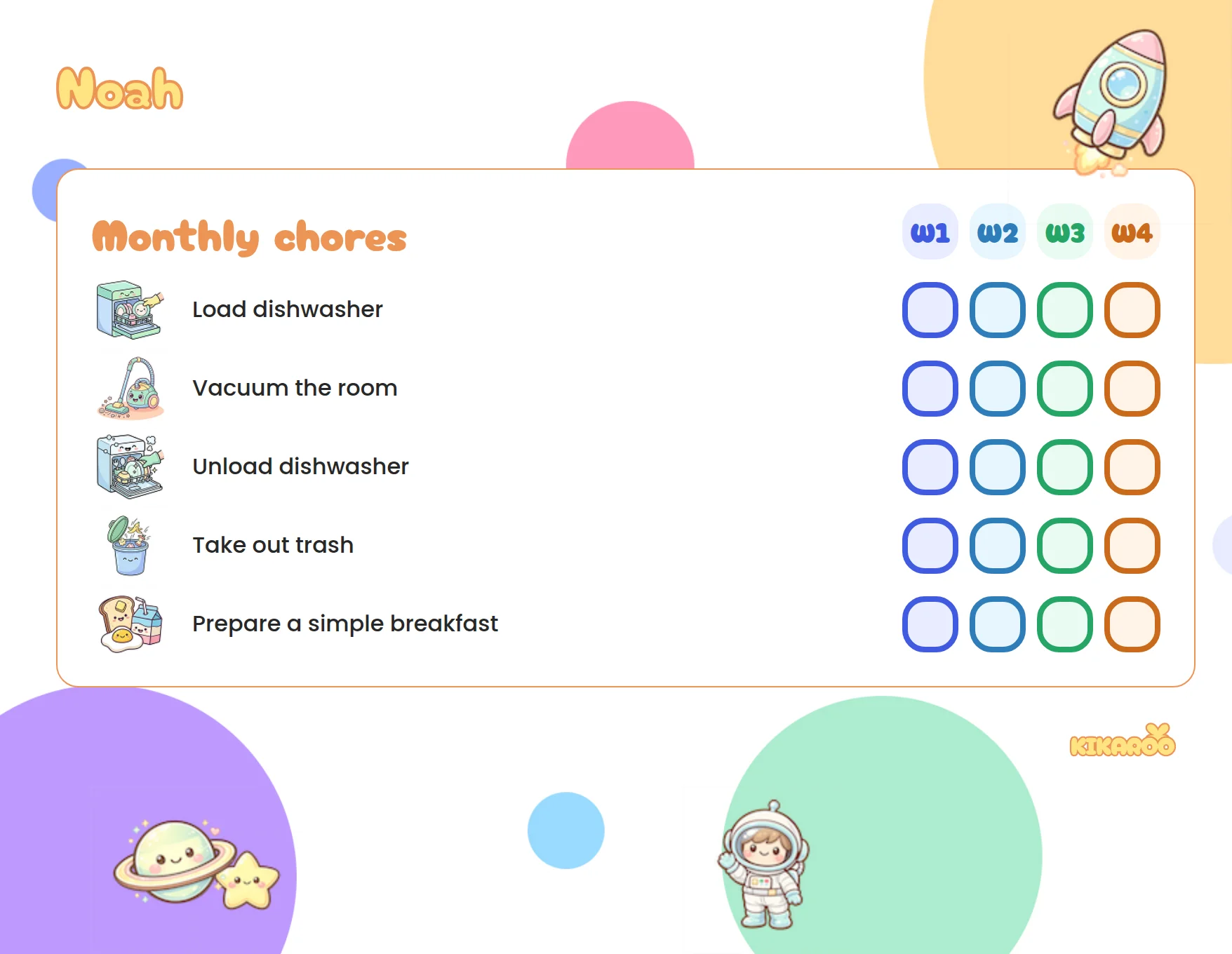
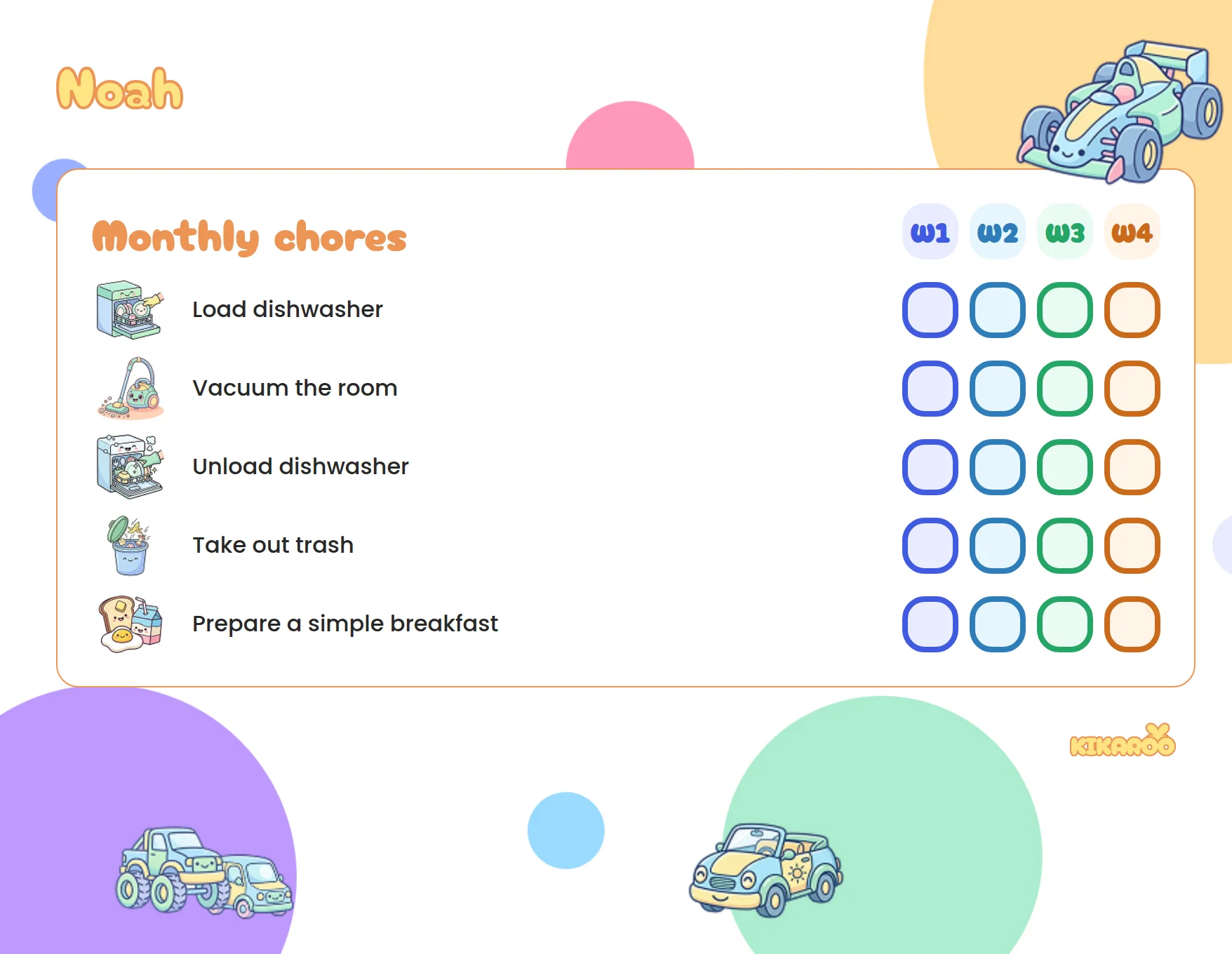
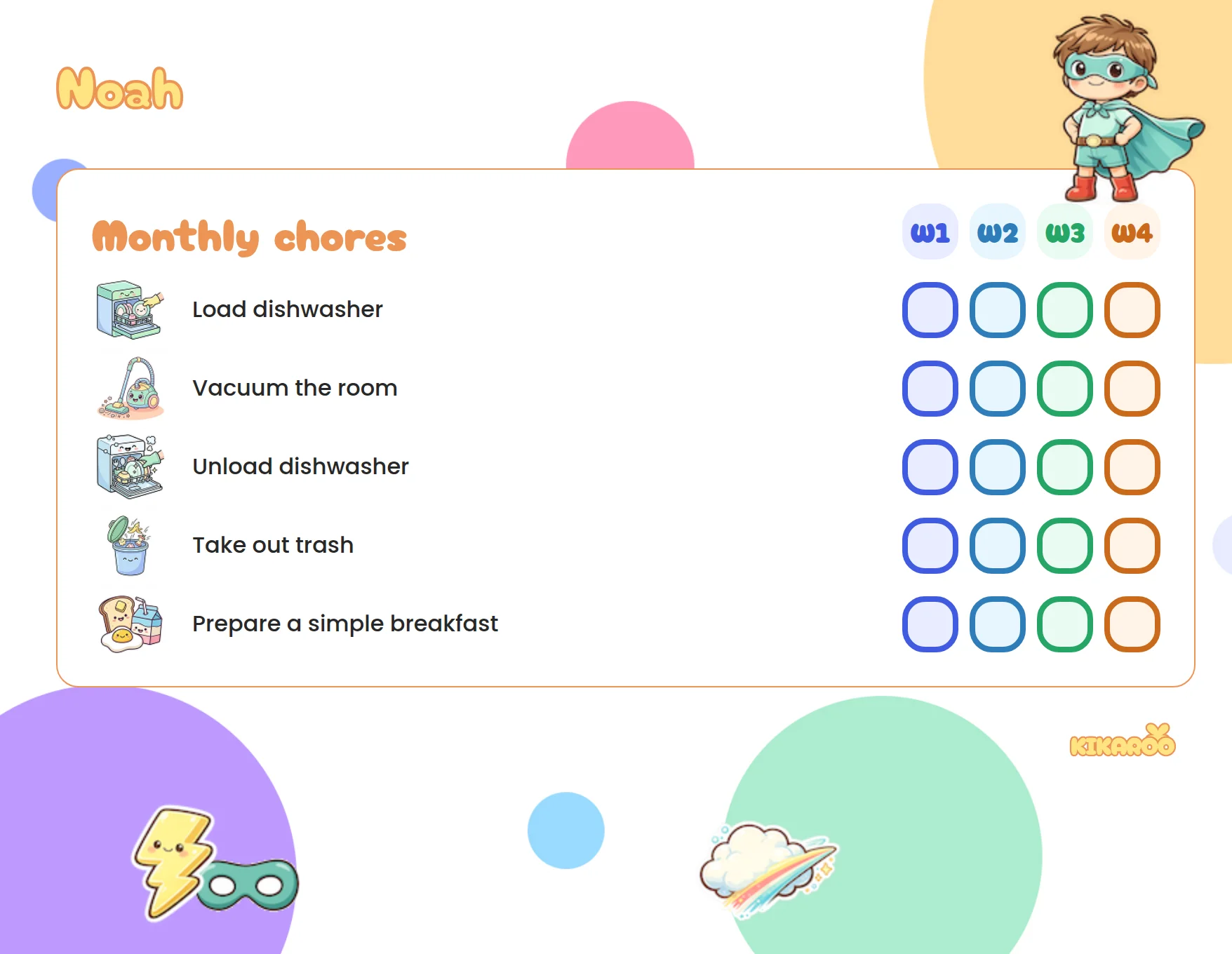
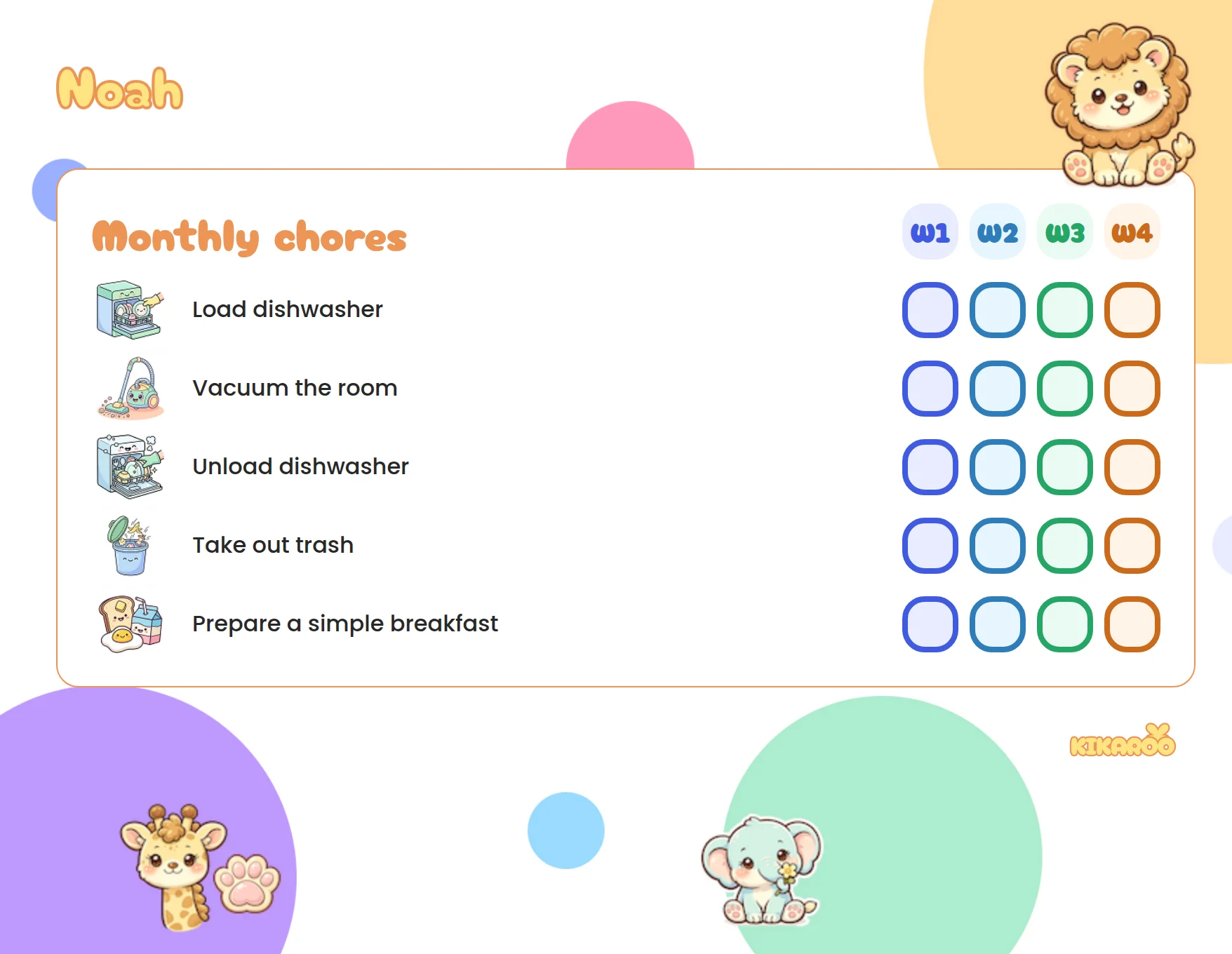
What belongs on a monthly chore chart?
The monthly format fits jobs that happen about once a week and bigger tasks that rotate through the month:
- Change the bed sheets
- Deep-tidy their room, beyond the daily pickup
- Vacuum their room
- Clean out the school backpack
- Wash the car
- Yard work for the season
How the four-week grid works
Each chore row has four checkboxes labeled W1 to W4. The deal is one tick per week, any day that works, which gives kids flexibility inside a firm expectation: the sheets get changed this week, but Tuesday or Saturday is their call. That trade, freedom on the when in exchange for reliability on the whether, is exactly the skill older kids and preteens need to practice. For months with a fifth week, treat it as a bonus week or start the next page early.
Who the monthly chart fits
Monthly works best from about age 9 up, once a child can hold a week-long commitment without daily prompts. It is also the low-maintenance option for busy families: one print run a month instead of four. Pair it with a daily chart for the everyday habits, and let the monthly page carry the bigger jobs. If you want day-level scheduling instead, use the weekly chart.
More free printable charts: the chore chart generator, chore chart for a 3-year-old, chore chart for a 5-year-old, chore chart for teens, weekly chore chart.
 Make the bed
 Pick up toys
 Organize books and school supplies
 Put clothes away
 Pack and unpack school backpack
 Dust low surfaces
 Water plants
 Take out trash
 Feed the pet
 Clear the table after meals
 Get ready for school
 Get dressed
 Put on your shoes and jacket
 Put on your pajamas
 Go to sleep
 Clean your shoes
 Wipe kitchen table
 Clean the sink
 Organize shoes
 Clean the mirror
 Collect dirty laundry
 Sort laundry
 Unload dishwasher
 Load dishwasher
 Vacuum the room
 Mop the floor
 Use the bathroom
 Brush your teeth
 Brush your hair
 Wash your face
 Take a shower
 Set the table
 Collect dishes
 Prepare a simple breakfast
 Wash fruits and vegetables
 Put groceries away
 Put away clean dishes
 Make a snack
 Help in the kitchen
 Drink water
 Pick up trash outside
 Water flowers
 Sweep the entrance
 Put away the bicycle
 Clean shoes
 Put away outdoor toys
 Make a daily plan
 Check homework
 Organize desk
 Pack bag for tomorrow
 Take care of a pet
 Turn off lights
 Vacuum the whole apartment
 Dust the whole room
 Prepare a simple meal
 Take out the trash
 Wash dishes by hand
 Clean the bathroom
 Cook with supervision
 Wash the car
 Babysit a younger sibling
 Plan weekly chores