

 Home
Home Features
 Testimonials
 Downloads
 FAQ
FAQ Blog
Blog
Giving kids chores is about more than just getting help around the house. It’s a powerful way to teach them responsibility, build their confidence, and show them that they are an important part of the family team.
By matching chores to their age and ability, chores become less of a battle and more of a valuable learning experience. This guide will walk you through how to introduce chores in a positive way, what tasks are right for each age, and how to keep kids motivated for trhe long haul.
Understanding Age Appropriate Chores
Assigning age appropriate chores is the key to making this system work for everyone. The goal isn’t perfection, but progress. A task that is too difficult leads to frustration and failure, while a task that is too simple fails to teach anything new.
The right chore, given at the right time, strikes a balance, it challenges a child just enough to foster a sense of accomplishment and growth.
This approach respects their current developmental stage, building their skills from the ground up, from simple picking up to complex multi step projects, ensuring they feel capable and motivated to contribute.
How Kids Build Responsibility Over Time
Responsibility isn’t a switch you flip, but muscle you build, repetition by repetition. A young child starts by simply following a direct instruction, like putting a toy in a bin.
The responsibility in this moment is to the action itself. Over time, as they consistently complete these small tasks, something shifts. They begin to internalize the reason for the action, that we clean up so we can find our toys later, that we set the table so the family can eat together.
The responsibility evolves from just completing the task to being a reliable member of a community. This gradual process transforms chores from external demands into internalized habits, laying the groundwork for the self discipline and accountability they will need as adults.
How to Introduce Chores in a Positive Way
The way you introduce chores sets the tone for your child’s entire attitude toward them. Frame chores not as a burdensome obligation, but as a sign of growing up and a valued role within the family.
Start by working alongside your child, turning the task into a collaborative activity rather than a solo assignment.
Use phrases like, “Let’s get our kitchen clean for the morning,” or “Can you be my helper with this?”
This models the behavior and makes it a shared family norm, not a punishment. Keep instructions clear and simple, offer plenty of praise for effort (not just the result), and be patient, because the goal is to build a lifelong habit, not achieve a spotless floor on day one.
Safety Considerations for Each Age Group
A child’s safety is the non negotiablle foundation of any chore assignment. Every task must be evaluated not just for its developmental appropriateness, but for its physical and environmental risks.
For the youngest children, this means avoiding small objects that are choking hazards, steering clear of toxic chemicals, and ensuring stability on step stools.
As children grow, the risks evolves, pre teens may handle sharper tools or appliances, requiring thorough instruction on operational safety and clear boundaries for use.
The key is proactive supervision and a commitment to teaching safety as an integral part of the chore itself, not as an afterthought. This careful approach ensures that the path to responsibility is a safe one.
Chores for a 4 Year Old
At this age, chores should be simple, concrete, and ideally, mimic what they see you doing. The goal is to introduce the concept of “helping” in a fun, low pressure way. Focus on one step chores and be prepared to work alongside them, turning chores into a game.
Putting toys in a bin
Make it a challenge: Can we put all the blue blocks away before I count to ten?
Placing dirty clothes in a hamper
A basketball hoop over the hamper can make this a hit.
Wiping up small spills with a cloth
Give them their own small rag for this important job.
Dusting baseboards or low furniture
Their low to the ground perspective is a perfect advantage.
Carrying plastic dishes to the sink
Opt for non breakable items to build confidence.
Piling books or magazines neatly
A simple sorting and organizing task.
Helping to feed a pet
They can scoop dry food into a bowl with your supervision.
Making their bed with help
This may just mean pulling up the comforter, and that’s a great start.
Chores for a 5 Year Old
At five, children are developing more coordination and the ability to follow slightly more complex, multi step directions. Their chores can build on the foundations laid at four, introducing a bit more independence and responsibility while keeping tasks concrete and manageable.
Making Their Bed
The expectation is not perfection but the habit, a lumpy, lopsided bed is a sign of a child taking ownership of their space.
Putting Away Their Own Toys
This chore reinforces the concept that we are responsible for cleaning up after our own activities and play.
Setting Placemats or Napkins on the Table
This task helps them contribute directly to a family ritual, giving them a clear and valued role in mealtime.
Watering Houseplants with Supervision
A small, lightweight watering can allow them to care for living things, teaching gentleness and consistency.
Helping to Unload Safe Utensils from the Dishwasher
They can safely handle and put away plastic cups, kid friendly plates, and non sharp utensils, learning where items belong.
Using a Handheld Dustpan and Brush
This provides a satisfying, tangible result as they see the mess they can successfully clean up themselves.
Matching Clean Socks from the Laundry
This simple sorting activity is a practical lesson in pairing and organization.
Clearing Their Own Plate and Cup After Meals
This instills the basic principle of cleaning up after oneself in a shared space.
Chores for a 6 Year Old
Six year olds are often proud of their growing capabilities and can handle chores with a bit more complexity and a focus on neatness. They are ready for tasks that require more attention to detail and can often be completed with less direct supervision.
Sorting Laundry by Color
This chore introduces basic categorization skills and lays the groundwork for understanding how different materials are cared for.
Vacuuming a Small Room with a Lightweight Vacuum
Using a handheld or lightweight stick vacuum allows them to tackle real cleaning and see immediate, satisfying results from their effort.
Wiping Down Kitchen Counters and Table After Meals
This task reinforces the habit of cleaning up after shared activities and contributes to the family’s shared space.
Packing Their Own School Backpack (with a Checklist)
With a visual list to guide them, this chore builds executive function skills and personal responsibility for their belongings.
Chores for a 7 Year Old
With improved reading and math skills, a stronger sense of responsibility, and better fine motor coordination, seven year olds are ready for more complex tasks that require a bit more precision and independence.
Sweeping Floors
This chore helps develop gross motor skills and teaches them to cover an area systematically for a thorough clean.
Making a Simple Breakfast (like cereal or toast)
This task fosters independence in self care and introduces basic kitchen safety and food preparation.
Taking Out the Kitchen Trash
A classic chore that reinforces the concept of contributing to household maintenance and handling a routine, weekly task.
Folding and Putting Away Their Own Laundry
This builds on earlier sorting skills, teaching organization and the importance of caring for personal belongings.
Chores for an 8 Year Old
Eight year olds are capable and eager to prove their competence. They can handle more responsibility, including tasks that require planning, basic appliance use, and a greater contribution to the family’s daily operations.
Loading and Starting the Dishwasher
This chore teaches appliance safety and the logical sequence of loading for optimal cleaning, moving them from just unloading to starting the full cycle.
Mopping Hard Floor Surfaces
Building on sweeping skills, this task introduces the process of using cleaning tools with water or solution for a deeper clean.
Writing Items on a Family Grocery List
This chore connects household management to practical literacy and observation skills, as they note what is running low.
Putting Away Groceries
This task teaches organization and where food belongs, reinforcing categories like pantry, refrigerator, and freezer.
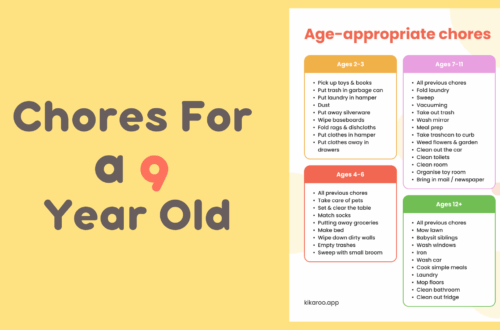
Chores for a 9 Year Old
At nine, children are developing stronger problem solving skills and can manage more independent projects. They are ready for chores that involve basic meal preparation, longer term planning, and a greater trust in their judgment.
Preparing a Simple Meal with Supervision
This goes beyond cereal to tasks like making a sandwich, scrambling eggs, or using a toaster oven, teaching foundational cooking skills and safety.
Washing the Family Pet (if appropriate)
This chore teaches gentle responsibility for another living being and the process of completing a multi step, messy task from start to finish.
Helping to Wash the Family Car
A large scale task that shows them how to work on a project collaboratively and see a very tangible, satisfying result from their effort.
Walking a Pet Around the Block (with parental discretion)
This instills a strong sense of responsibility for an animal’s well being and introduces the concept of a safe, predictable route in the neighborhood.
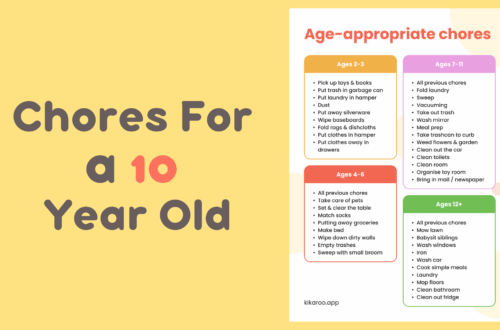
Chores for a 10 Year Old
Ten year olds stand on the cusp of adolescence, capable of significant responsibility and autonomy. Their chores should reflect this, focusing on tasks that require minimal supervision, teach essential life skills, and contribute meaningfully to the entire household.
Doing Their Own Laundry Start to Finish
This chore teaches complete ownership of a personal care routine, from sorting and washing to folding and putting away.
Cleaning the Bathroom Sink and Counter
This task introduces the use of specific, safe cleaning products for different surfaces and the importance of bathroom hygiene.
Making a More Complex Meal or Side Dish
Moving beyond basics, they can follow a simple recipe to contribute a dish to a family meal, building culinary confidence.
Babysitting Siblings for Short Periods
With clear guidelines, this chore fosters maturity, problem solving, and responsibility for the well being of others.
How to Adjust Chores as Kids Grow
A static chore chart quickly becomes obsolete as a child matures. The most effective approach is a dynamic one, where responsibilities evolve in tandem with a child’s developing capabilities, judgment, and need for autonomy.
The core principle is to progressively shift from simple task completion to overarching management.
This means transitioning from “put your toys away” to “keep your room tidy,” or from “set the table” to “help plan and prepare a weekly meal.”
This evolution involves adding complexity, increasing the scope of responsibility, and gradually reducing supervision.
The goal is to continuously provide a just manageable challenge that fosters competence and prepares them for the ultimate objective: independent adulthood.
To make this process easier and more engaging, consider using a dedicated tool like the Kikaroo chore app for kids, which is designed to help families manage chores, set routines, and celebrate successes together, all in one simple app.
Similar articles: