

 Home
Home Features
 Testimonials
 Downloads
 FAQ
FAQ What is Kikaroo?
 Blog
Blog Chore charts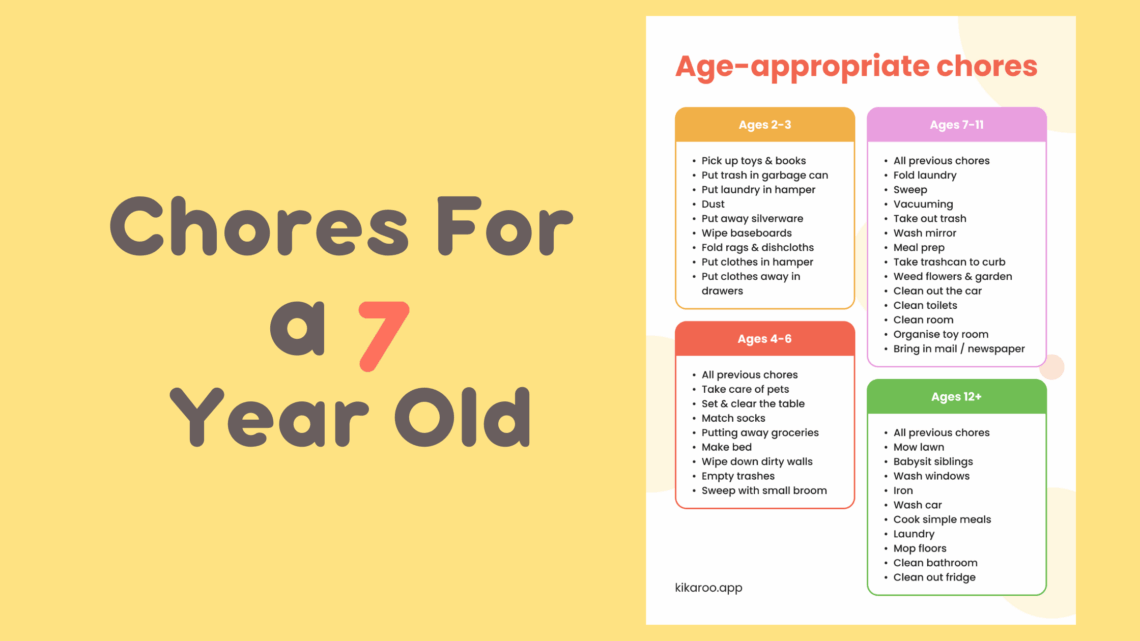
Seven-year-olds are at a turning point for household responsibilities. They have enough motor control to do tasks properly, enough working memory to follow a two or three-step sequence, and enough need for autonomy that being given real responsibility feels meaningful rather than childish. The mistake most parents make at this age is giving too few chores, not too many.
The 20 chores below are age-appropriate chores for most 7-year-olds. Some will come easily depending on what your child has already been doing. Others will take a few weeks of practice before they stick. The key is starting with the easier ones, building confidence, and adding tasks gradually.
What 7-Year-Olds Are Capable Of
At 7, children can:
- Follow a sequence of 2-3 steps without reminders mid-task
- Do tasks that require some physical coordination (folding, wiping, pouring)
- Sustain focus on a household task for 5-10 minutes
- Take real ownership of a small recurring responsibility (like a pet or plant)
- Connect doing chores to earning rewards or screen time
They still need an initial demonstration for any new task. Show them once, do it together once, then let them do it alone.
Bedroom Chores
1. Make their own bed
Takes 3-5 minutes. At 7, children can pull up a duvet and arrange pillows without help. It won’t look perfect. That’s fine. Let it be theirs.
2. Put away clean clothes
Folding is harder than it looks. Focus on putting away first, then teach folding. Give them their own drawer system so they know where things go.
3. Tidy their floor
Set a standard: nothing on the floor at bedtime except the rug. Keep it concrete and measurable so there’s no argument about whether it’s done.
4. Empty their bin
Swap the bin liner and take it to the main bin. Most 7-year-olds can manage this independently once shown how.
5. Dust their shelves
Give them a microfibre cloth and show them the motion. Takes 2 minutes. Works well as a weekly Saturday morning job.
Kitchen Chores
6. Set the table
Plates, cutlery, glasses. Give them a placemat template if it helps them get the layout right. Add a responsibility card on the fridge if they keep forgetting.
7. Clear the table after meals
Carry their own plate and glass to the counter or dishwasher. At 7, they can also carry serving dishes (with supervision for anything hot or heavy).
8. Load the dishwasher
Start with safe items, no sharp knives. Show them where things go (cutlery basket, cups on the top rack) and which items don’t go in the dishwasher.
9. Unload the dishwasher
Harder than loading because it requires knowing where everything lives. Do it together a few times until they know the layout, then let them do it alone.
10. Wipe down the table after meals
Wet cloth, wipe all surfaces, rinse the cloth. Straightforward once they know the steps. Takes 2 minutes.
Bathroom Chores
11. Hang up their towel
Simple but builds the habit. The goal is that their towel is never on the floor.
12. Wipe the bathroom sink
After brushing teeth, a quick wipe with a cloth keeps it clean. Most 7-year-olds can handle this daily without much resistance.
13: Put dirty clothes in the hamper
Sounds obvious. Without a clear expectation set, it won’t happen. Make the hamper visible and accessible, and include it in the bedtime routine.
Living Areas
14. Vacuum their bedroom
A lightweight stick vacuum works well for this age. Show them how to move furniture slightly and get the edges. A satisfying, visible result means they often enjoy this one.
15. Tidy the lounge before bed
Cushions back on the sofa, any toys or belongings taken to their room, remotes in their spot. Set a consistent time (right after dinner is easiest), so it becomes automatic.
16. Water a plant
Assign one or two plants to them specifically. Show them how much water each needs. This teaches basic responsibility for a living thing without the stakes of a pet.
H2: Outdoor Chores
17. Sweep the porch or path
A small broom, sized for children, makes this manageable. Works well as a weekly job tied to bin day or a regular family task time.
18. Pick up toys or equipment from the garden
Before dinner or bedtime, anything left outside comes in. Short, clear, and teachable in one session.
Pet and Family Responsibilities
19. Fill the pet’s water bowl
Daily, consistent, and directly connected to caring for another living creature. If you have a pet, this should be one of the first chores assigned at this age.
20. Help bring in groceries
Not carrying the heaviest bags, but taking lighter bags from the car to the kitchen. Participates them in a family task they’ll do for years.
How to Make Chores Stick at Age 7
Start with three, not ten
Introduce three chores and let them become habit before adding more. Overloading leads to resistance. Gradual build-up leads to ownership.
Show them once, then let them do it
Demonstrate the task completely, do it together once, then step back. Hovering or correcting mid-task makes it feel like a test rather than a responsibility.
Tie completion to something they actually want
A chore chart with a concrete reward at the end works far better at 7 than abstract praise. Screen time, a trip out, or choosing what’s for dinner are more motivating than sticker chart badges alone. An app like Kikaroo lets them see their points accumulate in real time, which helps maintain momentum between reward milestones.
Keep the expectation simple and visible
A list on the fridge or a chore app they can check themselves removes the need for parents to remind them every day. When children own the checklist, completion rates go up. For a suggested daily structure at this age, what to assign in the morning versus the evening, see our daily chores for kids guide.
Don’t redo it in front of them
If the bed isn’t perfectly made or the table isn’t perfectly set, let it go, unless there’s a safety issue. Redoing their work in front of them teaches that their effort doesn’t count, which kills motivation faster than anything else.
Chores That Are Too Advanced for Most 7-Year-Olds
Save these for ages 9-10:
- Cooking anything on the stove unsupervised
- Mopping (coordination and water management)
- Doing a full load of laundry independently
- Looking after younger siblings without an adult nearby
- Mowing the lawn
Frequently Asked Questions
Start with 3 daily chores and 1 weekly task. Once those are consistent habits, add one more. Most 7-year-olds can manage 4-6 chores without it feeling overwhelming.
That depends on your family’s approach to allowance. Some families tie allowance directly to chores; others separate the two. Either works. What matters is that the reward (whether money, screen time, or something else) is consistent and follows through.
Start with one chore they’ve chosen themselves, make the reward clear and immediate, and reduce the size of the task until it’s undeniably doable. Resistance usually comes from unclear expectations or rewards that feel too distant.
Yes. Household skills aren’t gendered. Every child benefits from learning to clean, organise, care for their environment, and contribute to family life. Assigning the same types of chores regardless of gender builds practical skills and shared responsibility.
By 5-6, children can typically put toys away, carry their plate to the sink, help set the table, and pick up clothing. Age 7 builds on that foundation rather than replacing it.
For a full list, see our guide to chores for 5-year-olds.