

 Home
Home Features
 Testimonials
 Downloads
 FAQ
FAQ What is Kikaroo?
 Blog
Blog Chore charts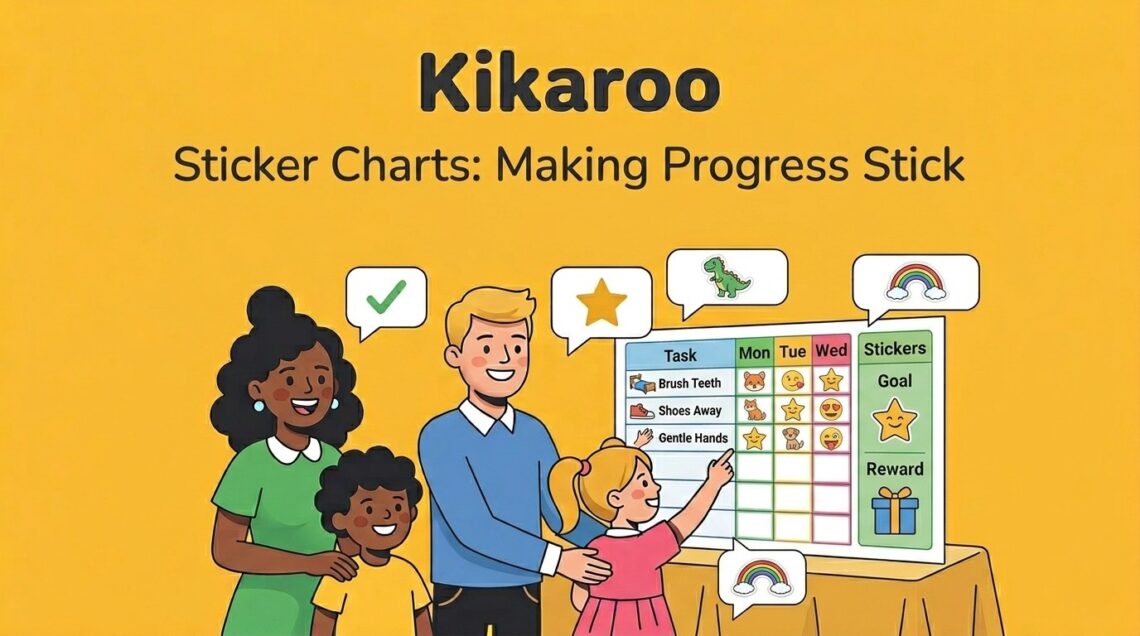
A sticker chart is one of those parenting tools that sounds almost too simple. Put up a chart, hand out stickers when your kid does the thing, and watch the behavior stick. And for a lot of families, it genuinely works, at least for a while.
The problem isn’t the sticker chart itself. It’s the way most parents set them up. The chart gets introduced with excitement, works well for a week or two, and then slowly stops getting used. The stickers lose their pull, the chart comes down, and you’re back to nagging.
This guide covers how sticker charts actually work, which kids they suit best, and how to avoid the mistakes that cause them to fall apart.
Do sticker charts work for kids?
Yes, with conditions.
Sticker charts work because they make progress visible. A child can see exactly what they’ve done and how close they are to a reward. That visibility reduces the need for reminders, because the chart does the prompting instead of you.
The research behind them is straightforward: kids respond to immediate, consistent feedback. A sticker earned right after the behavior is more effective than praise given later in the day. The chart keeps a record when your memory can’t.
Where sticker charts fail is when the reward stops feeling worth it. If your child earns a sticker for making their bed, but the reward at the end is something they don’t really care about, the motivation drains fast. The chart isn’t broken, the incentive is.
The other failure point is inconsistency. If stickers are given sometimes and forgotten other times, the chart loses its logic. Kids need to trust that the system is fair and predictable.
Used correctly, with a reward your child actually wants and a consistent follow-through, sticker charts are one of the more reliable behavior tools available to parents.
What age is appropriate for a sticker chart?
Sticker charts work best for kids aged 3 to 8. That’s the window where the combination of visual feedback, immediate rewards, and the novelty of stickers hits hardest.
Ages 2-3
Two-year-olds can participate in a sticker chart, but with significant limitations. They don’t yet understand delayed gratification. The concept of earning stickers toward a future reward is mostly lost on them. What works at this age is the sticker itself as the reward. Hand over the sticker immediately after the behavior, let them place it on the chart, and that’s the end of it. Keep it simple and don’t expect the chart to drive sustained behavior change.
Ages 3-5
This is the sweet spot. Kids this age understand the connection between behavior and reward, love the ritual of placing a sticker, and are motivated by visual progress. Keep the goal short, no more than 5 stickers before a reward. A week-long chart is too abstract at this stage.
Ages 6-8
Still effective, but the reward needs to be more meaningful. Sticker charts work well here when the goal is tied to something the child genuinely wants. A specific activity, screen time, or a small treat. Weekly charts are manageable at this age.
Ages 9 and up
Most kids outgrow the sticker chart by around 9 or 10. The format starts to feel babyish. A points-based system or a chore app tends to work better for older kids because it feels more grown-up and gives them more autonomy over their rewards.
Are sticker charts good for ADHD?
Yes, sticker charts are particularly well-suited to kids with ADHD, with a few adjustments.
Kids with ADHD typically struggle with delayed rewards. The longer the gap between doing a task and receiving recognition, the less motivating it feels. Sticker charts help because they provide immediate, visible feedback the moment a behavior happens. The sticker is a concrete signal that says “you did it” right now, not later.
A few things to adjust for ADHD:
Shorten the goal. A standard sticker chart might require 10 or 15 stickers before a reward. For a child with ADHD, cut that in half. Frequent small wins keep motivation alive better than one big reward at the end of the week.
Keep the target behavior specific. “Be good today” won’t work. “Put your shoes away when you come home” will. The more concrete and observable the behavior, the easier it is for your child to know exactly what earns a sticker.
Give the sticker immediately. Don’t batch it, don’t say “I’ll add your sticker after dinner.” The sticker goes on the chart the moment the behavior happens. That immediacy is what makes the system click for kids with ADHD.
Use it alongside a routine. A sticker chart works best when it’s part of a predictable sequence, morning routine, after-school tasks, or bedtime steps. Routines reduce the cognitive load of remembering what’s expected, which is where kids with ADHD often struggle most.
How to set up a sticker chart
Step 1: Pick one behavior to focus on
Start with a single, specific behavior, not a general goal like “be helpful.” Choose something observable: “put dirty clothes in the hamper,” “brush teeth without being asked,” “come to dinner when called the first time.” One behavior per chart. If you try to track five things at once, the chart becomes a chore for you to manage and loses clarity for your child.
Step 2: Set a realistic sticker goal
Decide how many stickers equal a reward. For kids under 5, aim for 3-5 stickers. For kids aged 6-8, 7-10 is reasonable. For older kids, up to 14. The goal should feel achievable within a week. If your child can see the finish line, they’ll keep going. If it feels too far away, they’ll stop trying before they get there.
Step 3: Choose a reward your child actually wants
Ask your child what they’re working toward. Don’t pick the reward for them. It can be screen time, a trip to the park, choosing dinner, staying up 20 minutes later, or a small treat. The reward doesn’t need to cost money. It needs to matter to your kid. A reward that doesn’t excite them is a chart that won’t last two weeks.
Step 4: Put the chart somewhere visible
Stick it at eye level for your child. On the fridge, bedroom door, or bathroom mirror. Out of sight means out of mind. The chart only works as a prompt if your child sees it regularly throughout the day.
Step 5: Give the sticker immediately after the behavior
The moment the behavior happens, hand over the sticker. Let your child place it on the chart themselves. That small act of ownership matters. Don’t batch stickers or promise to add them later. Immediacy is what makes the connection between behavior and reward real for kids.
Why sticker charts stop working
Most sticker charts don’t fail because the idea is wrong. They fail because of a few predictable mistakes.
The reward loses its appeal. A reward that excited your child in week one might mean nothing by week three. Kids’ interests shift fast. Check in every couple of weeks. If the goal doesn’t feel worth working toward anymore, change it. The chart is the structure; the reward is the fuel.
The goal is too far away. If your child needs 30 stickers before anything happens, they’ll lose interest before they get halfway. Shorten the runway. More frequent, smaller rewards beat one big payout at the end of the month.
The behavior isn’t specific enough. “Be responsible” can’t be stickered. “Feed the dog before school” can. Vague targets leave kids guessing what earns a sticker, which makes the system feel arbitrary and unfair.
Stickers get given inconsistently. If your child does the behavior and sometimes gets a sticker, and sometimes doesn’t, because you were busy, forgot, or it was a hectic morning, the logic of the chart breaks down. Kids need to trust that the rules are the same every day.
The chart runs too long without a reset. A chart that’s been on the fridge for two months with stickers half-filled in is demoralizing, not motivating. Once a goal is reached, celebrate it and start fresh with a new chart, a new behavior, or a new reward. Momentum matters.
When to move on from the sticker chart
A sticker chart is a tool for building a habit, not a permanent fixture. The goal is to reach a point where the behavior happens without the chart.
You’ll know it’s time to move on when your child does the target behavior consistently without needing the visual prompt. That’s the whole point: the chart scaffolds the habit until it sticks on its own. Once it does, quietly retire it. No big announcement needed.
If your child is around 9 or 10 and starting to find the sticker format embarrassing, that’s a clear signal too. Forcing a system that feels babyish will create resistance, not results. This is a good age to switch to a points-based system or a chore app where the tracking feels less childish, and they have more control over how they spend what they earn.
Some behaviors are also just harder to retire from a chart. Recurring responsibilities like daily chores or morning routines can benefit from a tracking system indefinitely. In that case, evolving the format rather than dropping it entirely works better. A chore chart or a behavior chart gives older kids a structure that still works without the sticker aesthetic.
The sign of a sticker chart that did its job isn’t that you need it forever. It’s that eventually you don’t.
The digital sticker chart option
Paper sticker charts have one obvious limitation: they live on the fridge. If your child isn’t walking past it, they’re not thinking about it. And for parents managing multiple kids, tracking who earned what, and making sure the reward actually gets delivered, adds friction to a system that’s supposed to reduce it.
A chore and reward app like Kikaroo works on the same principle as a sticker chart, but without the paper. Your child completes a task, earns points, and can see their progress in real time. You get a notification when something’s done, so you’re not relying on memory to hand out the sticker at the right moment.
The reward is customizable, screen time, a trip to the park, or choosing what’s for dinner, so it stays relevant as your kids grow and their interests change. And because it works across multiple kids, each child has their own chart without you managing four pieces of paper on the fridge.
If your child is old enough to use a phone or tablet, typically 6 and up, a digital system is worth trying alongside or instead of a paper chart. The structure is identical. The consistency is built in.
Frequently asked questions
Yes, when used consistently and with a reward your child actually wants. Sticker charts work because they make progress visible and provide immediate feedback after the behavior. The most common reason they fail is that the reward stops feeling worth the effort, not that the method itself is flawed.
Sticker charts work best for kids aged 3 to 8. Children under 3 can participate, but won’t understand delayed rewards, use the sticker itself as the immediate reward at that age. Kids 9 and older often find the format too babyish and respond better to a points-based system or a chore app.
Yes, sticker charts suit kids with ADHD particularly well because they provide immediate, visible feedback rather than a delayed reward. For best results: shorten the goal, keep the target behavior specific and observable, and give the sticker the moment the behavior happens rather than later in the day.
Partially. Two-year-olds don’t yet grasp the idea of saving up stickers toward a future reward. What works at this age is treating the sticker itself as the reward, hand it over immediately after the behavior and let them place it on the chart. Keep expectations realistic: the chart at this age builds the habit of the ritual, not the logic of a reward system.