

 Home
Home Features
 Testimonials
 Downloads
 FAQ
FAQ What is Kikaroo?
 Blog
Blog Chore charts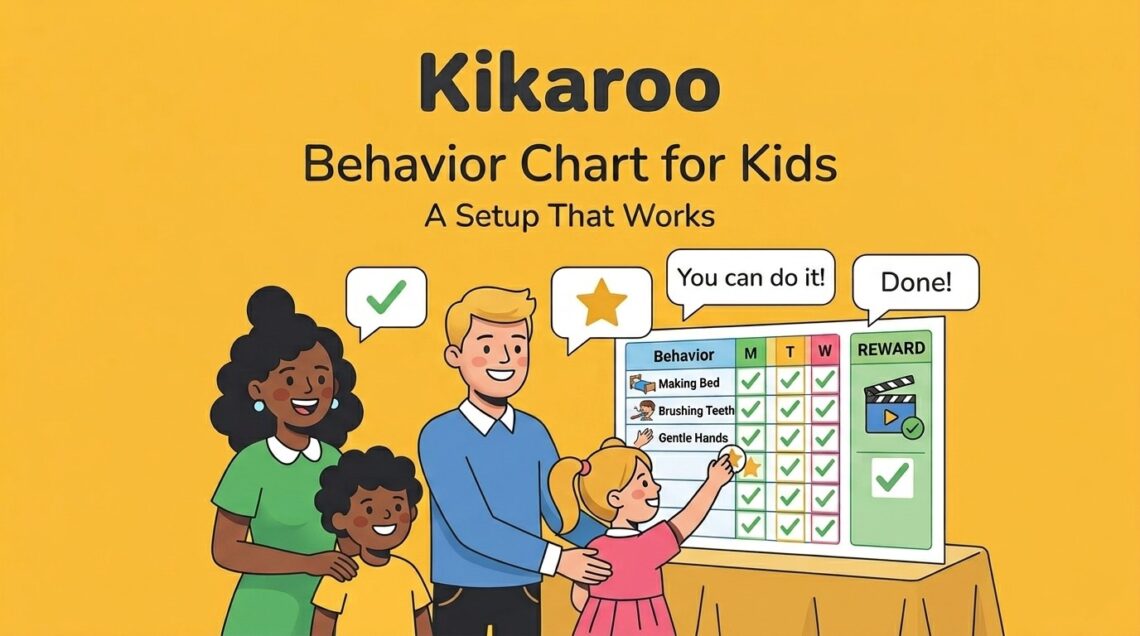
A behavior chart is one of the oldest parenting tools there is. A piece of paper, a few stickers, a clear goal. Simple enough that a 4-year-old understands it. Effective enough that child psychologists still recommend it.
But most behavior charts fail within two weeks. Not because the idea is wrong, but because the setup is wrong. The wrong behavior, the wrong reward, the wrong timeline. A chart that starts with the best intentions ends up ignored on the fridge by Thursday.
This guide covers how to set up a behavior chart that actually works, what to track, how to reward it, and what to do when it stops working.
If you want the printable version, grab our free behavior chart templates. Ready to print or use on your phone.
What is a behavior chart?
A behavior chart is a visual tracking tool that shows a child what behavior is expected, whether they did it, and what they earn when they do. It makes the invisible visible, turning abstract expectations like “be kind to your sister” into something a child can see, track, and work toward.
At home, behavior charts are most commonly used for:
- Building a new habit (making the bed every morning)
- Stopping a repeated problem (hitting, tantrums, backtalk)
- Getting through a difficult transition (a new sibling, starting school)
- Establishing a chore routine
The chart itself can be a sticker sheet on the fridge, a printed grid, a whiteboard, or an app. The format matters less than the system behind it.
Do behavior charts actually work?
Yes, with conditions.
Behavior charts work when the behavior is specific, the reward is meaningful, and the feedback loop is short. They stop working when any one of those three things is off.
The underlying principle is straightforward: children respond to clear expectations and immediate positive feedback. When a child can see exactly what’s expected, track their own progress, and receive a reward they actually care about, behavior changes faster than it does with reminders and consequences alone.
When they work
- The target behavior is one specific thing, not a general attitude
- The child understands the chart and helped choose the reward
- Rewards happen quickly, days, not weeks
- The parent is consistent about tracking and following through
When they don’t work
- The goal is too vague (“be good today”)
- The reward is too far away (“earn a bike at the end of the month”)
- The chart tracks too many behaviors at once
- The parent forgets to update it after day three
The most common failure isn’t the chart, it’s the setup. A well-designed chart with a modest reward beats an elaborate system with a big prize every time.
How to set up a behavior chart step by step
The setup takes 15 minutes. Getting it right up front saves weeks of inconsistency.
Step 1 – Pick one behavior
Start with one. Not three, not a full routine, one specific, observable behavior. “Put shoes away after school” is a behavior. “Be more responsible” is not.
If you have multiple things you want to work on, rank them and start with the one causing the most friction. Add a second behavior only after the first has become a habit, usually 3–4 weeks.
Step 2 – Choose the chart format
The format should match the child’s age:
- Ages 2-5: Visual sticker chart, one box per day, simple picture of the behavior
- Ages 6-9: Weekly grid with checkboxes or stickers, can track 2–3 behaviors
- Ages 10+: Point-based system, can handle weekly targets and varied rewards
Don’t over-engineer it. A hand-drawn grid on paper works as well as a printed template.
Step 3 – Set the reward
The reward needs to be two things: meaningful to the child and deliverable quickly.
Ask the child what they want to work toward, don’t assume. A 6-year-old might work harder for 20 minutes of extra screen time than for a toy. A 10-year-old might prefer choosing dinner or staying up late on Friday.
Avoid cash for younger kids, abstract value doesn’t motivate the same way as concrete rewards.
Step 4 – Keep the loop short
For ages 2-6: daily rewards. Complete today’s behavior, earn today’s sticker, and get a small reward at the end of the day or week.
For ages 7-12: weekly rewards. Earn enough points across the week, redeem on the weekend.
For teenagers: flexible timing, but never longer than two weeks between reward opportunities. Long gaps kill motivation at every age.
Step 5 – Know when to stop
A behavior chart is a temporary tool, not a permanent fixture. The goal is to make the behavior automatic, at which point the chart becomes unnecessary.
Signs the chart has done its job:
- The child does the behavior without checking the chart
- They remind you to update it (habit is forming)
- They seem mildly bored by the reward
For chore-specific habits, see how we break down the transition in our guide to tracking chores without nagging. When you see these signs, phase it out gradually. Reduce tracking frequency, then move to occasional praise, then let it go entirely.
Behavior chart ideas by age
The right behavior to track depends on what a child is developmentally ready for. A chart that works for a 9-year-old will frustrate a 4-year-old, and vice versa.
Ages 2-4
At this age, the chart is more about ritual than accountability. Keep it to one behavior, use pictures instead of words, and reward daily.
Good behaviors to track:
- Putting toys in the bin after play
- Staying in bed after lights out
- Using gentle hands with siblings
- Getting dressed independently
One sticker per day. Small reward at the end of the week, a favorite snack, a movie choice, an extra story.
Ages 5-8
This is the sweet spot for behavior charts. Kids this age understand the system, care about the reward, and feel genuine pride when they earn stickers. Good behaviors to track:
- Making the bed every morning
- Completing homework before screen time
- Speaking kindly to siblings
- Putting dirty clothes in the hamper
Weekly grid, 3–5 stickers needed to earn the reward. Let them choose between two reward options, giving choice increases buy-in. These are also the ages when chore routines stick best. See our complete guide to chores for kids by age for a full breakdown by age group.
Ages 9-12
Preteens respond better to point systems than sticker charts, stickers feel babyish at this age. A simple tally or app works better.
Good behaviors to track:
- Completing chores without being reminded
- Managing homework independently
- Screen time limits
- Keeping their room tidy
Points earned across the week, redeemed for a meaningful reward on the weekend. Let them bank points toward something bigger if they want.
Teenagers
Most teenagers won’t engage with a traditional behavior chart, and they shouldn’t have to. At this age, the focus shifts to agreements rather than charts.
If you do use a chart or tracking system with a teen, frame it as a shared agreement: “Here’s what I’m asking for, here’s what you get in return.” Keep the tracked behavior to one thing, make the reward genuinely worthwhile, and treat it as a negotiation rather than a rule.
A visible app, where they track their own progress, works better than a parent-managed chart at this age.
Types of behavior charts
The chart format should match the behavior you’re tracking and the age of the child. Here are the most common types and when each works best.
Sticker chart
The classic. A grid with days or tasks on one axis, stickers added when the behavior happens. Works best for ages 3-8 where the physical act of placing a sticker is its own small reward.
Best for: single daily behaviors, building morning or bedtime routines.
Point chart
Instead of stickers, the child earns points they can accumulate and redeem. More flexible than a sticker chart, points can be earned for multiple behaviors and redeemed for different rewards at different point thresholds.
Best for: ages 8 and up, families with multiple children, situations where you want to track more than one behavior at once.
Traffic light chart
Three zones, green, yellow, red, that reflect behavior across the day. Common in classrooms but works at home too, especially for kids who need frequent feedback rather than end-of-day tracking.
Best for: younger kids with impulse control challenges, or any situation where you need real-time feedback rather than a daily summary.
Chore chart
A chore chart is a specific type of behavior chart, one focused entirely on household responsibilities rather than general behavior. The difference is that a behavior chart is usually temporary (used to change or build one habit), while a chore chart is designed to be permanent.
This is where Kikaroo fits in. A behavior chart tracks what you want to change. A chore chart tracks what you want to build. Kikaroo does both in one place, parents assign chores and behaviors, kids earn points, and those points convert to rewards the child actually cares about. It works from age 4 through the teenage years without switching tools.
If you’re using a behavior chart to build a chore routine, our chore chart templates are a good starting point, and Kikaroo is the natural next step once the habit has formed.
Behavior charts for kids with ADHD
Standard behavior charts often fail for kids with ADHD, not because the child isn’t trying, but because the system wasn’t designed for how their brain works. A few targeted adjustments make a significant difference.
Why standard charts don’t work
The most common chart failure with ADHD looks like this: the child starts enthusiastically, earns stickers for three days, then loses interest or forgets entirely. Parents assume the child doesn’t care. The real issue is usually one of three things:
- The reward is too far away. A child with ADHD has a shorter motivation horizon than neurotypical kids. A prize at the end of the month is functionally invisible.
- Too many behaviors at once. A chart tracking five things simultaneously is overwhelming before it starts.
- No external reminder system. Relying on the child to remember to check the chart doesn’t work when working memory is genuinely impaired.
What to change
One behavior only
This is true for all kids, but critical for ADHD. Pick the single most important behavior and track only that until it’s automatic. Everything else waits.
Daily rewards, not weekly
Shorten the loop as much as possible. Complete the behavior today, earn something today, or at most by tomorrow. Weekly rewards are too abstract for most kids with ADHD to stay motivated toward.
Visual and physical reminders
Put the chart where the behavior happens, on the bathroom mirror for morning routines, on the bedroom door for bedtime habits. An app with push notifications works better than a paper chart that requires the child to seek it out.
Celebrate the streak, not just the outcome
Kids with ADHD often struggle with all-or-nothing thinking. If they miss a day, they assume the whole chart is ruined. Build in a reset, missing one day doesn’t wipe the week. Acknowledge the streak that existed before the miss and help them start again immediately.
Free printable behavior chart
A good behavior chart doesn’t need to be complicated. A simple grid, behaviors on one side, days of the week across the top, is enough to get started.
We’ve put together free printable behavior and chore charts for every age group, ready to print at home or save to your phone.
Get the free printable charts →
Each chart includes:
- Age-appropriate behaviors and chores
- Daily and weekly tracking formats
- A reward tracker section
If you want a digital version that handles reminders, point tracking, and rewards automatically, Kikaroo does everything the printable does, without the weekly reprints.
Frequently asked questions
Yes, when set up correctly. Behavior charts work because they make expectations visible and give children a clear, immediate path to a reward they care about. The most common reason they fail isn’t the chart itself, it’s a reward that’s too far away, a behavior that’s too vague, or tracking too many things at once. Start with one specific behavior, keep the reward loop short, and most charts will work.
Yes, but they need adjusting. Standard charts with weekly rewards and multiple tracked behaviors tend to fail for kids with ADHD. What works better: one behavior only, daily rewards instead of weekly, and a visual reminder placed where the behavior happens. An app with push notifications works better than a paper chart for most kids with ADHD.
Ages 3-9 are the sweet spot. Younger kids respond to simple sticker charts with daily rewards. By 6-8, kids understand point systems and can work toward slightly longer-term goals. Preteens (9-12) respond better to point systems than sticker charts. Teenagers rarely engage with traditional charts. At that age, a shared agreement or app-based system works better.
A behavior chart for kids at home is a visual tracking tool that shows a child what behavior is expected, whether they did it, and what they earn when they do. Unlike classroom behavior charts, which often use public systems like traffic lights, home behavior charts are private, reward-focused, and usually tied to a specific habit or chore routine the family wants to build.