

 Home
Home Features
 Testimonials
 Downloads
 FAQ
FAQ What is Kikaroo?
 Blog
Blog Chore charts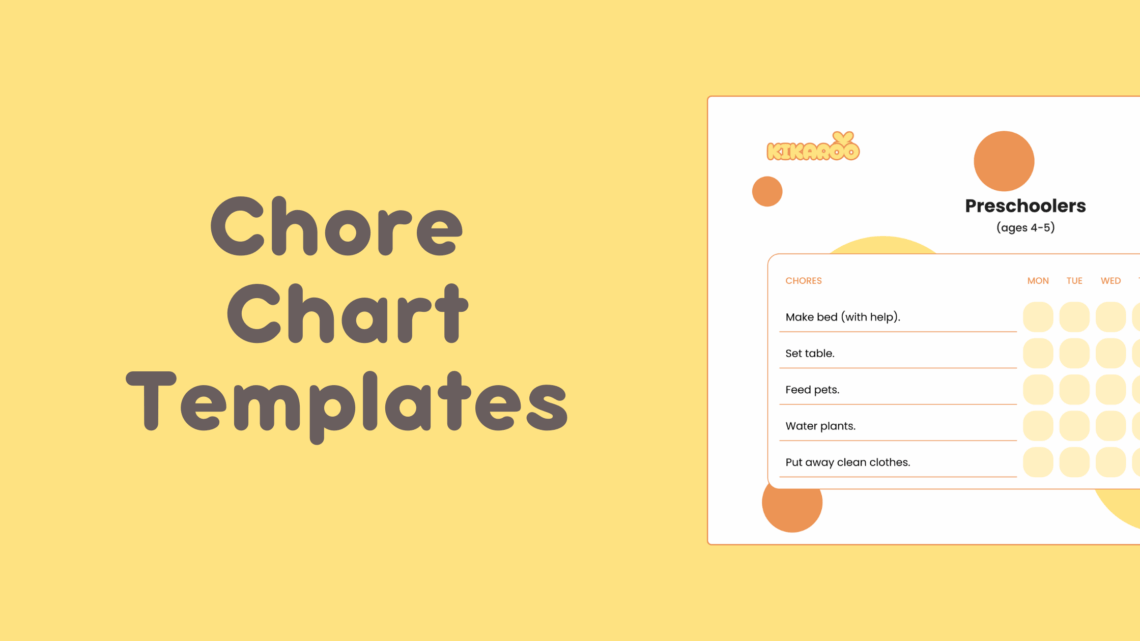
A chore chart gives your kids a clear picture of what’s expected, and gives you a break from repeating yourself every morning.
Most parents try a chart, see it ignored after a week, and give up. The chart wasn’t the problem. The setup was. When a chart matches your child’s age, shows tasks in a format they can follow, and connects to something they actually want to earn, it works.
This guide covers every format, daily, weekly, family, and by age, with free printable templates and a step-by-step setup that takes less than 15 minutes.
What is a chore chart?
A chore chart is a visual list that shows your child which tasks they’re responsible for, how often, and whether they’ve completed them. It replaces the daily verbal reminder with a system that the child can check themselves.
Charts come in many formats: a printed sheet on the fridge, a whiteboard on the bedroom door, or a digital app. What matters is that the child can see it, understand it, and mark it done without asking you what comes next.
A good chore chart has three things: the task, the schedule (daily or weekly), and a way to track completion. Everything else, stickers, points, and colour coding, is optional. Start simple and add layers once the habit is there.
How to create a chore chart
Setting one up takes less than 15 minutes if you follow these steps.
Step 1 – List the tasks
Write down every chore your household needs done regularly. Don’t filter yet, just get them all on paper. Dishes, laundry, vacuuming, taking out bins, feeding the pet, wiping surfaces.
Step 2 – Match tasks to age
Go through the list and assign each task to the youngest child who can reasonably do it. A 5-year-old can make their bed and put dirty clothes in the basket. A 10-year-old can load the dishwasher and vacuum their room. See the age-by-age breakdown below if you’re unsure.
Step 3 – Choose daily or weekly
Daily charts work best for younger children. They need the same routine every day to build the habit. Weekly charts work better for older kids who can manage varied tasks across the week. You can run both at the same time: daily basics for younger kids, a weekly rotation for older ones.
Step 4 – Decide on a reward
The chart tracks effort. The reward is what makes the effort worth it. This doesn’t have to be money, extra screen time, a chosen activity, or points toward something they want all work. Keep it specific and achievable within one or two weeks so kids stay motivated.
Step 5 – Put it somewhere visible
Fridge, bedroom door, bathroom mirror, wherever your child starts and ends their day. A chart nobody sees is a chart nobody uses. If you’re going digital, a shared app that sends reminders removes the “I forgot” excuse entirely.
Types of chore charts
Daily chore chart
A daily chart lists the same tasks every day, morning, afternoon, and evening. It works best for children under 8 who need a predictable routine to build habits. Tasks like making the bed, brushing teeth, putting shoes away, and tidying their room appear every day until they become automatic.
Once a child stops needing to check the chart to remember their tasks, the habit is set. That’s the goal. The chart makes itself unnecessary.
👉 For a ready-made morning and evening task structure to fill your daily chart, see our daily chores for kids guide.
Weekly chore chart
A weekly chart spreads different tasks across the week. Monday might be vacuuming, Wednesday helping with laundry, Saturday outdoor tidying. This format works well for children aged 8 and up who can plan ahead and handle variety.
Weekly charts are also useful when you want to rotate tasks between siblings. Each child gets a different job each week, which keeps things fair and teaches a wider range of skills.
Family chore chart
A family chart puts every household member on one sheet, and each person has a column or row showing their tasks for the week. It works well in households with multiple children because everyone can see who is responsible for what.
The visible accountability helps reduce arguments. When a child sees their sibling’s tasks alongside their own, they’re less likely to claim their workload is unfair. Rotating assignments weekly keeps it fresh and teaches every child every skill.
Free printable chore chart by age
The right tasks depend entirely on your child’s age and development. Giving a 6-year-old a job meant for a 10-year-old leads to frustration. Starting too easily means a missed opportunity to build real independence.
Below is a quick guide. For the full breakdown with detailed task lists, see our chores for kids by age guide.
Chore chart for toddlers and preschoolers (ages 2-4)
Keep it simple and physical. Put toys in a basket, place dirty clothes in the hamper, wipe up spills with a cloth, and help carry light groceries. The goal at this age isn’t a clean house. It’s building the idea that everyone contributes.
Chore chart for ages 5-6
This is when real habits start forming. Make the bed (it doesn’t need to be perfect), set the table, feed a pet, water a plant, tidy their bedroom. A daily chart with pictures works well at this age, and checkboxes they can tick themselves feel satisfying and build ownership.
👉 See the full list: chores for a 5-year-old
Chore chart for ages 7-9
Children this age can handle multi-step tasks. Unload the dishwasher, pack their own school bag, help sort laundry, vacuum their room, and clean the bathroom sink. They can also start taking on indoor chores that benefit the whole household, not just their own space.
Chore chart for ages 10-12
At this age, kids are ready for real household responsibility. Cooking simple meals, doing a full load of laundry, mowing the lawn, cleaning the bathroom, and taking out the bins. A weekly chart works better than a daily one. Give them the list and let them manage when they do it.
👉 See the full list: chores for a 9-year-old | chores for a 10-year-old
Chore chart for teens (ages 13+)
Teenagers can handle nearly everything an adult can. Normal chores for a 14-year-old include cooking full meals, grocery shopping with a list, deep cleaning shared spaces, doing their own laundry start to finish, and managing outdoor chores like mowing or weeding.
The chart format matters less at this age. What matters is clear expectations, defined deadlines, and a reward or consequence that’s real. Weekly check-ins work better than daily reminders.
👉 Download our free printable chore charts by age to get a ready-made template for each stage.
What are 10 chores for kids?
If you’re starting from scratch, these ten tasks cover the basics for most households and work across a wide age range:
- Making the bed – ages 5 and up
- Putting dirty clothes in the hamper – ages 3 and up
- Setting and clearing the table – ages 5 and up
- Loading or unloading the dishwasher – ages 7 and up
- Vacuuming their bedroom – ages 8 and up
- Taking out the bins – ages 9 and up
- Wiping down kitchen surfaces – ages 8 and up
- Doing a load of laundry – ages 10 and up
- Feeding and watering a pet – ages 5 and up
- Cleaning the bathroom sink and mirror – ages 9 and up
Start with two or three from this list and add more as the habit settles. Overloading a chart in the first week is one of the most common reasons kids disengage.
Behaviour and sticker charts
A chore chart tracks tasks. A behaviour chart tracks how a child acts, whether they remembered without being asked, whether they stayed calm during a difficult moment, and whether they followed through without a reminder.
The two work well together. A chore chart builds the routine. A behaviour chart shapes the habits around it, the attitude, the consistency, and the follow-through that make the routine stick.
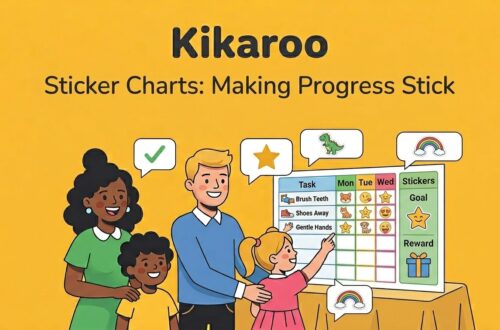
Sticker charts are the simplest version of a behaviour chart. A child earns a sticker for completing a target behaviour, one sticker per day, one row per week. When the row is full, the reward is earned. For younger children, especially, the sticker itself is motivating, not just what it leads to.
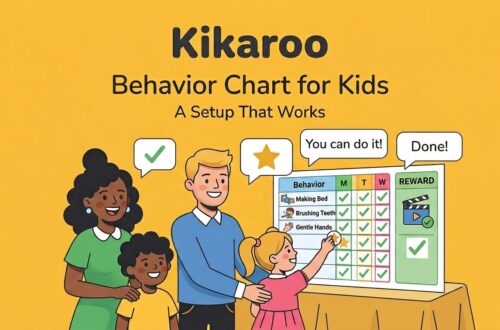
If you want to track behaviour alongside chores, not just what gets done, but how, a dedicated behavior chart for kids gives you a structured system with clear goals and visual progress your child can see every day.
Digital chore chart – tracking without paper
Printed charts have one consistent weakness: they get ignored. They fall off the fridge, get scribbled on, or simply stop being noticed after the first two weeks. A digital chore chart solves this without adding complexity.
A chore app sends reminders directly to your child’s device, shows their progress in real time, and lets you approve completed tasks from your phone. There’s no re-printing when tasks change, no lost charts, and no “I didn’t see it” excuses.
Kikaroo is built for exactly this. You set up each child’s tasks once, daily or weekly, with the right age-appropriate chores, and the app handles the reminders, tracks completion, and connects each task to a reward your child actually wants to earn. It takes less than 10 minutes to set up and works for kids from age 4 through to their teens.
For families who want the structure of a chore chart without the paper, it’s the straightforward next step. Try Kikaroo free and have your first chart running today.
Frequently asked questions
A chore chart is a visual tool that lists a child’s household tasks, how often they need to be done, and a way to track whether they’ve been completed. It replaces verbal reminders with a system the child can check and manage themselves.
List all household tasks, assign each to the youngest child who can do it, choose a daily or weekly format, decide on a reward, and put the chart somewhere your child sees it every day. A printed sheet or whiteboard works fine to start. The full step-by-step is in the how to create a chore chart section above.
At 14, a child can handle nearly all adult household tasks, cooking full meals, doing their own laundry, cleaning bathrooms, vacuuming shared spaces, mowing the lawn, and managing outdoor chores independently. The focus at this age shifts from supervision to accountability.
They work when they match the child’s age, connect to a reward the child cares about, and stay visible. Charts fail when tasks are too hard, rewards are too far away, or the chart gets forgotten after the first week. Start simple, keep the reward achievable, and adjust as the habit builds.
Yes, download our free printable chore charts by age, which include templates for toddlers through teens in both daily and weekly formats.