

 Home
Home Features
 Testimonials
 Downloads
 FAQ
FAQ What is Kikaroo?
 Blog
Blog Chore charts
Ages 4 and 5 sit in a sweet spot for starting chores. Preschoolers are past the unpredictability of toddlerhood, keen to show they can do things independently, and still young enough to absorb good habits without much resistance. Most parents wait too long. By age 4, kids are ready.
This guide covers 15 practical chores for preschoolers aged 4-5, grouped by category, with tips on making them stick. If you want to see what comes before or after this stage, the complete age-by-age chore guide covers every stage from toddlers through teens.
What Preschoolers Can Actually Handle
At ages 4–5, children have enough fine motor control to hold and carry small objects, enough focus to complete a short task from start to finish, and enough language to follow simple two-step instructions. They cannot maintain attention for long, and they learn by watching first, model a task, do it alongside them, then step back.
Research supports starting early. A University of Minnesota study found that children who began helping with household tasks at ages 3–4 were more likely to be competent, self-reliant adults. The benefit came from starting young, not from any specific task chosen.
15 Chores for Preschoolers (Ages 4–5)
Self-Care and Bedroom
- Make their bed. It won’t be neat, that’s fine. Straightening the sheets and pulling up the duvet each morning is the habit that matters, not hospital corners.
- Put dirty clothes in the laundry basket. Simple, immediate, and easy to check. Keep the basket visible and within reach so there is no excuse.
- Choose and lay out tomorrow’s clothes. Helps preschoolers practise making decisions and cuts the morning rush. Do it as part of the bedtime routine.
- Put toys away after playtime. One box or shelf per category makes this manageable. A tidy-up song signals when it starts. Music removes the negotiation.
Around the Home
- Carry light shopping items. Handing a preschooler the bread, cereal box, or bag of apples makes them feel genuinely useful, not just entertained.
- Wipe up small spills with a cloth. Give them a dedicated cloth and show them the motion. Mistakes become practice, not punishment.
- Dust low surfaces. Coffee tables, skirting boards, and low bookshelves, all reachable without a stool and satisfying to do with a microfibre cloth.
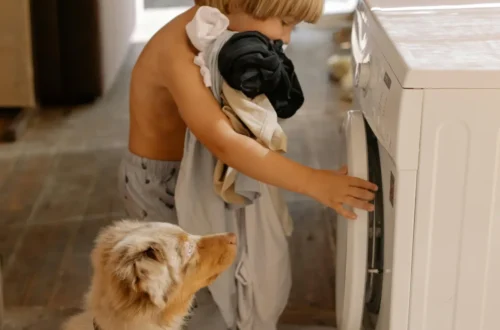
- Sort laundry by colour. Whites in one pile, darks in another. Simple, clear, and doubles as an early maths activity.
- Take rubbish to the bin. Paper scraps, tissues, snack wrappers, teach them to carry them to the right bin rather than leaving them on the nearest surface.
Meals and Kitchen
- Set the table with non-breakable items. Placemats, napkins, cups, and cutlery, they can do all of it if the items are child-safe and stored at their height.
- Carry their own plate to the sink after meals. One rule: you eat it, you carry it. Takes under a minute and builds a lifelong habit.
- Help wash fruit and vegetables. Safe, satisfying, and kids are consistently more likely to eat food they have helped prepare.
Garden and Pets
- Water indoor plants. Give them a small watering can that they can carry themselves. Teach them to check the soil first. Dry means it needs water.
- Help tidy the garden. Collecting fallen leaves into a pile, picking up outdoor toys, and putting sticks in the compost bin. Purposeful and physical.
- Refill a pet’s water bowl. With supervision, most 4-5 year olds can manage this without spilling, easier with a small jug than carrying a full bowl.
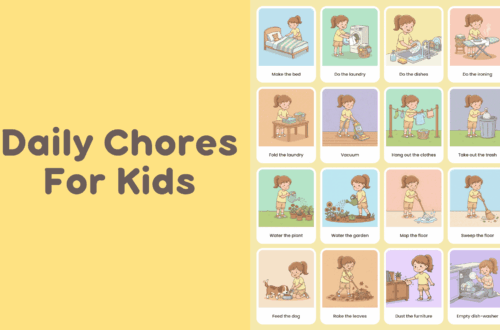
A visual chart makes a real difference at this age. Preschoolers respond to seeing their own progress. A sticker chart or printed chore chart keeps the routine visible without you having to remind them every day.
How to Make Preschool Chores Stick
The biggest risk with preschool chores is not starting. It is inconsistent. Kids this age need the same task, at the same time, every day, before the habit forms. Here is what works:
- Attach chores to an existing routine. “After breakfast, we tidy the table” works better than “sometimes we tidy the table.” Linking to meals, bedtime, or getting dressed removes the daily negotiation.
- Show once, do together, then let them do it alone. Model it, do it side by side, then step back. Resist the urge to redo it in front of them, it signals that their effort did not count.
- Keep tasks short. Attention spans at 4–5 are roughly 10–15 minutes at best. One chore done well beats three abandoned halfway through.
- Praise effort, not result. “You put all your toys away, that really helped” lands better than a generic “good job.” Specific, genuine praise builds the intrinsic motivation you want long-term.
- Use a chart they can see. A chore chart gives preschoolers a concrete sense of completion that abstract praise cannot match. Stickers, checkboxes, or a digital tracker all work.
If you want a full morning and evening framework with chores built in at each age, the daily chores guide has age-by-age routines you can adapt from toddlers through to primary school.
Frequently Asked Questions
What chores should a 4-year-old do?
At age 4, focus on simple single-step tasks: putting toys away, carrying their plate to the sink, putting clothes in the laundry basket, and watering a plant. Keep each task under five minutes and demonstrate it first. Consistency matters more than the specific chore, any task done daily becomes a habit.
Should preschoolers get an allowance for chores?
Most child development experts recommend separating basic household chores from payment at this age. Core tasks like tidying their room or carrying their plate are part of living together as a family. You can introduce a small allowance for optional bonus tasks if you want to start teaching money basics, but the expectation to contribute should remain regardless.
What if my preschooler refuses to do chores?
Refusal usually comes from one of three things: the task feels too hard, the timing is wrong (tired or hungry), or they have not seen you doing it alongside them enough. Give choice within the routine (“Do you want to wipe the table or carry the plates?”), do it together more often, and keep expectations low, one task done consistently beats a full chart abandoned after a week.
How many chores should a preschooler have?
Start with two or three daily tasks, typically one self-care chore (making their bed, putting clothes away) and one household chore (setting the table, carrying their plate). Once those are routine, add one more. A 5-year-old doing three chores reliably is ahead of most kids their age.