

 Home
Home Features
 Testimonials
 Downloads
 FAQ
FAQ Blog
Blog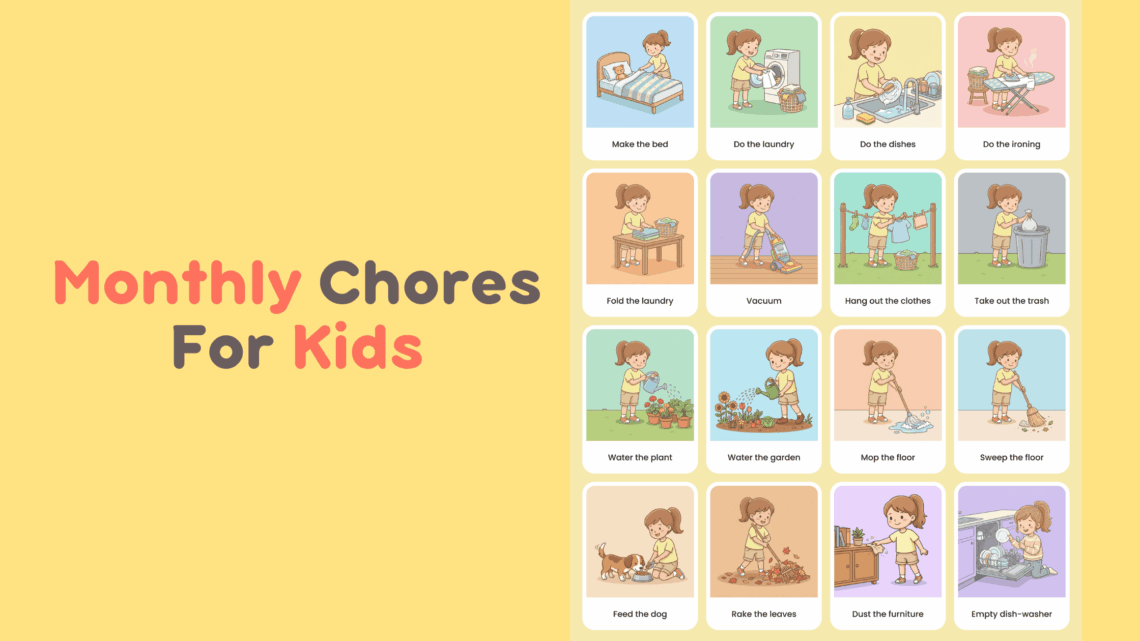
Monthly chores teach children how to handle bigger responsibilities that do not need to be done every day or every week. These chores often take a little more time, require deeper cleaning or involve organizing areas that collect clutter slowly.
By completing monthly chores, kids learn planning, patience and the value of taking care of the home in a long term way. These chores also help children understand that some responsibilities happen on a schedule, not just when something looks messy.
Parents often use calendars, charts or chore app for kids such as Kikaroo to remind kids when their monthly chores are due. This lets children prepare and feel confident instead of rushed. Below are helpful monthly chores for kids of different ages, along with explanations of why each chore matters for developing independence and life skills.
Why Monthly Chores Matter
Monthly chores give kids a chance to practice deeper cleaning and long term responsibility. Unlike daily or weekly chores, monthly chores teach children how to:
- manage larger projects
- break bigger chores into steps
- understand long term care for the home
- organize spaces with purpose
- see the difference their effort makes over time
These chores also help children become more aware of the environment they live in. They learn that a home stays clean and comfortable through steady upkeep, not just quick cleanups.
Monthly chores also build patience. Kids learn that some chores take time, and that results are more satisfying when they work through a bigger responsibility with care.
Monthly Chores for Ages 4 to 5
Monthly chores for younger children should be simple, guided and built around routines they enjoy. The goal is to help them feel included, not overwhelmed.
Cleaning Out One Toy Box
Kids can help remove toys from a basket, wipe the inside and sort which toys stay and which toys should move to another place. This monthly chore teaches early organization and helps prevent messy build up.
Helping Wash Larger Toys
Once a month, children can help clean plastic toys or outdoor toys using a bucket of soapy water. This chore is fun and teaches them how to care for their belongings.
Helping Water Bigger Plants or Check Soil
Younger kids can help check soil in pots or help water a larger plant once a month. This chore teaches responsibility and helps kids connect with nature in a deeper way.
Monthly Chores for Ages 6 to 7
At this age, children can handle slightly larger chores that involve more sorting and deeper cleaning.
Cleaning Under the Bed
This monthly chore helps children discover forgotten toys, dust and items that do not belong there. It teaches awareness of hidden spaces and encourages thorough cleaning.
Organizing a Closet Shelf or Drawer
Kids can sort clothes, fold items and remove things that no longer fit. This monthly chore teaches planning and responsibility for personal belongings.
Helping Clean Out the Refrigerator Door
With supervision, kids can remove light items, wipe the shelves and place everything back in order. This chore teaches organization and cleanliness in shared spaces.
Monthly Chores for Ages 8 to 9
Children in this age group are ready for deeper chores that involve more steps and attention.
Vacuuming or Sweeping Hard to Reach Areas
Kids can help vacuum corners, behind furniture or under tables once a month. This teaches thorough cleaning and patience as they handle a larger chore.
Helping Clean the Car More Deeply
Kids can remove items from the car, help wipe surfaces or clean floor mats with guidance. This monthly chore teaches responsibility beyond the home and strengthens awareness of how to care for shared property.
Organizing the Pantry or Snack Cabinet
Sorting snacks, checking for expired items and placing items in neat groups teaches children planning, attention to detail and how to maintain order in a frequently used space.
Monthly Chores for Ages 10 to 11
Older kids can handle more complex monthly chores that require time, planning and careful work.
Helping Clean the Bathroom More Deeply
Kids can help wipe cabinets, clean mirrors, organize products and tidy shelves. This monthly chore teaches hygiene, responsibility and pride in maintaining a shared space.
Helping Wash Bedding or Comforters
Ten to eleven year olds can help remove bedding, place items in the washer with guidance and make the bed with fresh sheets. This chore builds independence and teaches important life skills.
Sorting Seasonal Clothing or Items
Kids can help organize seasonal items such as jackets, hats or sports gear. They can decide what stays, what moves to storage and what no longer fits. This monthly chore teaches decision making and organization.
Tips for Successful Monthly Chores
Monthly chores can feel larger, so children benefit from clear steps and gentle guidance. Parents can make these chores smoother by:
- showing how to break the chore into smaller parts
- setting a relaxed amount of time
- offering support when needed but allowing independence
- using lists or chore charts
- praising effort, not perfection
It also helps to schedule monthly chores for a calm time, such as a weekend morning. Kids enjoy the chore more when they are not rushed.
Some families choose to rotate chores each month so children learn many different skills. Others assign the same monthly chore to each child so they can master it with confidence.
Conclusion
Monthly chores help kids learn deeper responsibility and understand how to care for important parts of the home.
From sorting closets and cleaning under the bed to washing bedding and organizing the pantry, these chores teach planning, patience and independence. When families guide children gently and use helpful chore apps such as Kikaroo to keep track of monthly routines, kids begin to see their home as something they help protect and care for. Monthly chores build strong habits that support confidence and prepare children for greater responsibilities as they grow.