

 Home
Home Features
 Testimonials
 Downloads
 FAQ
FAQ Blog
Blog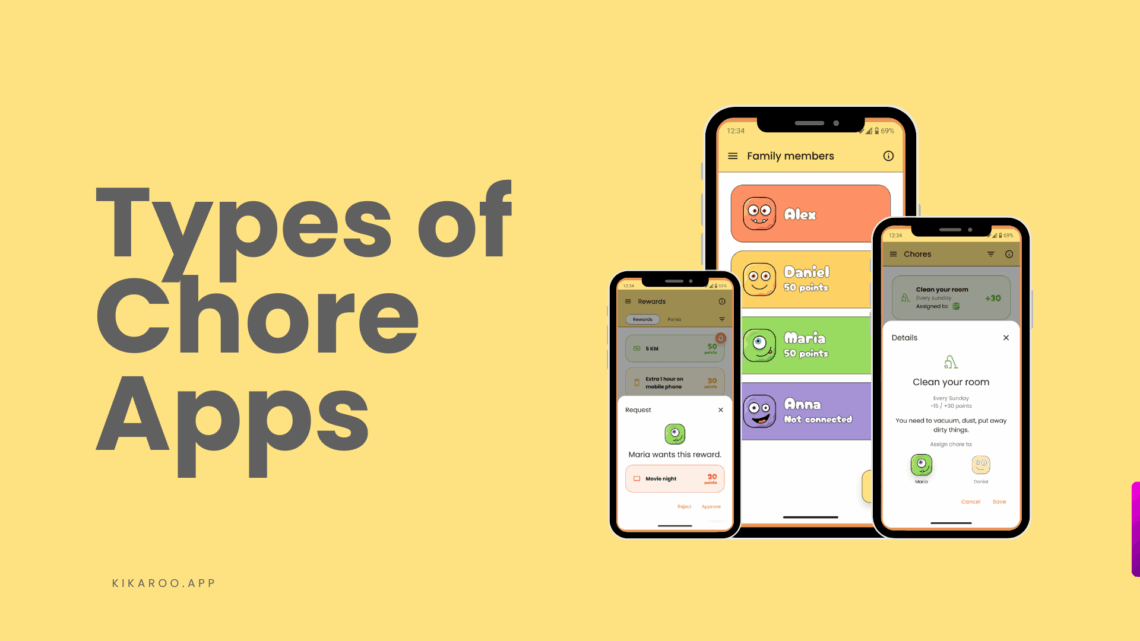
Chore apps have become the new way families stay organized, build daily routines and help children learn responsibility in a steady and reassuring way.
Many parents begin by exploring chores for kids by age, types of chores for kids or even chore charts for kids before turning to apps, and they often discover that digital tools give children a clearer and more motivated path.
A modern app such as Kikaroo gives families a simple place where routines live, rewards can be earned and every child can see what needs to be done.
There are many types of chore apps, each shaped for a different style of family life. Some focus on rewards, some on daily structure and others on simple money skills.
Many families mix these tools with chore chart templates and their own house rules to create something that works for their home. What follows is a full guide to the major categories so parents can find the best match for their needs.
Reward Based Chore Apps
Reward based chore apps focus on cause and effect. A child completes a task, and something pleasant happens. This can be a point, a star, a small surprise or a bigger reward collected over time.
Children respond strongly to rewards because they can see progress right away. Parents often match this system with types of rewards for kids so every child gets something that feels meaningful to them.
Kikaroo shines in this category because it uses a point system that feels simple and friendly. Children check off a task and watch their points grow. The reward does not have to be money.
Many families choose things like extra playtime, time with a parent, a fun activity, or a small toy. The key is finding something that matches the child’s age and stage of development. This is why many parents look at chores for kids by age before setting up tasks.
Reward based chore apps are especially useful for younger children who need direct motivation. They work like a coaching tool. They help the child see that effort leads to good outcomes. This creates a foundation for internal motivation later, but in the early years a clear reward system helps keep routines steady.
Families with more than one child often use reward based systems to keep things fair. Each child can follow their own list, collect their own points and build confidence at their own pace. Apps like Kikaroo help parents set individual tasks so no child feels behind or ahead. This supports a peaceful home rhythm and makes chores a regular part of family life.
Schedule and Routine Chore Apps
Some families want structure more than rewards. They look for tools that help everyone know what happens each morning, afternoon and evening. Schedule and routine chore apps focus on time and flow. They help families create predictable days and reduce the mental load for parents.
This type of app is especially helpful for families who follow morning and evening routines that never change much. For example, some parents start with wake up time, teeth brushing, a quick room check, breakfast and school preparation. In the evening it might be dinner cleanup, clothes ready for tomorrow, bath time and reading time.
Kikaroo includes daily routines in a way that children can understand. The child sees a simple list and follows it step by step. This supports independence because the parent does not have to repeat instructions every day. Children enjoy having a routine because it gives them a sense of control and comfort.
Schedule apps also support chores by family size. A bigger family needs more structure because many small moments can pile up and become stressful. A routine app helps each person know what to do without parents managing every detail. It reduces conflict because expectations are clear and consistent.
Parents often combine schedule apps with best house chores for kids to fill in the gaps. They choose tasks that match the time of day. Morning chores might be lighter and evening chores might help prepare the house for the next day. This approach helps children see routines as something natural rather than a list of demands.
Allowance and Money Linked Chore Apps
Allowance based chore apps teach financial awareness. They connect household tasks with money earned. Many parents like this because it is a simple introduction to saving, spending and planning. Children get a sense of what effort means and how money works in real life.
Some apps track how much is earned each week. Others help children set saving goals for toys or activities. Some even show a visual breakdown of where the money goes. This is useful for older children who are beginning to understand value and responsibility.
Kikaroo uses a point system that can be exchanged for different rewards, including money, if the parent wants that. This gives families freedom to choose whether money is part of the system or not. Parents who want a soft start can give small non money rewards and later introduce allowance as children grow.
Allowance based chore apps also help with chores for kids by age because the value of a task can change depending on skill level. A younger child might do simple tasks for small rewards while an older child takes on more complex responsibilities. This keeps everything fair and avoids frustration.
Families with more than one child benefit from clear money systems because it reduces arguments. Each child sees how much they earned and why. It also reduces emotional pressure on parents during store trips because expectations are already set at home.
Gamified Chore Apps for Kids
Gamified chore apps turn daily tasks into a kind of adventure. Children complete chores to unlock points, badges, levels or fun animations. Gamification works well because children love progress that feels playful. It transforms chores from something they avoid into a simple game they understand.
Kikaroo uses a light and friendly game style with points that build up as a child completes tasks. It is not overwhelming or noisy. It keeps focus on real routines while still giving children a sense of fun. This gentle approach works for many families who want engagement without too much screen stimulation.
Gamified chore apps are especially good for families who struggle with motivating children. A child who does not respond well to traditional chore charts for kids or chore chart templates might enjoy something that reacts instantly. The fast feedback helps keep their attention and gives them a reason to continue.
Gamified apps also support teaching responsibility in a positive way. Instead of seeing chores as punishment or something forced, the child sees it as progress. This mindset helps reduce conflict and encourages long term habit building.
Families can also combine gamified apps with types of rewards for kids to create even more motivation. A badge inside the app could match a real world reward, making the experience both digital and physical.
Family and Multi Child Chore Management Apps
When more than one child is involved, things get complex quickly. Family and multi child chore management apps help parents organize tasks across several children in a fair and clear way. Instead of arguing over who does what, every child has their own list and their own progress.
Kikaroo gives each child a profile, which helps parents assign tasks based on age, ability and personality. This supports chores by family size because the app adjusts to small families and large ones. No paper charts are needed. Everything stays in one place.
Families often worry about fairness. Multi child management apps remove that pressure. Children can see exactly what they need to do and parents can adjust tasks when needed. This reduces comparisons and helps each child work at their own pace.
This type of app is also useful for families where parents share responsibilities. Both parents can check the app, see what is done and what still needs attention. It keeps everyone on the same page without repeated conversations.
Many families mix these apps with chore charts for kids or printed chore chart templates for visual reminders around the home. The combination gives structure without losing flexibility.
Morning and Evening Chore Routines
A large part of family life happens in the morning and evening. These two periods set the tone for the whole day. Morning and evening chore routine apps help children start and end the day with simple predictable steps.
Morning routines often include making the bed, brushing teeth, cleaning up clothes, feeding a pet, helping with breakfast or packing a school bag. Evening routines often include putting toys away, cleaning the table after dinner, preparing clothes for tomorrow, bathroom routines and quiet time.
These routines tie in well with best house chores for kids because many house tasks can be added to the start or end of the day. For example, wiping counters after dinner or sorting laundry in the morning. When done consistently, these small actions build strong habits that last into adulthood.
Parents often notice that once morning and evening routines are steady, the rest of the day becomes easier. Children start taking more responsibility without being asked. The routines become part of the home culture, something normal and predictable.
Families who want even more structure often blend routine apps with chores for kids by age so tasks match the child’s ability, keeping things realistic and calm.
Conclusion
Chore apps give families a steady way to stay organized and teach children responsibility, no matter the child’s age or the size of the household.
Each type of app offers its own style of support, from rewards to routines to money skills, and parents can mix them with chore charts for kids or chore chart templates to build a system that fits their home.
Kikaroo adds to this by giving children a clear place to follow tasks and see progress, helping families create simple habits that feel natural over time.
To make this process easier and more engaging, consider using a dedicated tool like the Kikaroo chore app for kids, which is designed to help families manage chores, set routines, and celebrate successes together, all in one simple app.