

 Home
Home Features
 Testimonials
 Downloads
 FAQ
FAQ Blog
Blog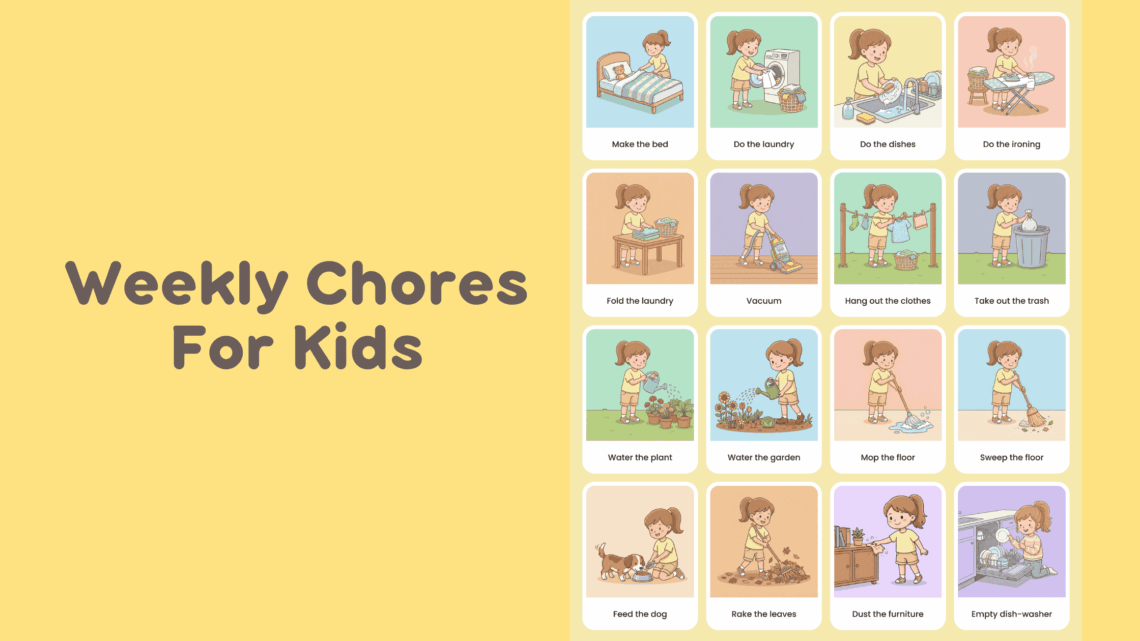
Weekly chores give children a sense of structure, responsibility and accomplishment. Unlike daily chores, which focus on small routine habits, weekly chores help children learn how to care for bigger parts of the home.
These chores take more time and effort, which makes them perfect for teaching focus, patience and pride in finishing something meaningful. Kids also learn that families work as a team and that everyone contributes to keeping the home comfortable and organized.
Weekly chores work best when they match a child’s age and ability. When parents offer clear instructions, kind guidance and steady encouragement, kids learn to take responsibility with confidence.
Many families use simple chore charts or digital chore app for kids such as Kikaroo to keep weekly chores organized and easy to follow. Below are examples of weekly chores for kids of different ages, along with explanations of why these chores are valuable for growing independence.
Why Weekly Chores Matter
Weekly chores teach children how to manage bigger responsibilities that cannot be done in just a minute or two. These chores show kids how to plan, how to complete a longer chore from start to finish and how to stay committed.
Weekly chores also help kids understand how much work goes into keeping a home running smoothly. When children complete their weekly chores, they feel proud of their effort and begin to see themselves as helpful members of the household.
Weekly chores also encourage time management. Kids learn when to start, how much time they need and how to pace themselves. This skill will help them later in school and in life. These chores can also be fun bonding moments when families work side by side.
Weekly Chores for Ages 4 to 5
Weekly chores for young children should be gentle, short and designed to build confidence. These chores help them feel important while keeping things simple and safe.
Helping Water Plants
Young children can help water indoor plants or outdoor pots once a week. This chore teaches care and patience because they can watch plants grow over time. It also introduces kids to nature in a way that feels useful and calming. With a small watering can, even very young children enjoy this routine.
Sorting Books or Toys
Once a week, children can sort through books or toys and return them to the right shelves or baskets. This chore helps them practice early organization skills and teaches them how to keep personal spaces tidy. It also creates a habit of cleaning up deeper areas that daily chores might not cover.
Helping Dust Simple Areas
Kids at this age can dust low shelves, small tables or the lower part of furniture using a soft cloth. This weekly chore teaches them to notice dust, understand cleanliness and participate in caring for shared spaces.
Weekly Chores for Ages 6 to 7
Weekly chores for this age group should build responsibility while still keeping things fun and manageable.
Cleaning Their Bedroom More Deeply
Once a week, children can spend extra time cleaning their bedroom. This chore can include organizing drawers, cleaning under the bed, sorting clothes and arranging items on shelves. This deeper cleaning helps them learn how to manage a larger chore, not just quick tidying.
Helping Clean the Bathroom Sink Area
With supervision, kids can help wipe the bathroom sink, replace the hand towel or organize toothbrushes. This weekly chore teaches hygiene, cleanliness and awareness of shared spaces.
Washing or Changing Bed Sheets
Kids can help remove pillowcases or light blankets and assist a parent in placing fresh sheets. This weekly chore teaches responsibility for personal comfort and helps children understand how to care for their sleeping space.
Weekly Chores for Ages 8 to 9
Children in this age group are ready for more detailed chores that require attention, planning and effort.
Vacuuming Their Bedroom or a Small Area
Kids can vacuum their bedroom once a week or help vacuum a hallway or living room with guidance. This weekly chore teaches focus and helps kids develop strength and coordination. They also learn how clean floors improve the home environment.
Helping Clean the Car Interior
Children can help remove trash, wipe the dashboard and organize items inside the car. This weekly chore teaches responsibility beyond the house and helps kids understand that cleaning applies to every part of life, not just home spaces.
Helping Organize the Pantry or Fridge
Once a week, kids can help place snacks into baskets, match lids to containers, sort drinks or help a parent check for expired items. This chore teaches sorting, planning and care for food storage.
Weekly Chores for Ages 10 to 11
Older kids can handle more complex chores that help build important life skills. These weekly chores encourage independence and teach kids how to manage larger areas of the home.
Helping Clean the Bathroom
With guidance, ten and eleven year olds can help wipe counters, clean mirrors and organize bath products. This weekly chore teaches them how to care for spaces used by everyone and builds confidence in handling important chores.
Helping Wash Laundry
Older kids can help sort laundry, measure detergent, load the machine and fold clean clothes. This weekly chore teaches responsibility, self care and how clothes move through the washing process. It also builds independence for later years.
Helping Prepare a Simple Family Meal
Once a week, kids can help choose a simple meal, prepare basic ingredients and assist a parent in cooking. This chore is fun, educational and a great way to build cooking confidence. It also teaches teamwork and strengthens family bonds.
Tips for Making Weekly Chores Successful
Weekly chores become more effective when parents create a positive environment around them. Kids should know when their chores happen, how to do them and what the final result should look like. Offering gentle reminders and steady praise helps children stay motivated. It is also helpful to rotate weekly chores so children learn different skills over time. Making a checklist or using a chore app like Kikaroo can help kids track their weekly progress and feel proud of finishing each chore.
Conclusion
Weekly chores give kids structure, confidence and important life skills that grow with them through the years. With chores like vacuuming, helping cook, watering plants or organizing their bedroom, children learn responsibility through meaningful weekly routines.
When parents encourage consistency and use helpful tools to guide the process, weekly chores become natural habits that build independence and support a well organized home.