

 Home
Home Features
 Testimonials
 Downloads
 FAQ
FAQ Blog
Blog
Chores, something that builds healthy habits, but something that can also break them if not treated correctly.
We love when our kids are responsible and are keeping up with their chores, but sometimes that’s just not the case and we start looking for help.
What do we do? Who do we ask for help, our parents, friends, what if they’re not sure either, or if their ways of teaching kids responsibilities is not something you agree with?
Then absolutely you need to set up your own strategies and ways of communicating with your kids, without imposing on them too much, or letting them build bad habits of not taking care of themselves and learning a lot about responsibilities along the way.
Since tech now plays a major role in our lives, and especially in our kids’ lives, why not find a solution right there?
Why not find a great chore app for kids to make both our lives and our kids’ lives easier, while creating an even better bond and more memories with them?
Maybe we should be the first who will break that generational barrier right?
Well, you’re in the right place, because in this complete guide we will try to cover everything about Chores, Chore Apps and Chores for Kids as a whole.
Introduction
Chores shape responsibility one small step at a time.
Kids learn best when tasks match their age, their abilities, and the rhythm of family life.
As routines become more consistent, children gain confidence, parents feel more supported, and the whole household runs more smoothly.
This guide brings together all the details we need: age appropriate chores, reward systems, chore charts, and the role of modern apps, so you can build a simple, positive system that works for your family.
Chores for Kids by Age
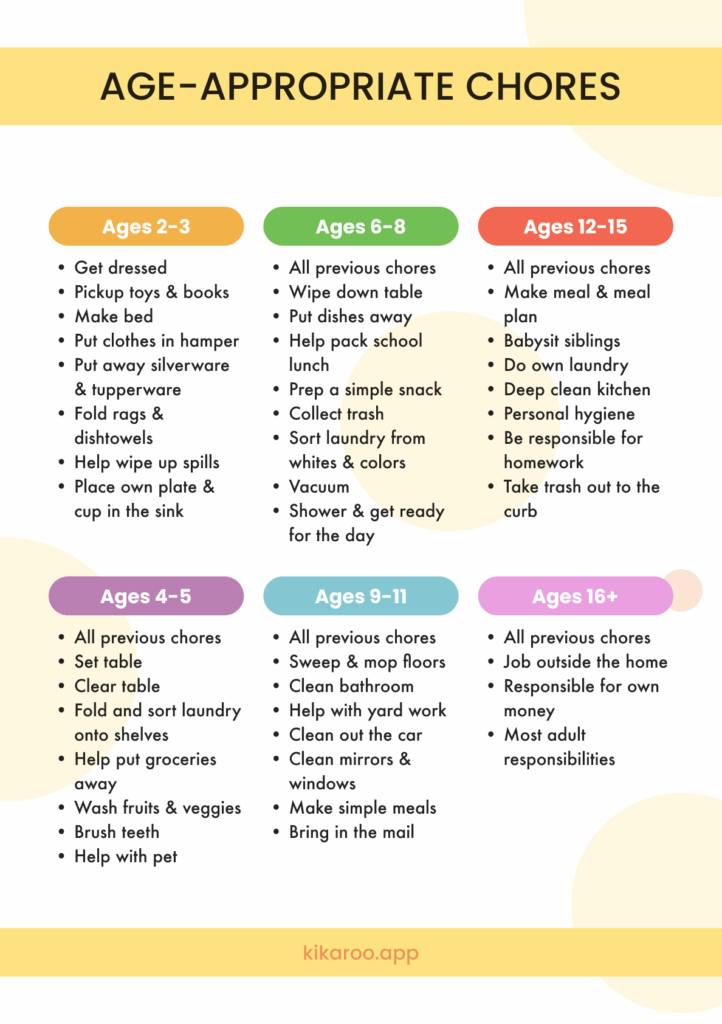
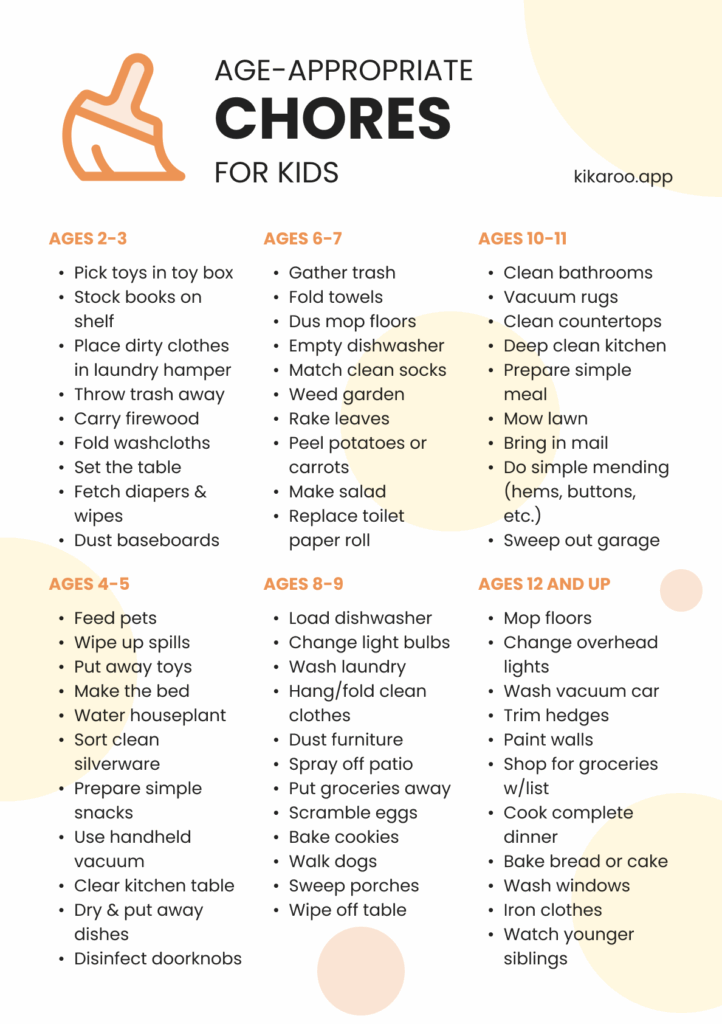
Building from a toddler’s first steps, preschoolers and young children can handle progressively more complex tasks.
- A 4 year old can put dirty clothes in a hamper.
- While a 5 year old may help set placemats on the table.
- By age 6, children can match clean socks.
- 7 year olds are often ready to make their own bed.
An 8 year old can typically take on greater responsibility, such as loading or unloading the dishwasher with supervision.
This steady progression allows children to build competence and confidence, solidifying their role as a capable contributor to the family.
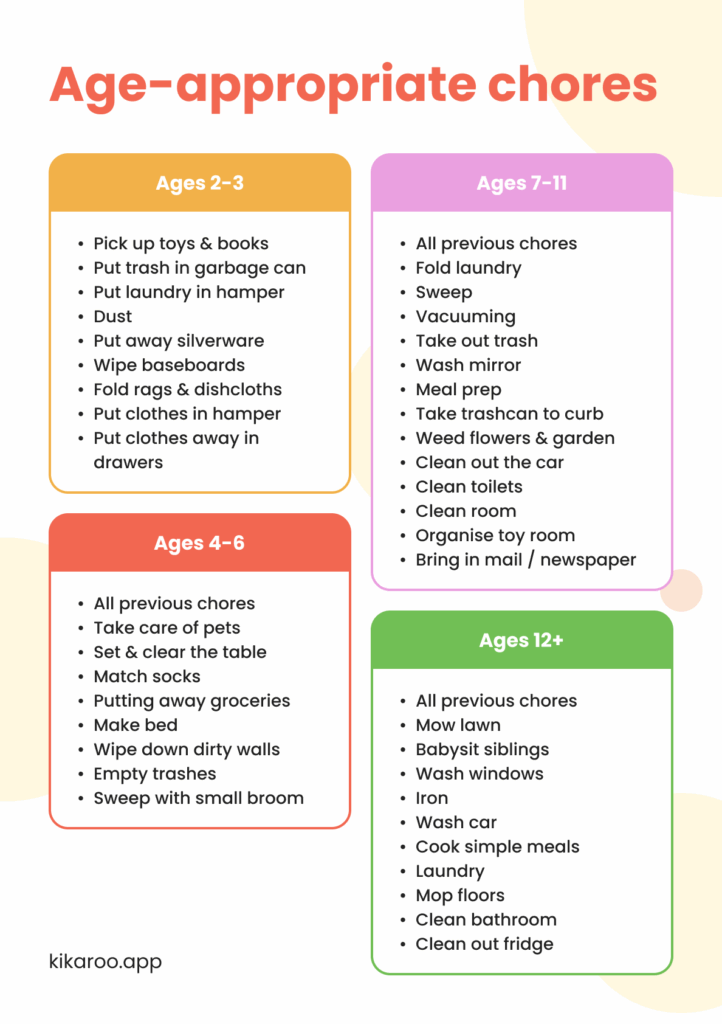
Assigning age appropriate chores is an important way to build responsibility in children, step by step. Toddlers can start with simple tasks like putting toys in a bin, which teaches them to contribute to the family routine.
As children grow into preschoolers and elementary students, they can handle more complex jobs like setting the table or taking out the recycling, fostering a sense of capability and pride.
By the tween and teen years, responsibilities expand to include tasks that truly help the household, such as doing laundry or preparing simple meals, solidifying their role as a dependable family member and preparing them for adulthood.
Chore Apps: All You Need to Know
Chore apps for kids function as a digital family command center, replacing traditional chore charts with a simple system accessible on smartphones and tablets.
Parents can easily assign tasks, set due dates, and attach custom instructions, while children receive notifications and can mark chores as complete.
The primary motivation for families to use these apps like Kikaroo is their ability to automate tracking and add a layer of motivation, many apps incorporate point systems, virtual rewards, or real world allowances that are paid out automatically upon chore completion.
This not only reduces parental nagging but also teaches children valuable lessons in time management and financial literacy, making the process of managing household responsibilities more organized, transparent, all while having fun and keeping everyone engaged.
Types of Chores for Kids
Categorizing chores helps families create a balanced and effective routine.
Chores can be divided by location, such as indoor chores (tidying rooms) and outdoor chores (raking leaves), and by frequency, including daily chores (making beds), weekly chores(vacuuming), and monthly chores (organizing a closet).
It’s also valuable to distinguish between skill building chores that teach new abilities like cooking, team chores that require family cooperation, and independent chores that foster self-reliance.
The ultimate goal is to assign safe and age appropriate chores that build responsibility step by step, ensuring children contribute meaningfully to the household in a way that supports their development.
Types of Rewards for Kids
Creating a responsible reward system is key to motivating children and teaching them the value of their efforts.
While some children are driven by intrinsic pride, many benefit from structured external rewards that recognize their achievements.
These systems often fall into several common categories, including tangible physical rewards like a small toy or book, experiential rewards such as a special trip to the park, or privilege based rewards like extra screen time.
Many families also use points based or digital rewards that can be saved up for a larger goal, fostering patience and planning.
The most effective approach often involves mixing in creative rewards, which offer unique and personalized encouragement, ensuring the system remains positive and reinforces responsible behavior.
Types of Chore Apps
When selecting a chore app for kids, parents can choose from several distinct categories tailored to different family goals.
Reward based chore apps for kids like Kikaroo and gamified apps turn tasks into engaging challenges with points and virtual rewards, ideal for motivating younger children.
For families focused on financial literacy, allowance and money linked apps automate payments and teach money management.
If the priority is structure and consistency, schedule and routine apps are perfect for managing morning and evening chore routines with timely reminders.
Finally, family and multi child management chore apps like KIkaroo provide a centralized platform for assigning tasks and tracking progress for everyone at once, simplifying coordination for the entire household.
The best choice ultimately depends on whether a family’s primary need is motivation, education, organization, or a combination of all three.
Family Chores: Chores by Family Size
The dynamics of chore management shift significantly with the size and structure of a family.
In a single child household, chores often focus on individual responsibility, while families with two or three kids can introduce teamwork and rotation systems to share common chores.
Large families typically benefit from a highly organized, team based approach, where chores are delegated efficiently, often by age, group or skill, to manage the larger workload.
For blended or shared households, establishing clear, consistent routines and fair chore distribution is crucial for building unity and ensuring all members contribute equally, regardless of which house they are in.
In short, a chore system that fits a family’s specific needs encourages teamwork and keeps the home running well.
Best House Chores for Kids
Assigning the best house chores for kids means finding tasks that are safe, age appropriate, and teach responsibility.
Simple kitchen chores for kids include loading the dishwasher or wiping counters, while living room chores for kids often involve tidying pillows and putting away toys.
A child’s own space is a great place to start, making bedroom chores for kids, like making the bed and organizing toys, a fundamental duty.
For older children, light bathroom chores for kids, such as restocking toilet paper or wiping the sink, are suitable.
Outdoor and yard chores for kids offer a change of scenery with jobs like raking leaves or watering plants.
A common question for parents is, “Should kids get paid for chores?”
Some families choose not to pay for everyday tasks that are part of being in a family, but they may offer payment for extra jobs that go beyond normal expectations, linking the reward directly to additional effort.
Chore Charts for Kids
Chore charts for kids are a simple but powerful tool that helps build routine, boost motivation, and give everyone a clear view of responsibilities.
You can start with a basic printable chore chart for kids or use chore chart templates that are often available as PDF, printable, or editable files to customize for your family.
It’s important to use chore charts for kids by age: for example, a chore chart for kindergartners would have simple pictures for tasks like putting toys away.
Many families use a weekly chore chart for kids to provide structure and help children learn to manage their tasks over several days, making the system work for everyone.
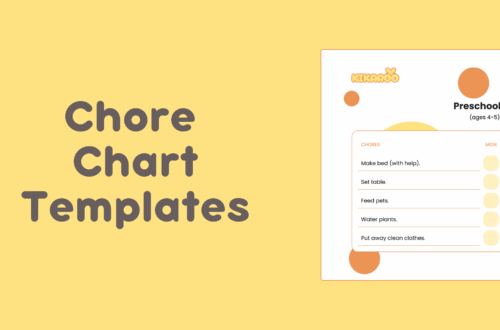
Chore Chart Templates
Chore chart templates provide an easy and organized way to start a chore system.
You can find many free chore chart templates online that are ready to use as printable chore chart templates, saving you time and effort from creating your own.
These templates come in different layouts to fit your family’s needs, such as daily chore chart templates for routine tasks and weekly chore chart templates for bigger jobs.
For a broader view, family chore chart templates assign tasks to everyone in the household.
To make it even easier, you can search for free printable chore charts by age to find templates with tasks that are already appropriate for your child’s developmental stage.
Conclusion
Ultimately, building a successful chore system for your family comes down to consistency, balance, and a positive attitude.
By choosing age appropriate tasks and a clear method for tracking them, you turn daily duties into valuable lessons in responsibility and teamwork.
Remember, the goal isn’t perfection, but progress and helping your children become capable, contributing family members.
To make this process easier and more engaging, consider using a dedicated tool like the Kikaroo chore app for kids, which is designed to help families manage tasks, set routines, and celebrate successes together, all in one simple place.