

 Home
Home Features
 Testimonials
 Downloads
 FAQ
FAQ What is Kikaroo?
 Blog
Blog Chore charts
Most chore guides hand you a list and wish you luck.
You already know a list isn’t the problem. You’ve printed the lists. You’ve made the charts. You’ve tried the marble jar. The problem is getting your kids actually to do the chores. Consistently, without you asking three times, and knowing whether you’re expecting the right things from the right ages.
This guide covers chores for kids by age from 2 to 18, with one addition most guides leave out: what skill each chore actually builds, and what to do when your child refuses.
If you want the printable version, grab our free chore charts by age, one chart per age group, ready to print or use on your phone.
Why chores matter (and what age to start)
Chores aren’t about keeping the house clean. That’s a side effect.
The real reason to give kids chores is simpler: kids who contribute to the household grow up believing they are capable. That belief, built one small task at a time, is harder to teach any other way.
Here’s what consistent chores actually build:
- Responsibility – your child learns that some things depend on them, not you
- Confidence – finishing a real task gives kids a real sense of achievement
- Independence – kids who can cook a basic meal, do laundry, and clean a bathroom don’t need rescuing at 22
- Routine – chores anchor the day, which reduces the mental load for everyone
At what age should you start?
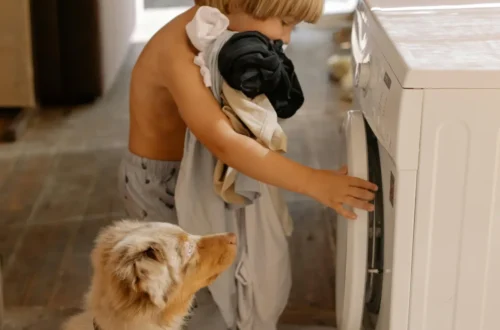
Earlier than most parents think. Toddlers as young as 2 can put toys in a bin or hand you clothes to fold. They won’t do it perfectly. That’s not the point. Starting early means chores become a normal part of life, not a new rule imposed at age 8 that feels like punishment.
A good rule of thumb: if your child is old enough to make a mess, they’re old enough to help clean it up.
How to introduce chores without a battle
Getting the system right from the start saves weeks of resistance. Most chore routines fail not because kids won’t cooperate, but because of a few setup mistakes that are easy to avoid.
The 3 mistakes most parents make
Most chore systems fail in the first two weeks. Not because the kids are difficult, but because the setup was wrong.
Mistake 1: Starting with too many chores at once
Handing a 6-year-old a list of five daily tasks on Monday morning sets everyone up to fail. Start with one chore. One. Let it become a habit before you add another.
Mistake 2: Stepping in when it’s done imperfectly
If your child makes the bed badly and you remake it while they watch, the message is clear: there’s no point trying. Accept imperfect. Correct gently over time, not in the moment.
Mistake 3: Inconsistency
Skipping chores on busy days, then enforcing them strictly the next. Kids read this as arbitrary. Consistency matters more than perfection. A simple system done every day beats an elaborate one done occasionally.
How to make the first week work
Pick one chore. Tie it to something that already happens, after dinner, before screen time, right after school. Habits attach to existing routines more easily than they attach to schedules.
👉 For a ready-made morning and evening chore structure at every age, see our daily chores for kids guide.
Do it with them for the first three days. Not to supervise, to normalise. After that, step back and let them own it.
Don’t reward the outcome. Reward the habit. “You remembered without me asking” is more powerful than “you did it perfectly.”
If you’re also working on a specific behaviour alongside chores, a behavior chart for kids can run alongside until the habit sticks.
Chores for 2-3 year olds
At this age, the goal isn’t a clean house. It’s building the habit of contributing. Tasks should be simple, physical, and immediately visible. Two and three-year-olds respond to “look what you did” more than anything else.
| Chore | Skill it builds |
|---|---|
| Put toys in a bin | Tidying, following instructions |
| Hand you laundry items to fold | Cooperation, fine motor |
| Wipe up spills with a cloth | Responsibility, cause and effect |
| Put dirty clothes in the hamper | Routine, independence |
| Help set the table (napkins, spoons) | Sequencing, helpfulness |
| Water a plant with a small can | Care, routine |
What to expect
Expect a mess. Expect half-finished tasks. Expect them to walk away mid-chore to chase the dog. That’s normal. Your job at this age is to make helping feel good. Not to get the job done efficiently.
Chores for 4-5 year olds
By four, most kids can follow a two-step instruction and take real ownership of a small task. This is the age where chores start to stick if you keep them simple and consistent.
| Chore | Skill it builds |
|---|---|
| Make their bed (roughly) | Routine, independence |
| Clear their plate after meals | Responsibility, self-sufficiency |
| Feed a pet | Empathy, consistency |
| Match and sort socks | Categorization, fine motor |
| Wipe down low surfaces with a cloth | Attention to detail, coordination |
| Help unload the dishwasher (safe items only) | Cooperation, spatial awareness |
| Put groceries away (low shelves) | Organization, following instructions |
| Sweep with a small broom | Motor skills, task completion |
What to expect
Four and five-year-olds want to help. That instinct is still strong at this age. Use it. Give them a chore that feels grown-up and let them do it without hovering. The window where kids genuinely want to contribute is shorter than most parents realise.
👉 For a more detailed breakdown, see our full guide to chores for a 5-year-old.
👉 At this age, pairing chores with a sticker chart works well. The visual progress keeps younger kids motivated without overcomplicating the system.
Chores for 6-8 year olds
School-age kids can handle multi-step tasks and start to understand that chores are part of how the household runs, not just a game they’re playing with you. Expectations can rise, and so can independence.
| Independence, organisation | Skill it builds |
|---|---|
| Make their bed daily | Routine, self-discipline |
| Pack and unpack their school bag | Organization, responsibility |
| Load and unload the dishwasher | Sequencing, helpfulness |
| Vacuum a room | Attention to detail, motor skills |
| Fold and put away their own laundry | Independence, organization |
| Take out the trash | Responsibility, following through |
| Clean their bedroom | Self-management, tidying |
| Prepare a simple snack | Basic cooking, independence |
| Wipe down bathroom surfaces | Hygiene awareness, thoroughness |
| Help with the grocery list or shopping | Planning, math skills |
What to expect
This is the age where resistance starts. The novelty has worn off, and chores feel like an interruption. This is normal, and it’s exactly why a visible system matters. When kids can see what’s expected, what they’ve done, and what they’re working toward, the daily argument mostly disappears.
👉 For a more detailed breakdown, see our full guide to indoor chores for kids.
Chores for 9-12 year olds
Preteens can handle real household responsibilities. At this age, chores should start to resemble the tasks they’ll need to manage independently in a few years. The goal shifts from habit-building to genuine contribution.
| Chore | Skill it builds |
|---|---|
| Do their own laundry start to finish | Independence, time management |
| Cook a simple meal once a week | Life skills, confidence |
| Clean the bathroom top to bottom | Thoroughness, hygiene |
| Mow the lawn or rake leaves | Physical responsibility, follow-through |
| Wash the car | Attention to detail, effort |
| Look after younger siblings briefly | Empathy, leadership |
| Manage their own schedule and homework | Executive function, self-management |
| Help with meal planning or grocery shopping | Planning, budgeting basics |
| Take bins out on collection day without being asked | Reliability, initiative |
| Deep clean their bedroom weekly | Self-management, standards |
What to expect
Nine to twelve-year-olds will test boundaries around chores more than any other age group. They’re old enough to argue and young enough to still push back on everything. The key is removing yourself from the enforcement loop as much as possible. A shared app or visible chore chart means the system is the authority, not you.
👉 For a more detailed breakdown, see our full guide to chores for a 9-year-old.
👉 For a more detailed breakdown, see our full guide to chores for a 10-year-old.
Chores for 13-18 year olds
Teenagers are capable of nearly everything an adult can do around the house. The challenge isn’t ability, it’s motivation and scheduling. Chores at this age should be treated less like assigned tasks and more like shared household responsibilities.
| Chore | Skill it builds |
|---|---|
| Cook dinner for the family once a week | Life skills, planning, confidence |
| Do their own laundry completely | Full independence |
| Clean shared spaces (kitchen, bathrooms) | Shared responsibility, standards |
| Grocery shopping from a list | Planning, budgeting |
| Manage their own room without reminders | Self-management, ownership |
| Mow the lawn, shovel snow, seasonal tasks | Physical responsibility, reliability |
| Help younger siblings with homework or chores | Leadership, empathy |
| Handle their own appointments and scheduling | Executive function, independence |
| Basic home maintenance (changing bulbs, filters) | Practical life skills |
| Budget and track their own spending | Financial literacy |
What to expect
Teens won’t always do chores on your timeline. Pick your battles. The goal at this age is building the habit of contribution, not perfect compliance. A teenager who cooks dinner once a week and does their own laundry is well ahead of most. Focus on the non-negotiables and give them ownership over the how and when, not just the what.
Chores and allowance at this age
Many families tie allowance to chores by the teenage years. If you do, keep the link clear and consistent, earn this, get that. Vague systems (“I’ll give you something if you help out”) lose credibility fast with teenagers. A visible, agreed-upon system works better than informal arrangements.
What to do when your kid refuses
Every kid refuses chores at some point. It’s not a discipline problem. It’s a normal part of testing boundaries. The mistake most parents make is turning a single refusal into a standoff. Here’s a system that works across most ages.
Step 1 – Don’t negotiate in the moment
When a child refuses, the worst time to have a conversation about why chores matter is right then. You’re both activated. Say “we’ll talk about this after dinner” and leave it. Trying to convince a resistant kid in the moment rarely works and usually escalates.
Step 2 – Find the real reason
After things have calmed down, ask a genuine question: “Is the chore too hard? Does the timing not work for you?” Sometimes refusal is about the specific task, the timing, or feeling like the system is unfair. Those are solvable problems. Sometimes it’s just resistance, that’s a different conversation.
Step 3 – Let the system do the enforcing
The less the refusal is about you personally, the easier it is to resolve. When chores live in an app or on a visible chart, the system holds the expectation, not you. “The chart says it’s your turn” lands differently than “I’m telling you to do it.” Remove yourself from the loop as much as possible.
Age-specific resistance patterns
Ages 4-7
Usually about attention and timing. They’re mid-play and don’t want to stop. A 5-minute warning (“chores start after this episode”) removes most of the friction.
Ages 8-12
More likely to argue fairness. “Why do I have more chores than my sister?” Keep the system visible and consistent. Arbitrary-feeling rules get the most pushback.
Ages 13-18
Resistance is often about autonomy. Give them control over the when, not the whether. “The bathroom needs to be clean by Sunday” gives ownership over timing without removing the expectation.
Chores for kids with ADHD or sensory sensitivities
Standard chore systems often don’t work for kids with ADHD, sensory processing differences, or anxiety. Not because these kids are less capable, but because the system wasn’t designed with them in mind. A few adjustments make a significant difference.
Why standard systems fail
A chore list with five items feels manageable to most kids. To a child with ADHD, it can feel overwhelming enough to trigger avoidance before they’ve even started. Sensory-sensitive kids may genuinely struggle with certain tasks, the smell of cleaning products, the texture of wet dishes, and the noise of a vacuum.
The solution isn’t fewer expectations. It’s a better-designed system.
What to change
Break tasks into single steps
Instead of “clean your room,” the chore is “put your clothes in the hamper.” One thing. Done. Then the next chore is “put your books on the shelf.” Completion feels achievable, and achievement builds momentum.
Use visual cues, not verbal reminders
Kids with ADHD often tune out verbal instructions, not out of defiance, but because working memory is genuinely harder for them. A visible chart, an app notification, or a simple checklist on their door works better than asking twice.
Respect sensory limits
If your child can’t tolerate the smell of bleach, swap the cleaning product. If wet textures are difficult, rubber gloves solve it. The goal is the habit and the responsibility, not the specific method.
Keep the reward loop short
Long-term reward systems (earn points for a prize next month) don’t work well for kids with ADHD. Shorter loops, earn something today, or this week, keep motivation higher. Kikaroo lets you set rewards at whatever frequency works for your child.
What stays the same
The expectations don’t need to change, just the delivery. Kids with ADHD are fully capable of contributing to the household. The system needs to meet them where they are.
Tracking chores without nagging
The nagging loop is exhausting for everyone. You ask, they ignore, you ask again louder, they resent it, you feel like the villain. The fix isn’t asking differently. It’s removing yourself from the reminder system entirely.
Why visual systems work
When expectations are visible, on a chart, a board, or an app, the system holds the standard, not you. Your child isn’t ignoring you, they’re ignoring the chart. That’s a much easier problem to solve, and it takes the personal friction out of the equation.
Paper chart vs app
Both work. The difference is maintenance.
| Paper chart | App | |
|---|---|---|
| Setup | 10 minutes | 10 minutes |
| Daily maintenance | You update it manually | Updates automatically |
| Works for multiple kids | Gets complicated fast | Built for it |
| Kids stay engaged | Novelty wears off in 2-3 weeks | Notifications and rewards help retention |
| Works for teens | Rarely | More likely |
A paper chart is a good starting point for younger kids, 4 to 7, where the physical act of ticking a box has its own satisfaction. For families with multiple kids, or kids over 8, an app holds up better over time.
How Kikaroo fits in
Kikaroo is built around exactly this problem. Parents set up chores once, who does what, how often, what they earn, and the app handles the reminders, tracking, and rewards. Kids can see their progress and their rewards in real time, which keeps motivation higher than a static chart.
Setup takes under 10 minutes. There’s no elaborate point system to configure. And it works from age 4 through the teenage years without switching to a different tool.
👉 For ready-made chart templates, see our chore chart templates.
Frequently asked questions
Age-appropriate chores match a child’s physical ability, attention span, and developmental stage. Toddlers (2-3) can put toys away and hand you laundry. By 6-8, kids can vacuum, load the dishwasher, and clean their room. Teenagers can handle most adult household tasks, cooking, laundry, cleaning, and seasonal work. The full breakdown is in the age sections above.
A 7-year-old can make their bed, pack their school bag, load and unload the dishwasher, vacuum a room, fold and put away their laundry, take out the trash, and help prepare a simple snack. Start with one or two and add more as each becomes routine.
For a full list, see our guide to chores for 7-year-olds.
By 10, kids can do their own laundry start to finish, cook a simple meal, clean the bathroom, manage their own schedule, help with grocery shopping, and take bins out on collection day without being reminded. The goal at this age is genuine contribution, not just token tasks.
Yes. Nine-year-olds are fully capable of real household responsibility. Regular chores at this age build the habits and life skills they’ll rely on as teenagers and adults. If chores haven’t started yet, 9 is a good age to begin. Start with one task, tie it to an existing routine, and build from there.