

 Home
 Features
 Testimonials
 Downloads
 FAQ
 What is Kikaroo?
 Blog
 Chore charts

If your school mornings sound like a broken record (“Shoes! Teeth! Backpack! Shoes!”), you don’t need more willpower. You need a morning routine for kids that your child can follow without you narrating every step. This guide gives you a simple school-day checklist, a sample timeline, age-by-age tips, and a few ways to stop the nagging for good.
Want the checklist to run itself? Kikaroo is a chore and routine app for kids 4 to 18, free to download. Download on the App Store or get it on Google Play.
Why a morning routine works
Mornings go sideways when every decision lands on the parent: what to wear, what to eat, where the shoes are, what comes next. A routine moves those decisions out of the moment. Kids know the order of things, so there’s less to argue about, and you stop being the human alarm clock.
A good routine also builds independence. When a child can look at a list and say “I’m on step four,” they’re practicing the same skills they’ll need for homework, packing for a trip, and eventually running their own day.
The simple school-day morning routine checklist
Keep it to five to seven steps. Any longer and kids lose track, and any shorter and the list doesn’t help. Here’s a checklist most families can use as is:
- Get up and use the bathroom
- Get dressed (clothes picked the night before)
- Make the bed
- Eat breakfast and put the dishes in the sink
- Brush teeth and hair
- Pack the backpack: homework, water bottle, anything for after-school activities
- Shoes and jacket on, ready by the door
To build the timing, work backward from the time you need to leave. Here’s a sample for an 8:00 departure:
| Time | Step |
|---|---|
| 7:00 | Wake up, bathroom |
| 7:10 | Get dressed, make the bed |
| 7:25 | Breakfast |
| 7:45 | Teeth and hair |
| 7:50 | Backpack, shoes, jacket |
| 8:00 | Out the door |
The times are a guide, not a rule. If one step always runs long, give it more room instead of rushing the child.
Morning routine checklist for kids by age
The steps stay mostly the same as kids grow. What changes is how much help they need and how the checklist looks.
Ages 4 to 6
Use pictures instead of words, and limit the list to four or five steps. You’ll still be nearby, mostly to cheer them on and to help with buttons and zippers. Let them tick off each step themselves; that small win matters.
Ages 7 to 9
Switch to a written checklist. Kids this age can make their own bed, pack most of their backpack, and handle breakfast with light supervision. A quick check at the door is usually enough.
Ages 10 to 12
Hand over more of the process: their own alarm, breakfast prep, double-checking the backpack. Your role shifts from directing to checking in once, near the end.
Teens
Teens need less of a script and more ownership. Agree on what “ready” looks like and the time you’re leaving, then let them manage the in-between. A shared checklist is still handy for the days everything goes wrong.
Morning routine for kids before school: set up the night before
The best mornings are decided the evening before. A few minutes of prep removes the most common sources of chaos:
- Lay out clothes, including socks and shoes
- Pack the backpack and put it by the door
- Sign forms and check the next day’s schedule
- Prep lunch or decide what’s for breakfast
If you’re building an evening routine too, our list of evening chores for kids covers easy after-school and nighttime tasks that make mornings smoother.
How to make school mornings easier
Once the checklist exists, these small changes help it stick:
- Wake up 15 minutes earlier. A little buffer turns a small hiccup into no big deal.
- Screens after the checklist, not before. Finish the routine first, then screen time is the natural reward.
- Make the list visible. Post it at kid height where the routine happens, or put it on their phone or tablet.
- Use a timer for slow steps. A visible countdown beats repeated reminders.
- One reminder, then let the list do the work. Point to the checklist instead of repeating the instruction.
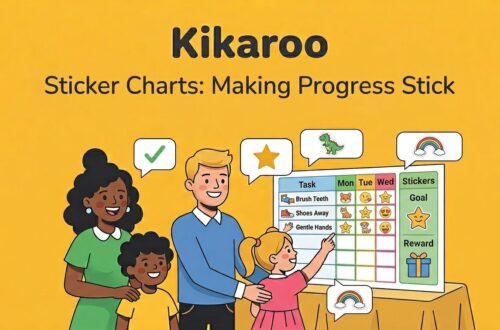
- Celebrate finishing. A sticker, a point, or a high five works. See our guide to setting realistic chore rewards and a simple sticker chart for kids.
Use a chart or an app to keep the routine going
A paper chart is a great starting point. You can build one in a few minutes with our free daily chore chart generator and adapt the steps from the checklist above.
If you want the routine to live on your child’s phone instead of the fridge, a chore app can do the tracking for you. In Kikaroo, Premium checklists let you break a routine into steps, so your child taps through the list and earns points toward rewards you choose. You can read how it works on the What is Kikaroo page, or see how it compares with other options in our roundup of the best chore apps for kids. For a broader look at how an app can support family routines, read how a chore app can transform your family routine.
Download Kikaroo on the App Store · Get it on Google Play
Frequently asked questions
What should a morning routine for kids include?
Aim for five to seven steps: wake up, get dressed, make the bed, eat breakfast, brush teeth and hair, pack the backpack, and shoes on. Adjust the list to your child’s age and your family’s needs.
How long should a kids’ morning routine take?
Build it backward from the time you need to leave. For many school-age kids, 45 to 60 minutes leaves room to move without rushing, and you can trim it as they get faster.
How do I get my child to follow a morning routine without nagging?
Let the checklist do the talking. Keep it visible, give one reminder, and tie something they enjoy, like screen time, to finishing the list.
At what age can kids do a morning routine on their own?
With a picture or written checklist, many kids can handle most steps by age 6 or 7, and many are mostly independent by 9 or 10. Every child is different, so adjust the support to what yours needs.
Should chores be part of a morning routine?
One small task, like feeding a pet or putting dishes in the sink, fits fine. Save bigger chores for after school or the evening. For ideas, see our list of daily chores for kids.
Start small this week
You don’t need a perfect system on day one. Pick five steps, write them down, and use them for a week. Adjust what isn’t working, keep what is, and let your child own a little more each time.